The MITSUBISHI Lancer Evolution VI RSII belongs to a very special period in sports car history. Built around the CP9A platform, the 4G63T turbocharged engine, and a mechanical all-wheel-drive system, it embodies an era when speed was defined primarily by mechanics: boost pressure, suspension geometry, braking confidence, and the connection between the driver and the chassis.
This silver EVO VI RSII comes from the early ATOMIC-SHOP project archive — a build that reflects the tuning philosophy of roughly two decades ago, when performance was defined by hardware rather than software. In those days, tuning quality was judged by a much simpler criterion: how the car behaved under hard driving.
Looking back at this project today, you understand its value: it demonstrates how smart mechanical decisions stand the test of time. Some builds become outdated as trends change. Others remain relevant because the logic behind them was right from the beginning.
The goal of the project was not to erase the character of the Lancer Evolution VI. That would have deprived the car of its purpose. It already possessed that rawness, compactness, and rally-bred mechanical feel that made the EVO name iconic. The task was to support these qualities with carefully selected components: sharper turbo response, better charge-air cooling, more precise suspension damping, reduced body roll, stable braking, and a proper driving position.
Forced Induction Update: EVO9 Turbocharger and HKS Components
The 4G63T engine was already one of the most powerful turbocharged four-cylinder platforms of its generation. Its cast-iron block, mechanical toughness, and massive tuning culture made it the ideal foundation for a serious EVO VI build.
For this project, the powertrain was upgraded with a turbocharger from an EVO9. For the 4G63T platform, this was a smart upgrade path using a later-generation component. It allowed for increased airflow potential while preserving the responsive character expected from a true Lancer Evolution.
The idea was not to turn the car into a track-only monster that only pulls at high RPMs. The goal was to give the engine a broader, thicker, and more usable powerband that works effectively during aggressive driving, corner exits, and repeated acceleration runs.
To support the updated turbo system, the car was equipped with an HKS Intercooler. On a turbocharged 4G63T, controlling intake air temperature is critical under high loads. The intercooler helps prevent intake air overheating and delivers consistent engine performance lap after lap.
The exhaust system was completed with an HKS Hi-Power Silent Exhaust. This helped reduce exhaust backpressure, improved turbo efficiency, and gave the car a deep, thoroughbred JDM sound. It was the exact exhaust choice that fit the spirit of the era: functional, recognizable, and subtle — built for a serious car rather than pure noise.
Suspension and Chassis Control: ÖHLINS and CUSCO Integration
The factory EVO VI chassis was created under the influence of rally technology. It possessed compliance, mechanical grip, and a readiness to work on imperfect surfaces. That was part of its personality. However, for precise track handling, the car required better damping control and reduced body roll in corners.
The suspension was upgraded with an ÖHLINS MIS MI01 Road & Track DFV Damper Kit. This kit was developed for the later EVO VII-IX platforms, but in this project it was integrated into the earlier EVO IV-VI chassis using a special ÖHLINS MIZ MI00 Adaption Kit.
This detail is one of the most interesting parts of the project. It was not just a matter of selecting random parts, but a proper integration of top-tier, newer-generation ÖHLINS components into the CP9A body, giving the EVO VI RSII exceptional road-smoothing ability while retaining its analog character.
ÖHLINS DFV (Dual Flow Valve) technology helps the suspension control body movements while allowing the wheel to effectively absorb curbs, bumps, or surface irregularities. For an older all-wheel-drive car, this ensures composure under braking, stability during direction changes, and predictability at the apex.
To combat body roll, the car was fitted with CUSCO Sway Bars at the front and rear. They reduce unwanted chassis lean, helping the all-wheel-drive system work on a more stable platform. The goal was not to turn the car into an uncomfortably stiff ride, but to provide the driver with clearer feedback and a predictable balance in corners.
Braking System: DBA Discs and ENDLESS MX72 Pads
As power, grip, and handling increase, the braking system must match that performance level. On a track-focused EVO VI, brake efficiency is measured not by a single emergency stop, but by how the pedal behaves across a series of hard laps.
The factory braking system was upgraded with DBA Brake Discs. DBA discs were chosen for their superior heat dissipation and resistance to thermal distortion compared to standard road components.
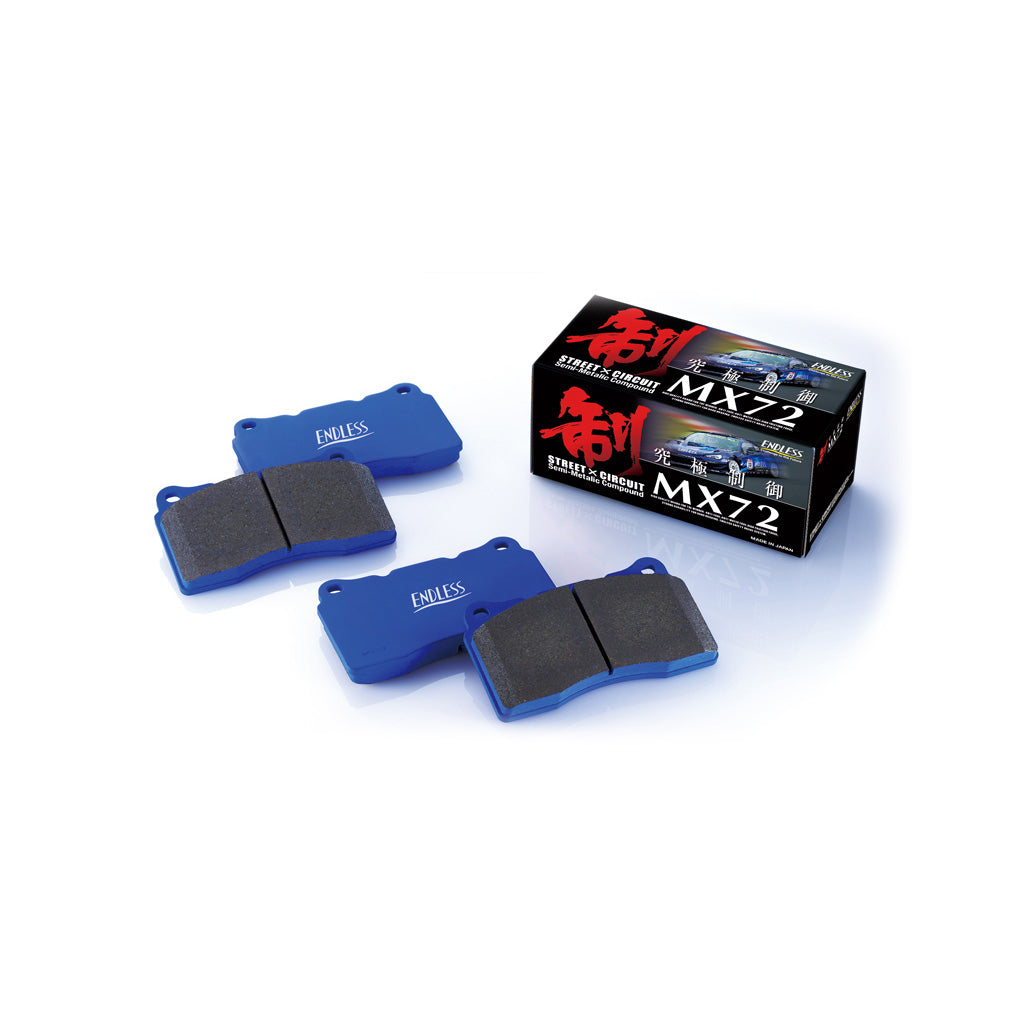
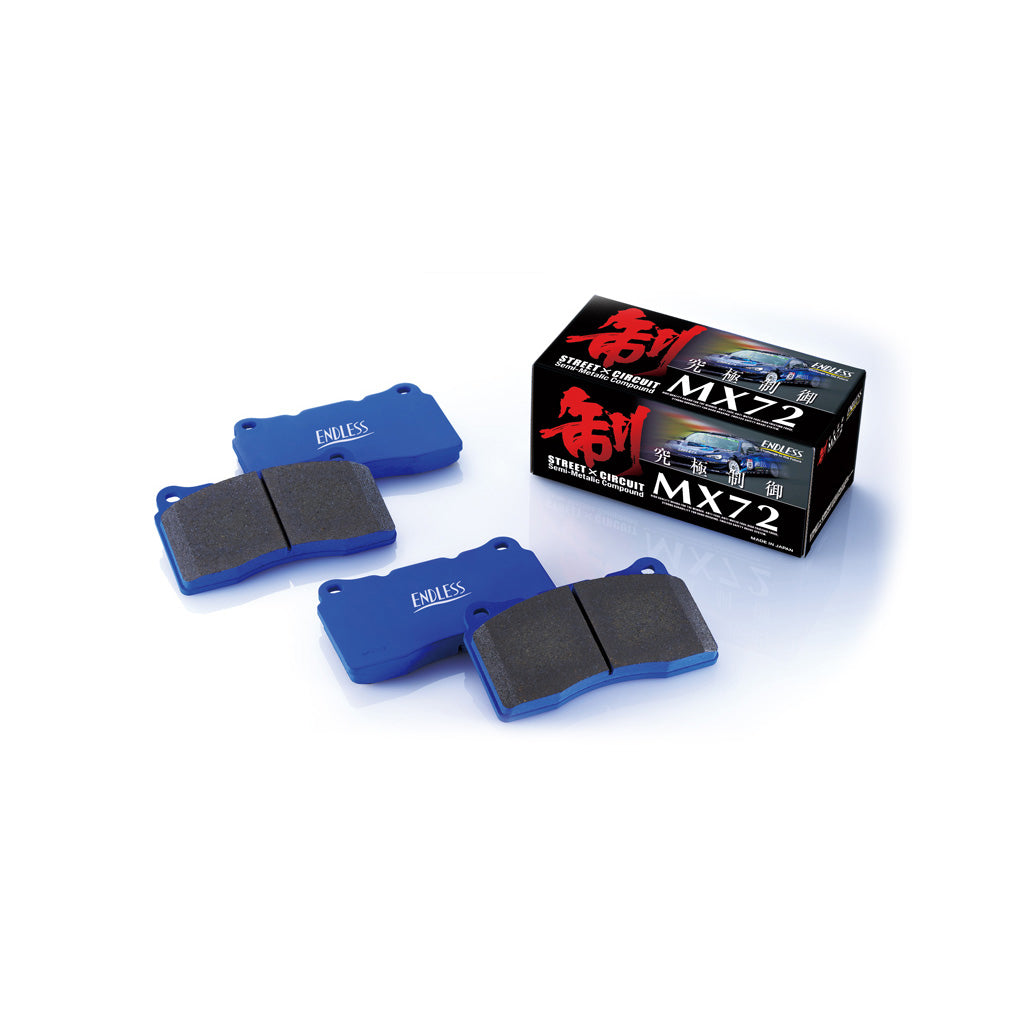
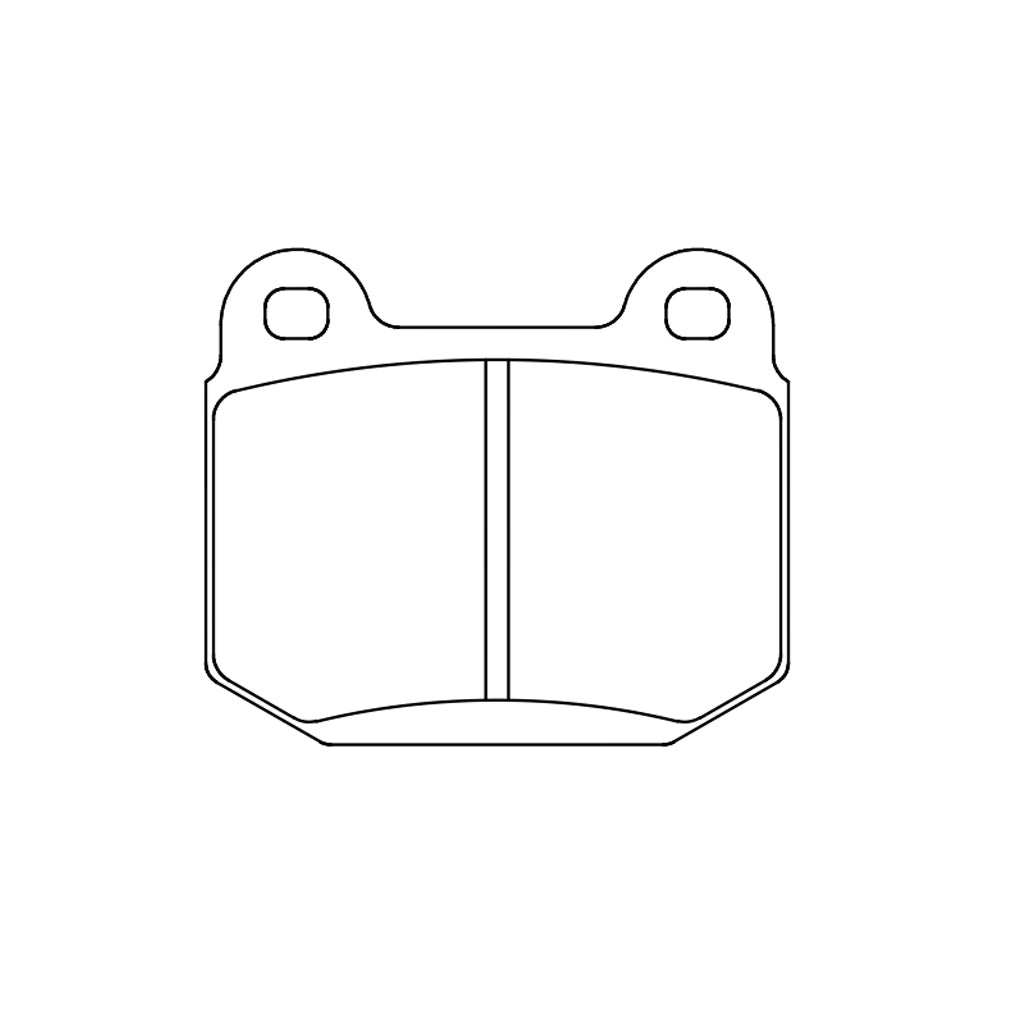
The discs were paired with ENDLESS MX72 brake pads. The MX72 series became a benchmark thanks to its excellent balance between daily drivability and track capability, providing strong initial bite, clear modulation, and high fade resistance.
The result was predictable braking performance, confident pedal feel, and superb feedback during aggressive deceleration.
Driver Cockpit Setup: Analog Control with OMP
One of the reasons the EVO VI RSII remains relevant today is the purity of its driver connection. It is mechanical, direct, and free of electronic "filters". That is why interior modifications needed to emphasize the car's analog nature.
The factory steering wheel was replaced with an OMP OD0-1956-073 Corsica 350mm sports steering wheel in black and red suede. The deep dish and suede grip improved control during rapid steering inputs, especially in tight turns and during corrections on corner exits.
A Steering Wheel Spacer was also installed to bring the wheel closer to the driver. This improved driving posture, reduced shoulder strain, and made steering inputs feel more natural during aggressive driving.
In a car like this, the steering wheel is not a styling element. It is one of the primary controls. A proper steering wheel position makes the car more intuitive and controllable.
Verdict: Proven Hardware, Timeless Logic
This silver MITSUBISHI Lancer Evolution VI RSII should be viewed as a project from the golden era of tuning culture. It reflects a time when efficiency was measured by mechanical response rather than software tunes or dry internet figures.
The ATOMIC-SHOP specialists sharpened the car in key areas: the EVO9 Turbocharger gave the 4G63T engine better breathing, the HKS intercooler and exhaust maintained boost efficiency, ÖHLINS suspension and CUSCO sway bars provided precise chassis control, DBA and ENDLESS components enhanced braking confidence, and the OMP steering wheel improved the most critical connection — between the driver and the front axle.
The result is a cohesive EVO VI RSII: raw, mechanical, and full of rally spirit, yet sharper, more composed, and faster than stock. Even two decades later, the philosophy behind this build remains a benchmark.
Key Components Used
Engine, Turbo & Exhaust
- EVO9 Turbocharger Upgrade
- HKS Intercooler
- HKS Hi-Power Silent Exhaust
Suspension & Chassis
- ÖHLINS MIS MI01 Road & Track DFV Damper Kit for EVO VII-IX
- ÖHLINS MIZ MI00 Adaption Kit for EVO IV-VI Integration
- CUSCO Sway Bars Front & Rear
Braking System
- DBA Brake Discs
- ENDLESS MX72 Brake Pads
Interior & Cockpit
- OMP OD0-1956-073 Steering Wheel Corsica 350mm (Black/Red Suede)
- Steering Wheel Spacer
BUILD YOUR LEGEND WITH ATOMIC-SHOP