






















Crankshafts as the Foundation for Converting Combustion Pressure into Torque
Crankshafts are the central load-bearing components of the engine’s bottom end, converting the reciprocating motion of the pistons into rotation that is then transferred to the drivetrain. The main mechanical load from combustion, connecting rod operation, piston group inertia, and vehicle resistance during acceleration all passes through the crankshaft. In a stock engine, this assembly is designed for a specific level of power, rpm, and durability, but after tuning, increased boost pressure, or displacement changes, the factory strength margin may become insufficient.
This category includes crankshafts and related components for building high-performance engines, including solutions for reinforcing the engine bottom end, increasing torque, operating at high rpm, and use in performance configurations. These parts are used during engine overhauls, when building an engine with a larger strength reserve, switching to a different stroke configuration, or preparing a vehicle for track use, drag racing, and fast road driving. Brands represented in this category include AMS Performance, Manley Performance, and Tomei, along with high-strength fasteners from the global leader ARP. Together, these components are used in projects where precision, strength, and absolute stability of the entire crank and rod assembly are essential.
For engine tuning, the crankshaft is fundamentally important because it determines not only the ability to withstand torque, but also the character of the engine. Its geometry affects piston stroke, displacement, piston speed, connecting rod loads, balancing, and maximum safe engine speed. If pistons and connecting rods form the force group of the cylinder, the crankshaft combines their work into one rotational process. In a high-load engine, a weak or incorrectly selected crankshaft can limit the entire project regardless of the quality of the turbocharger, fuel system, cylinder head, or electronic engine management.
Crankshaft Design and Its Operation Inside the Engine
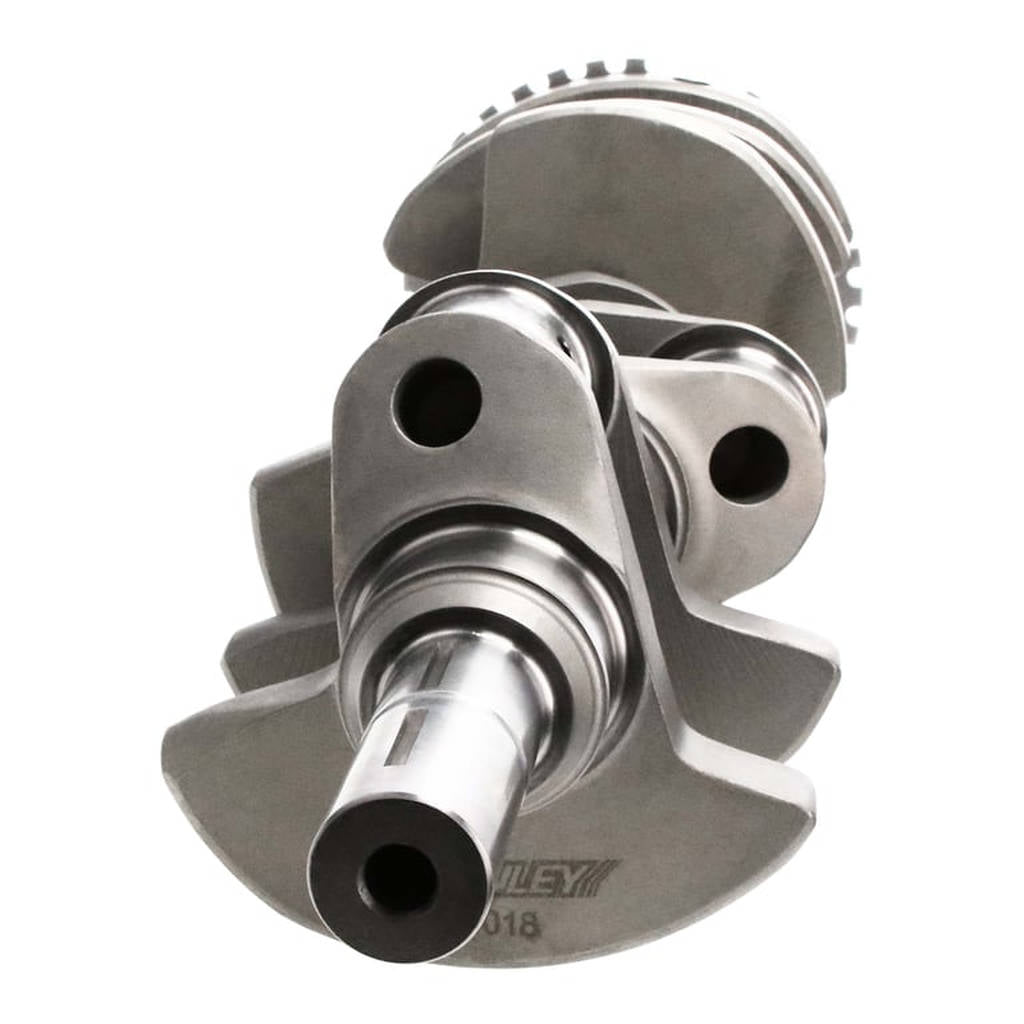
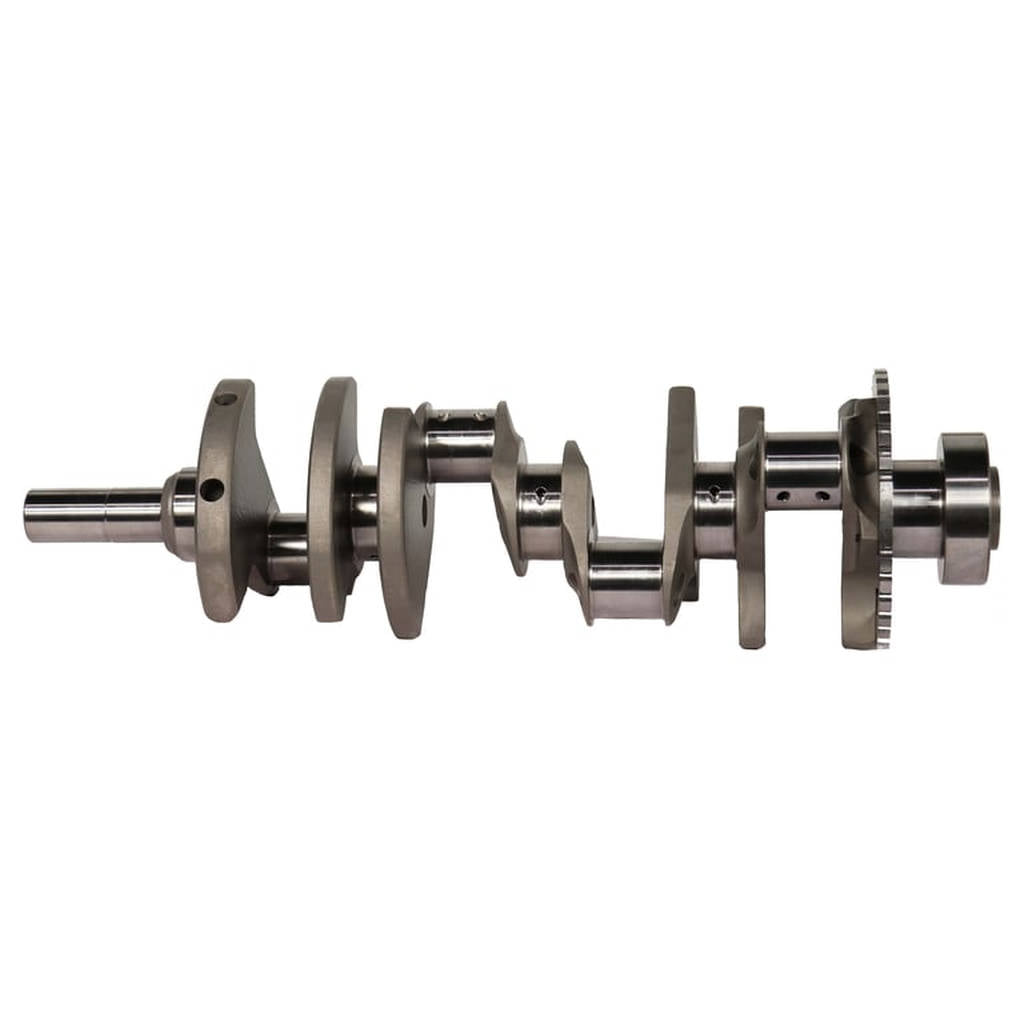
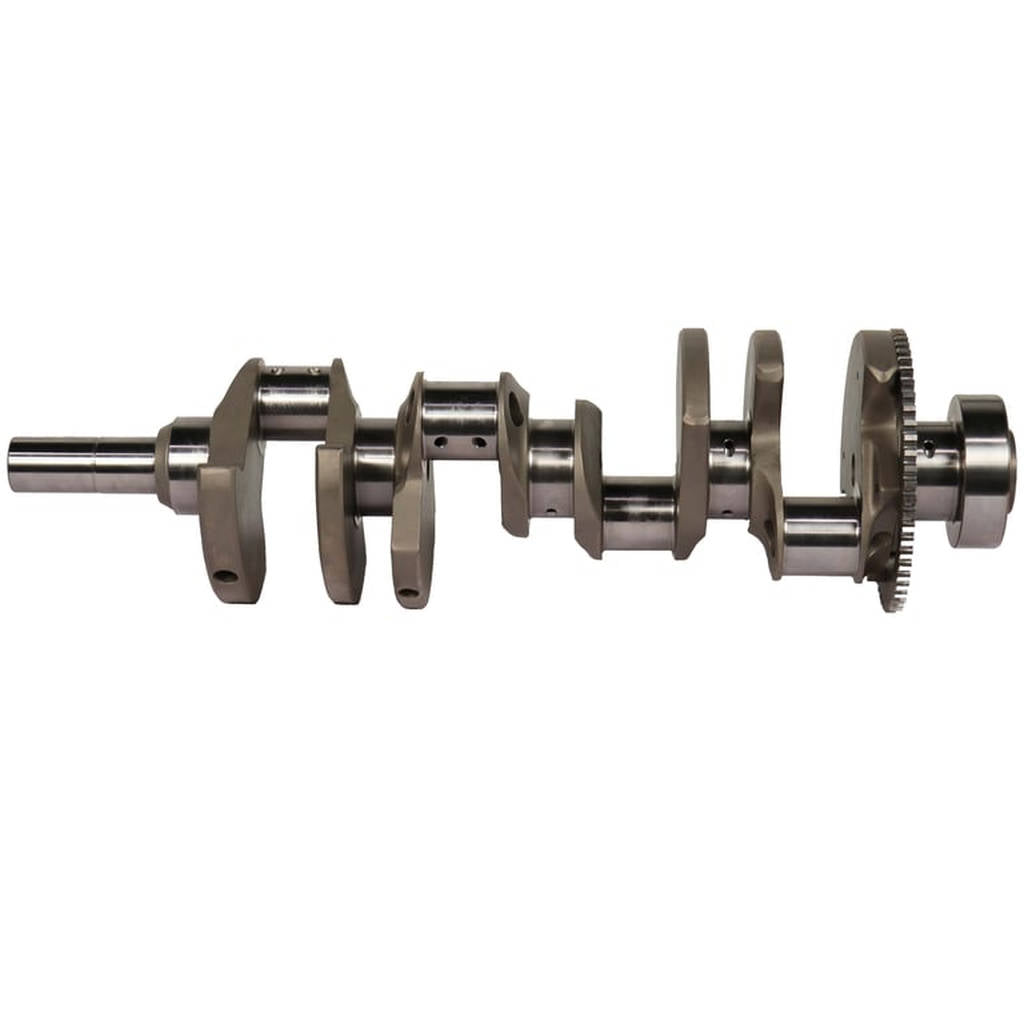
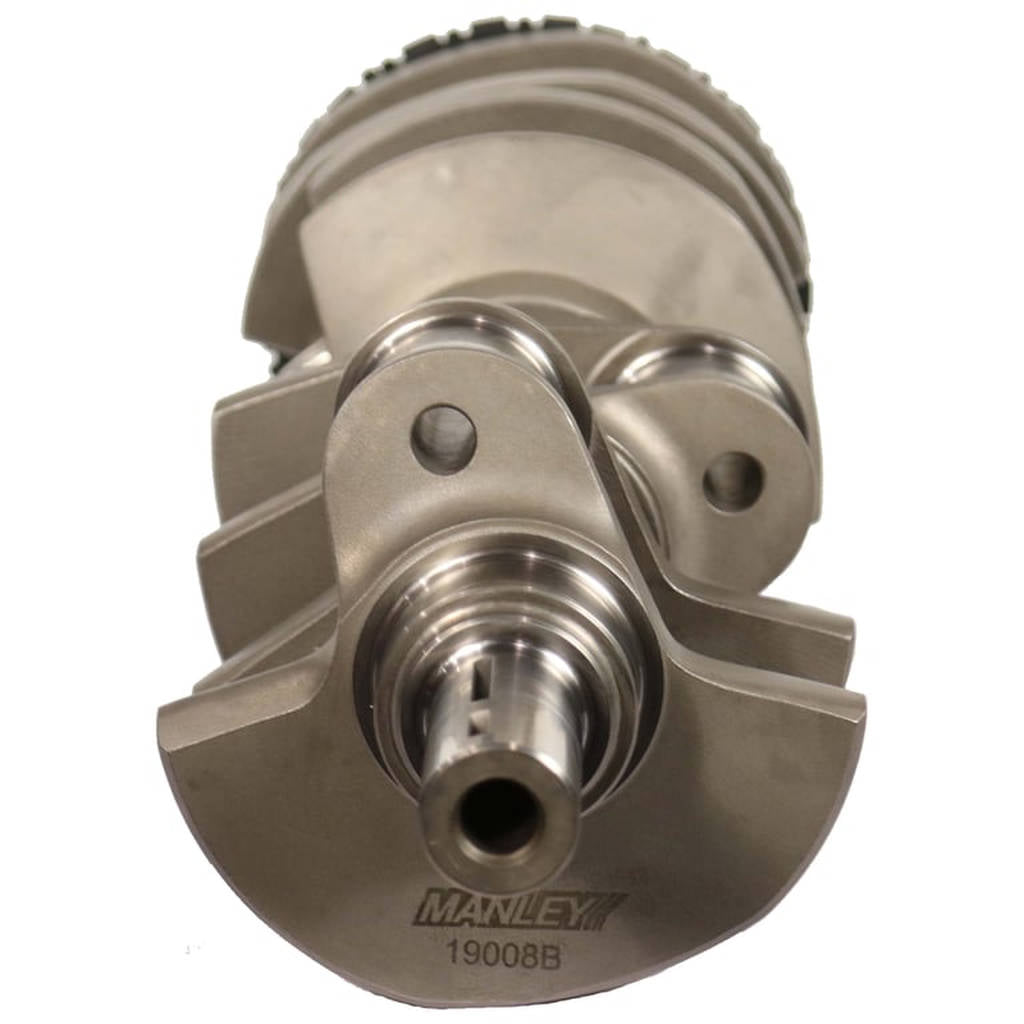
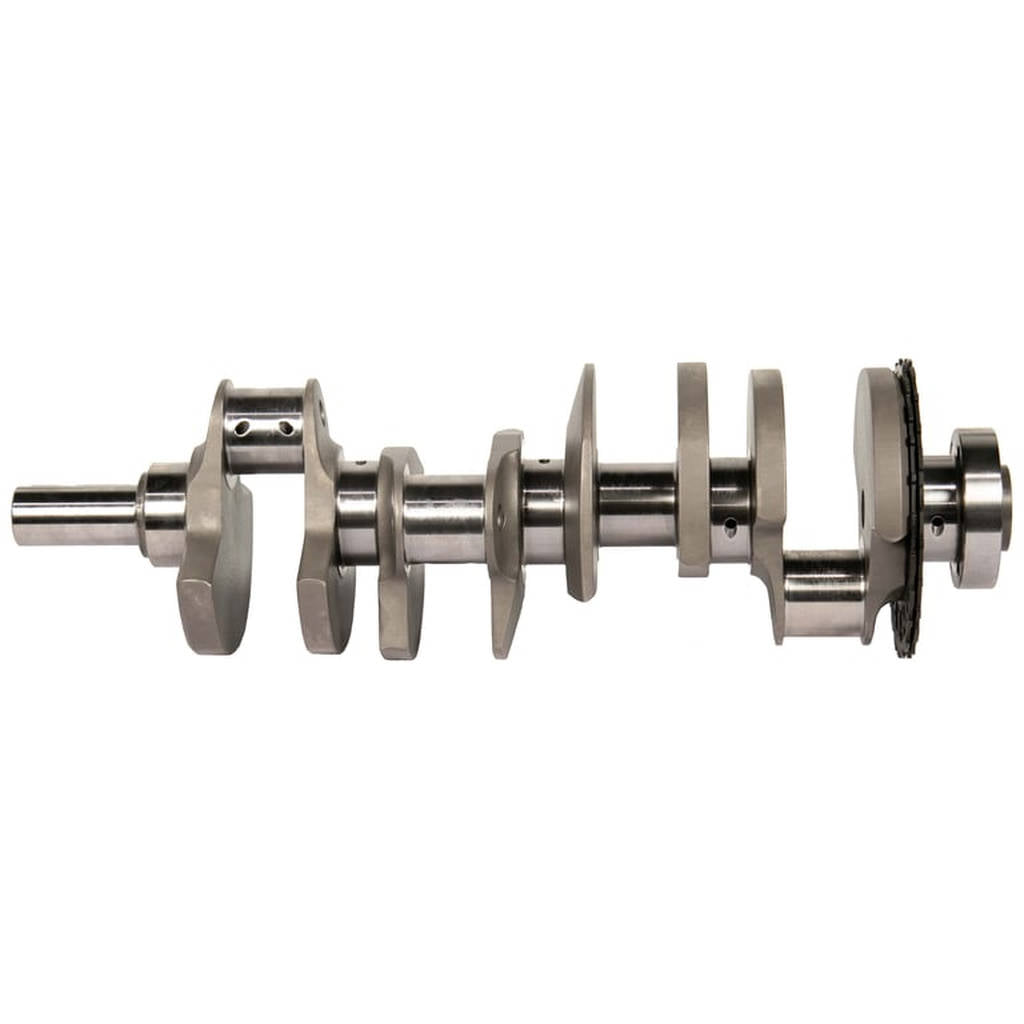
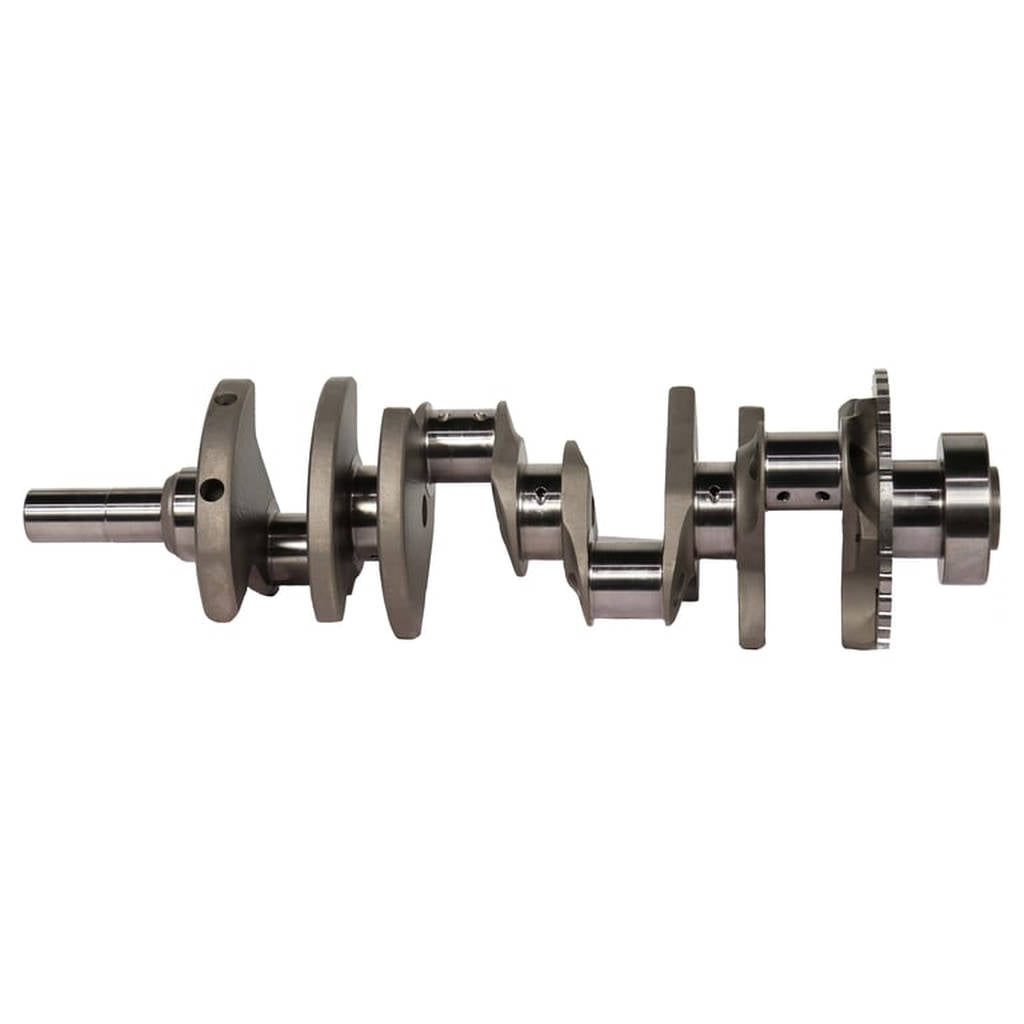
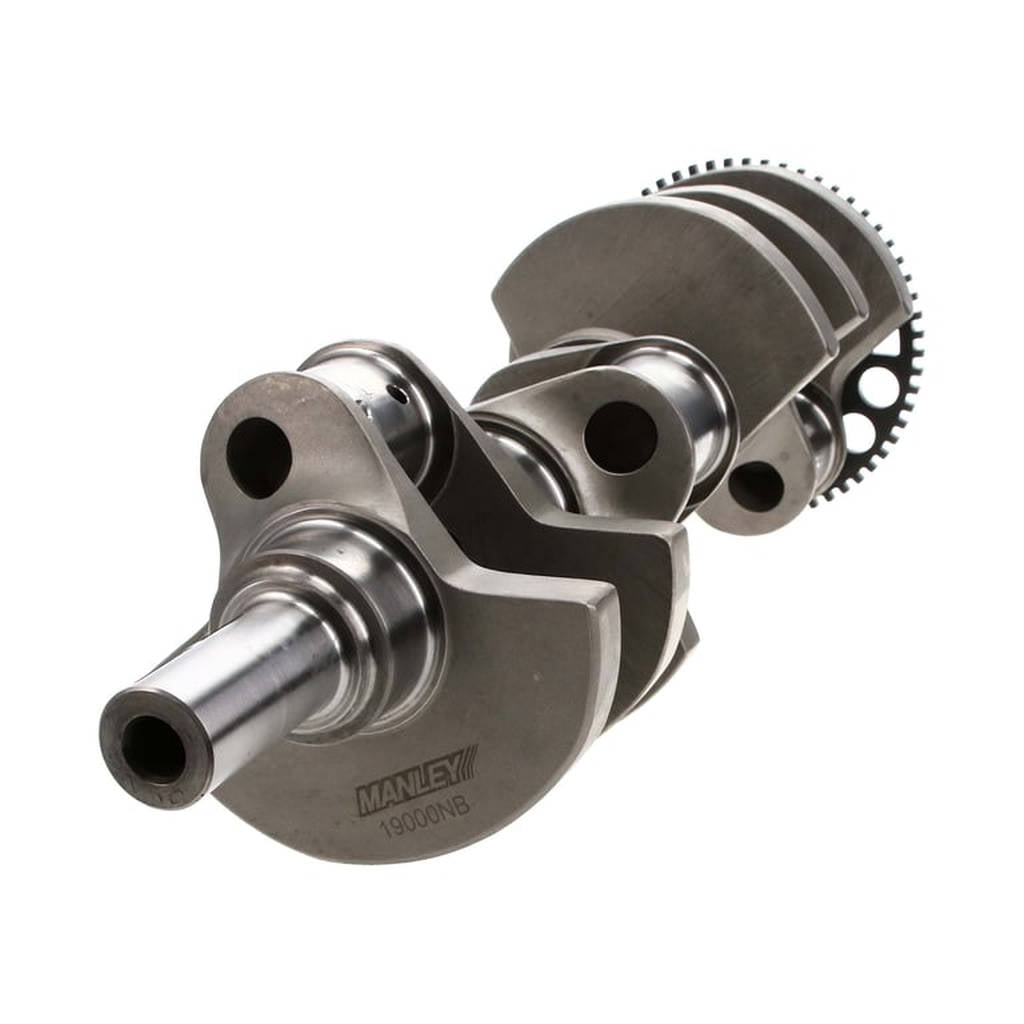
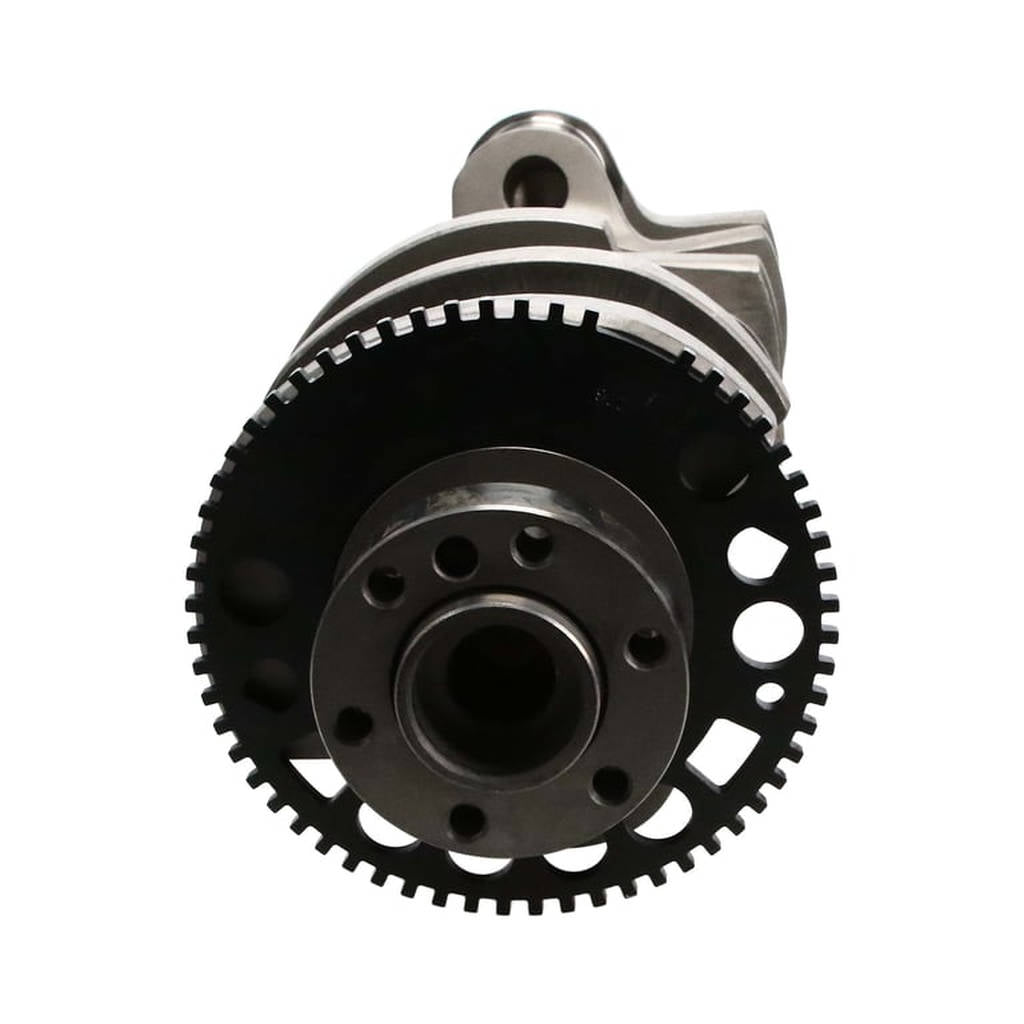
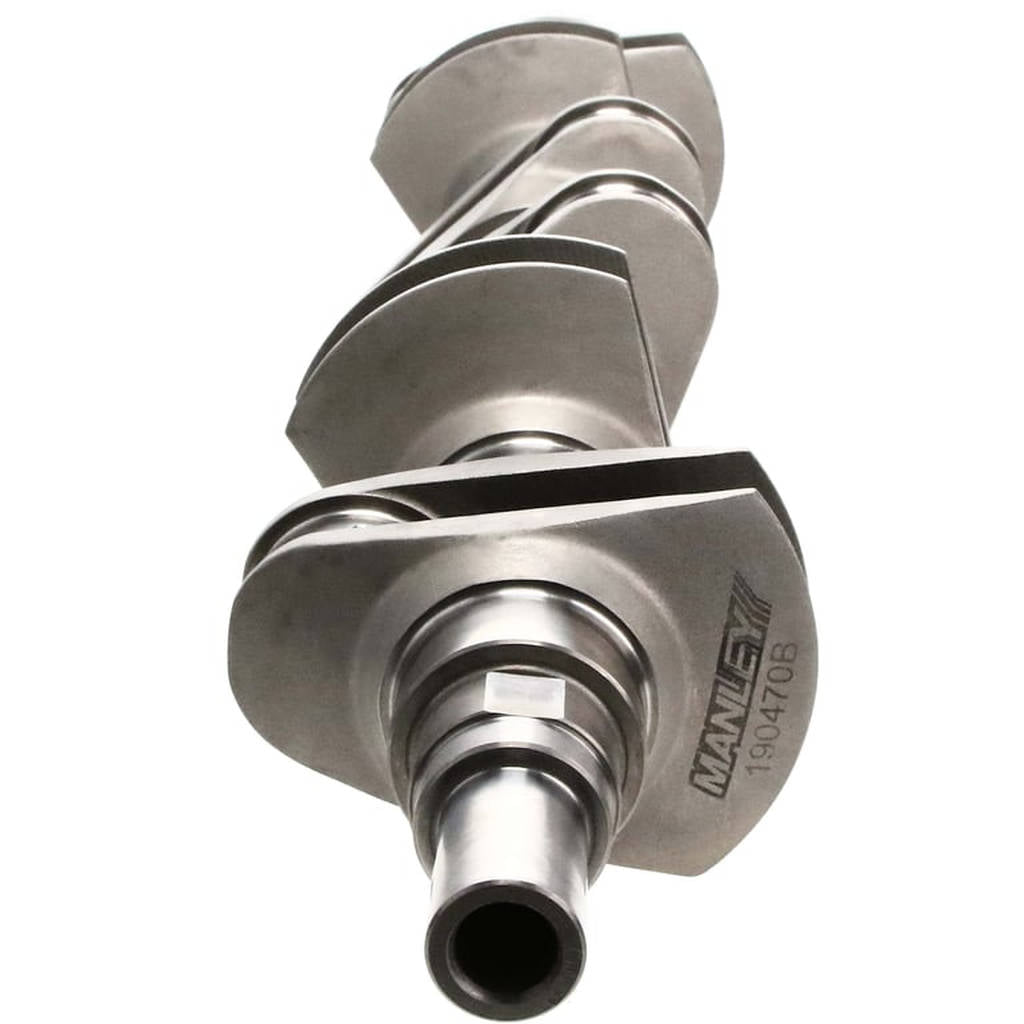
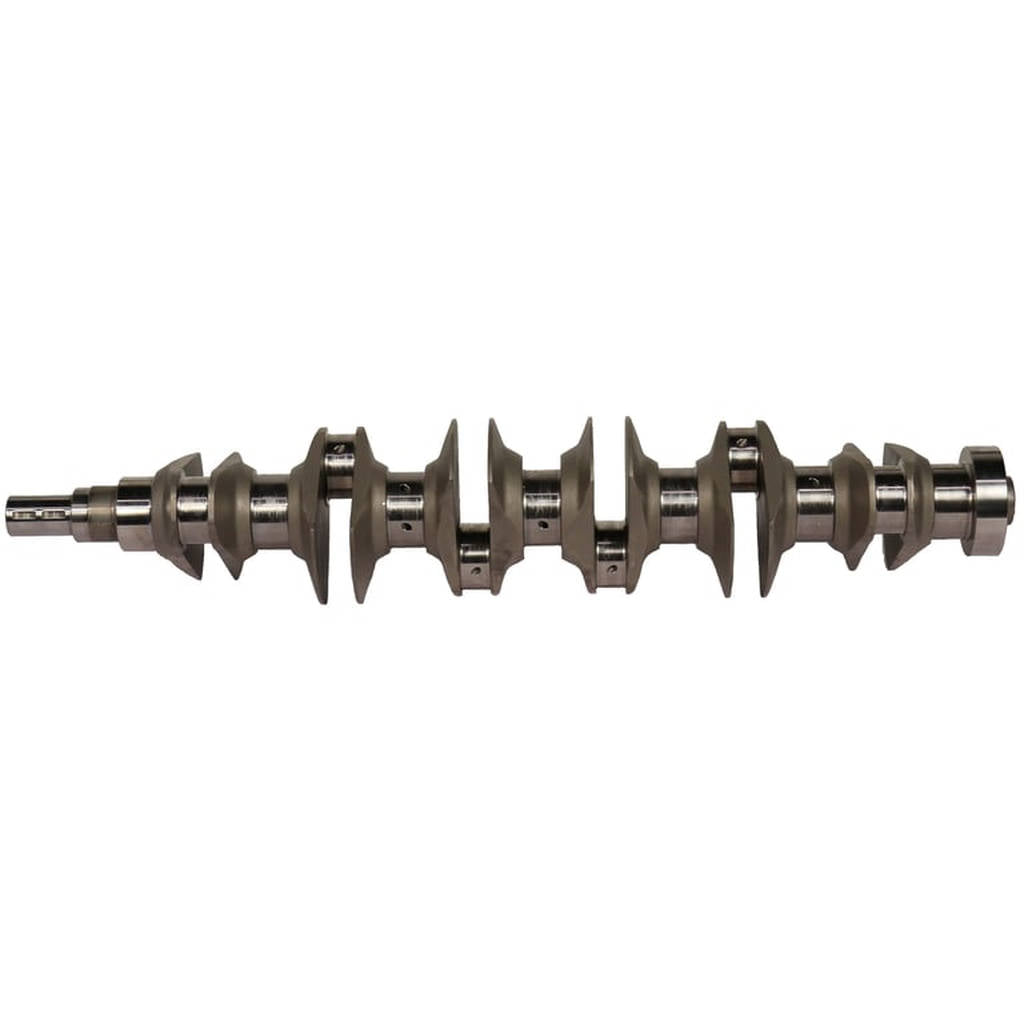
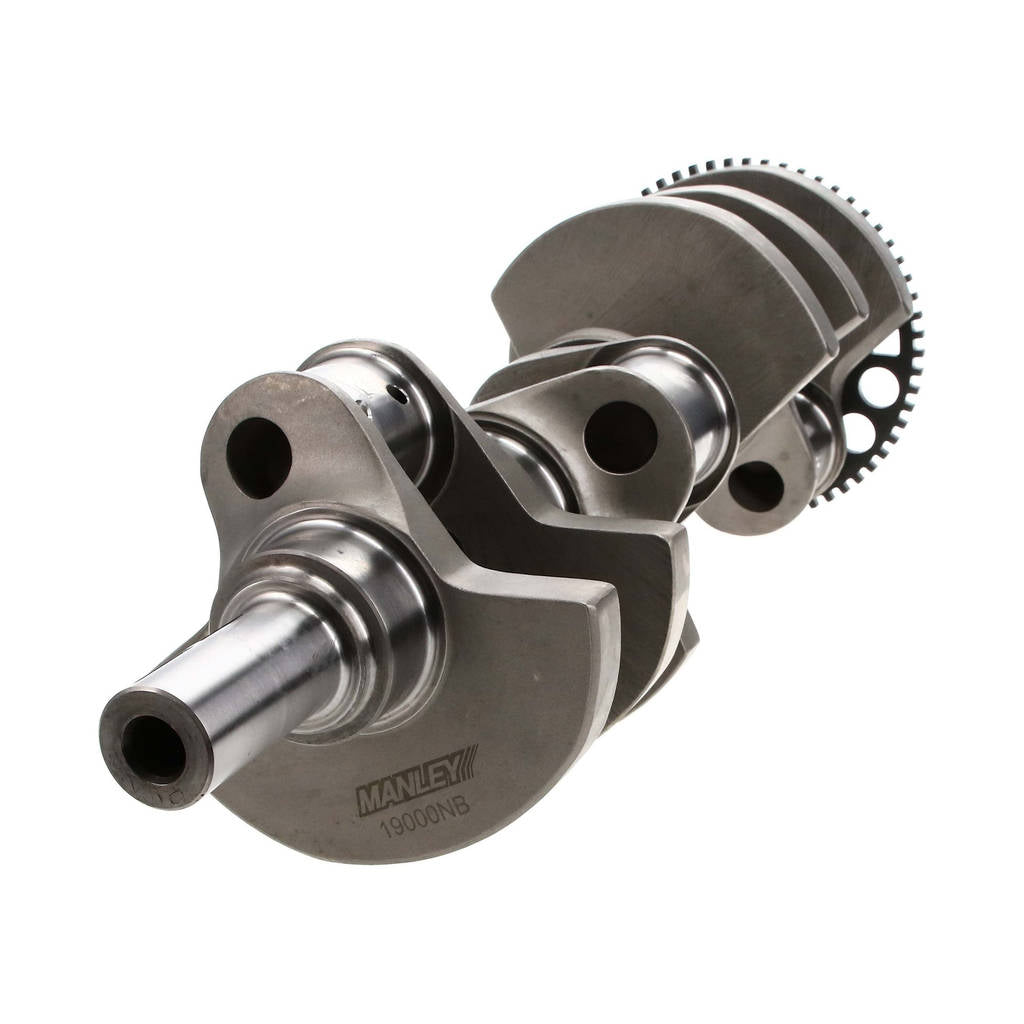
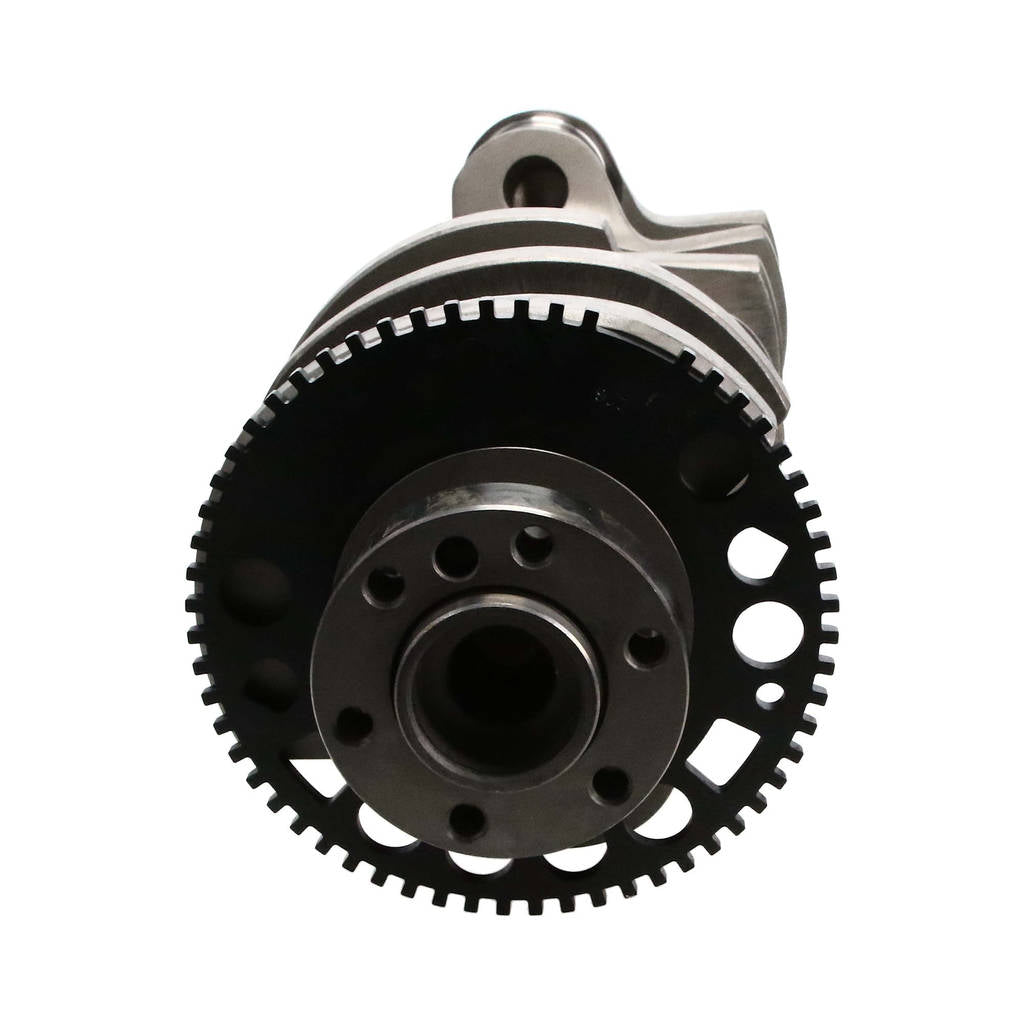
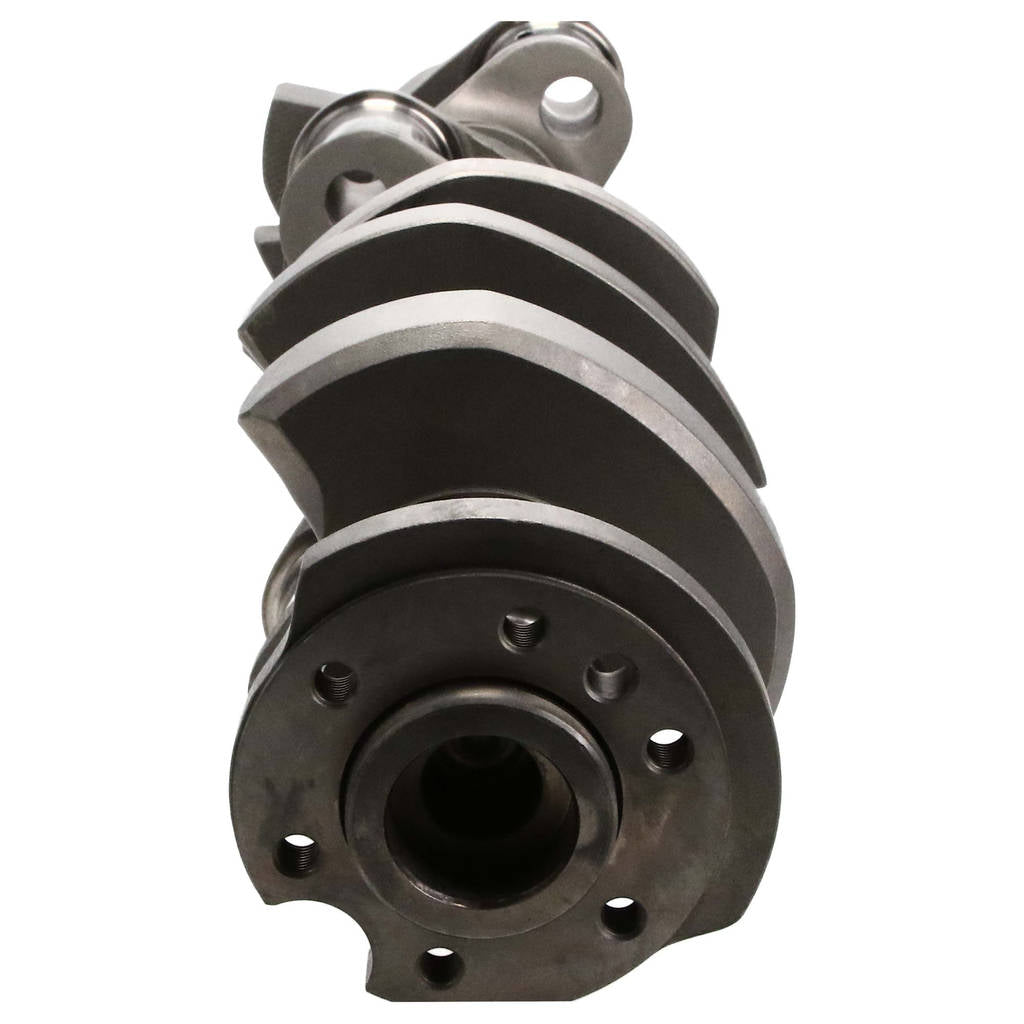
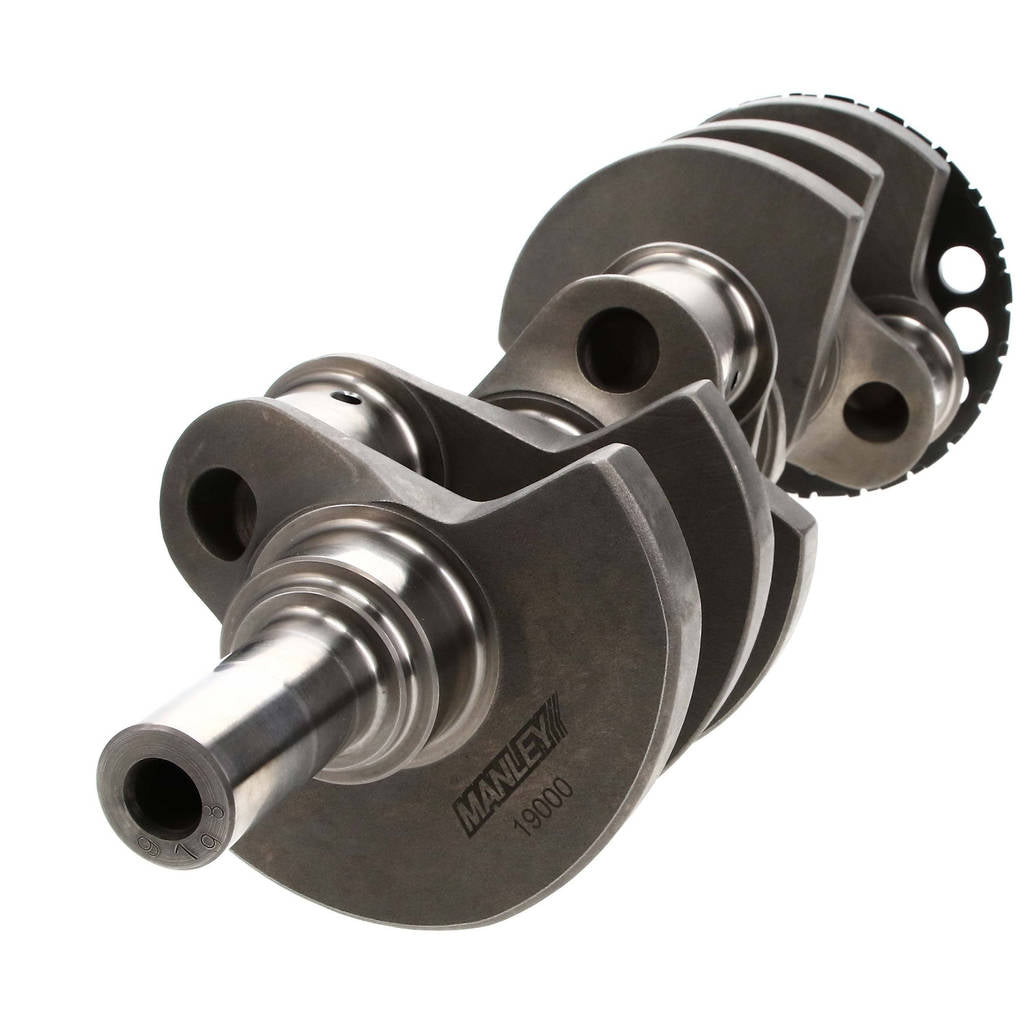
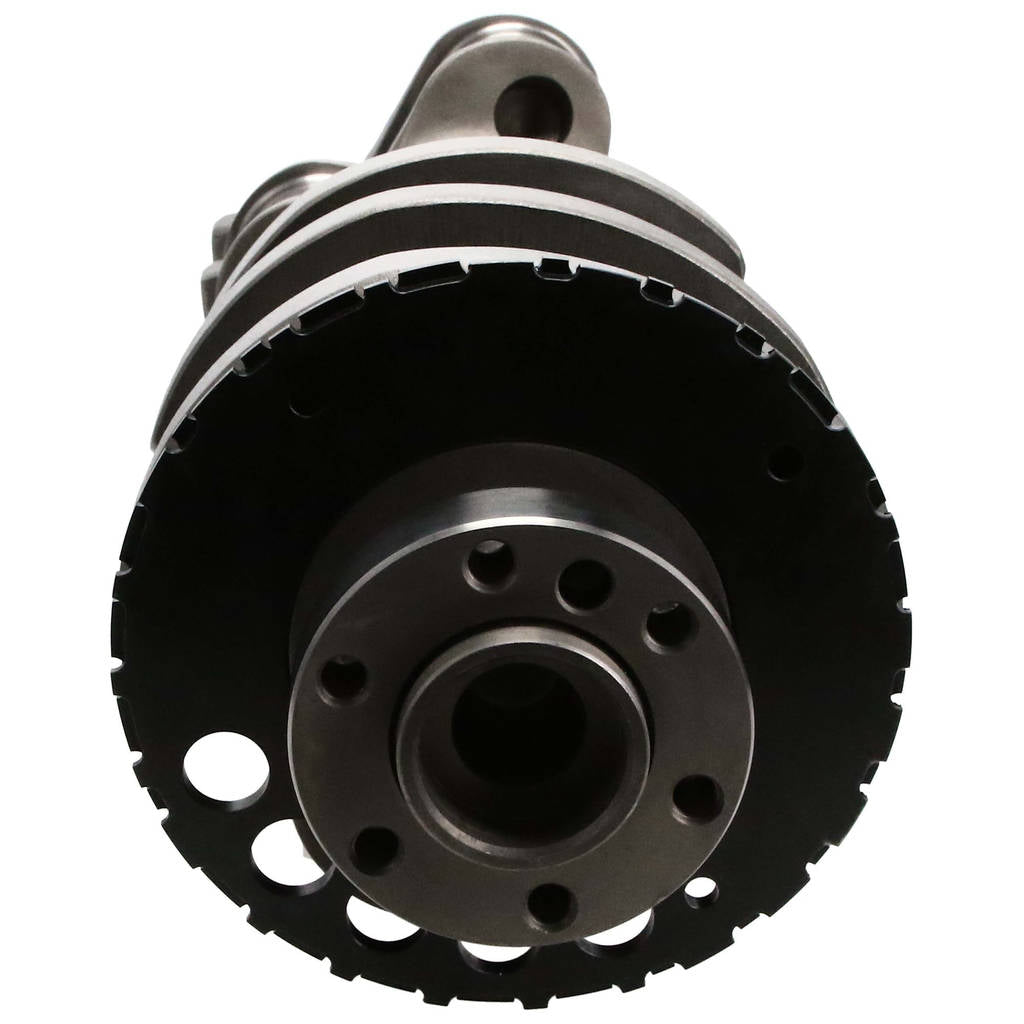
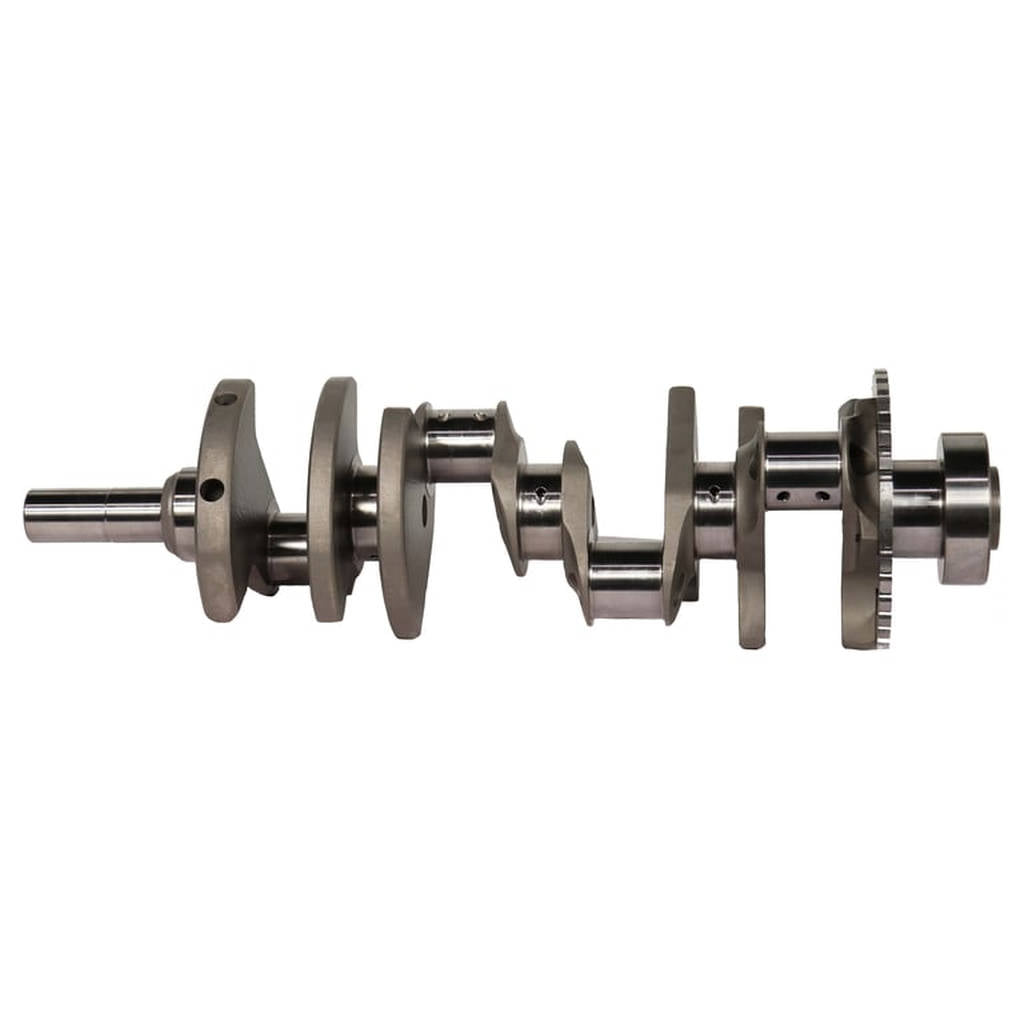
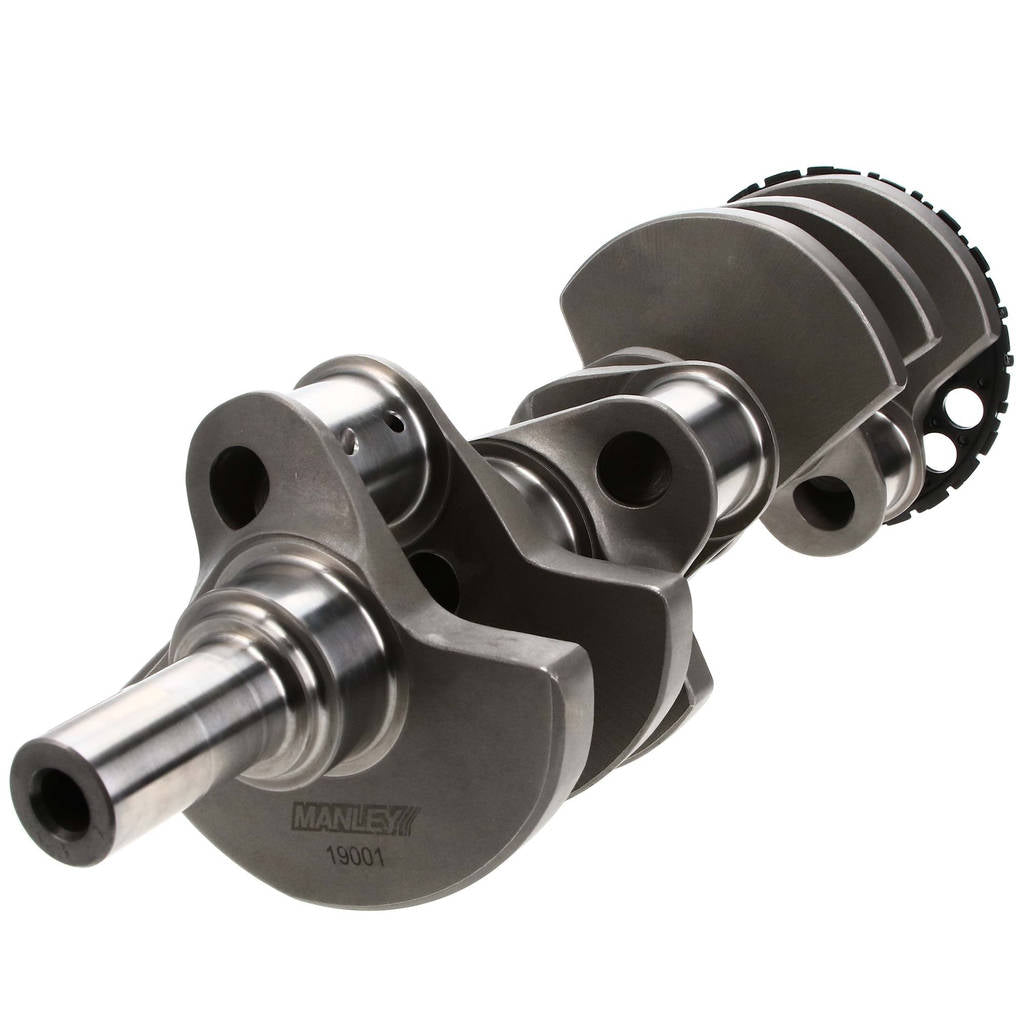
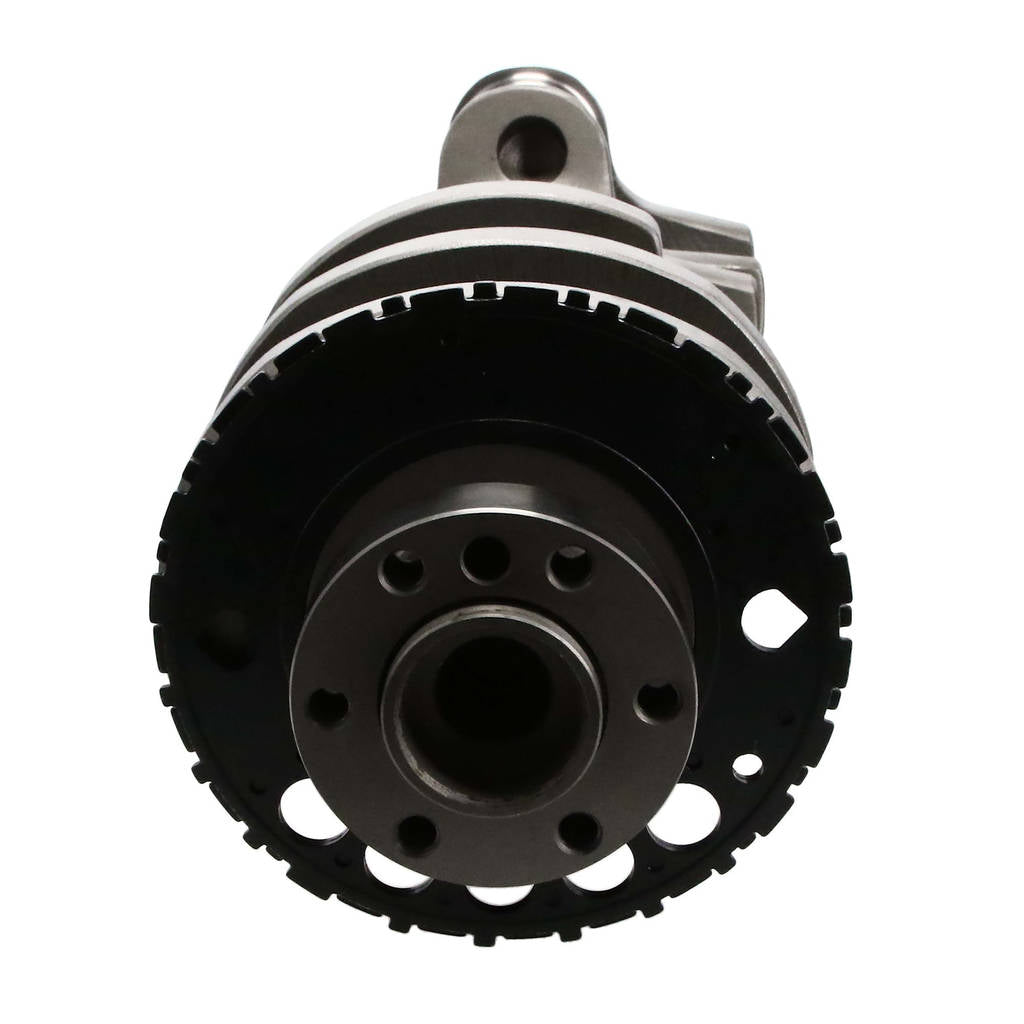
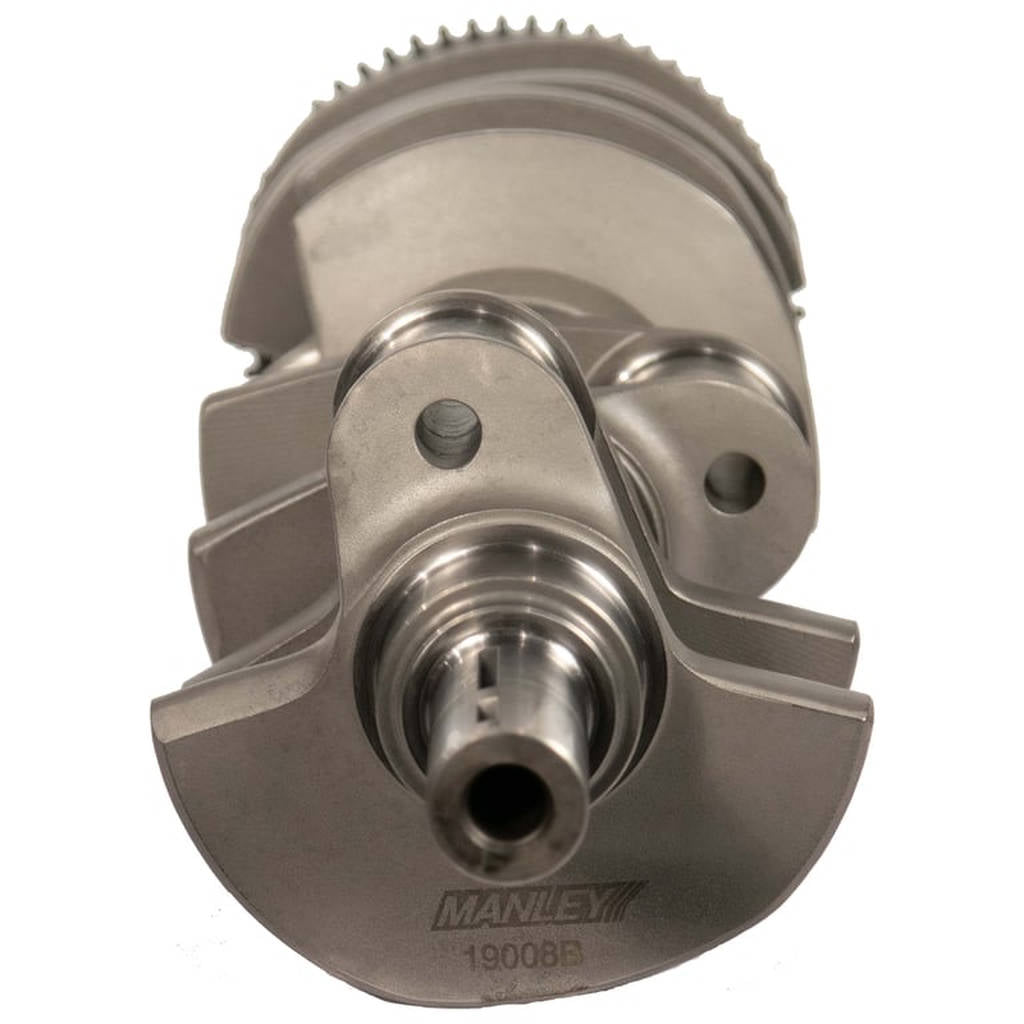
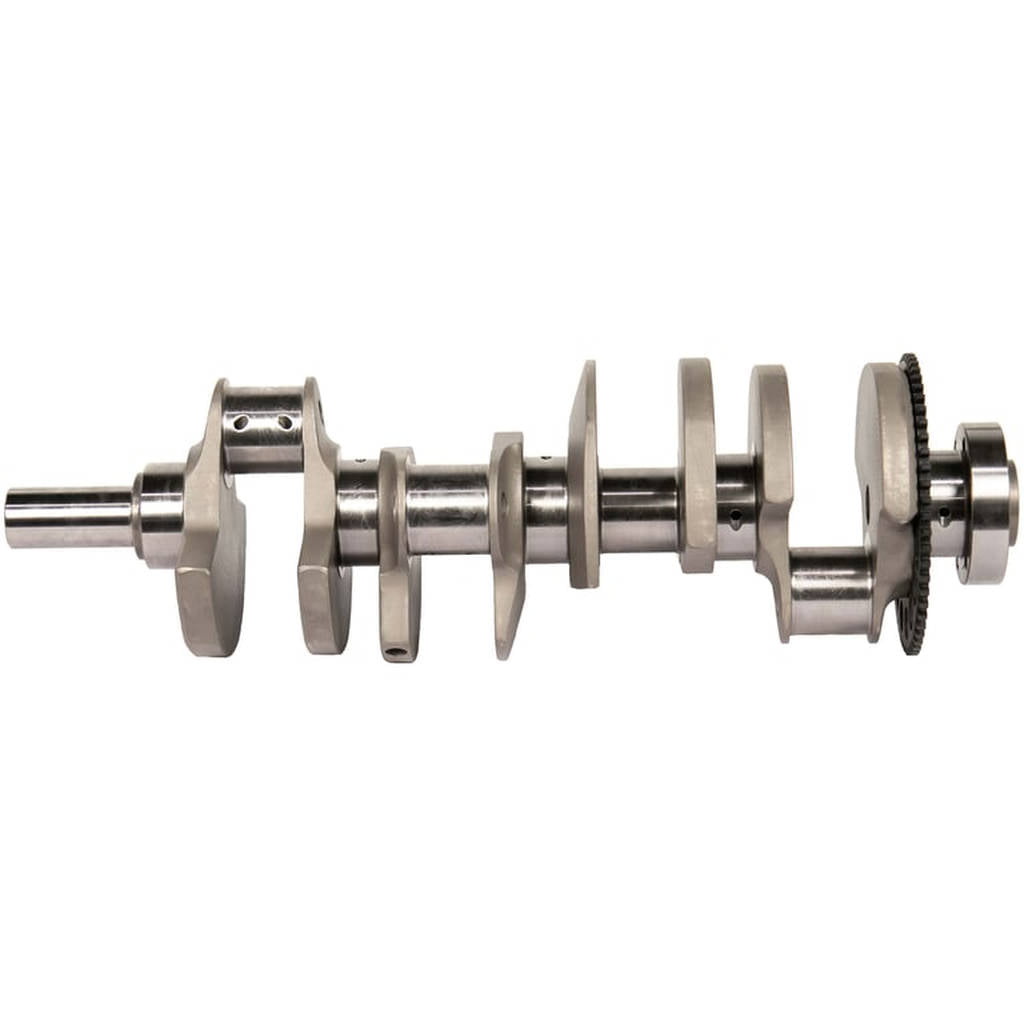
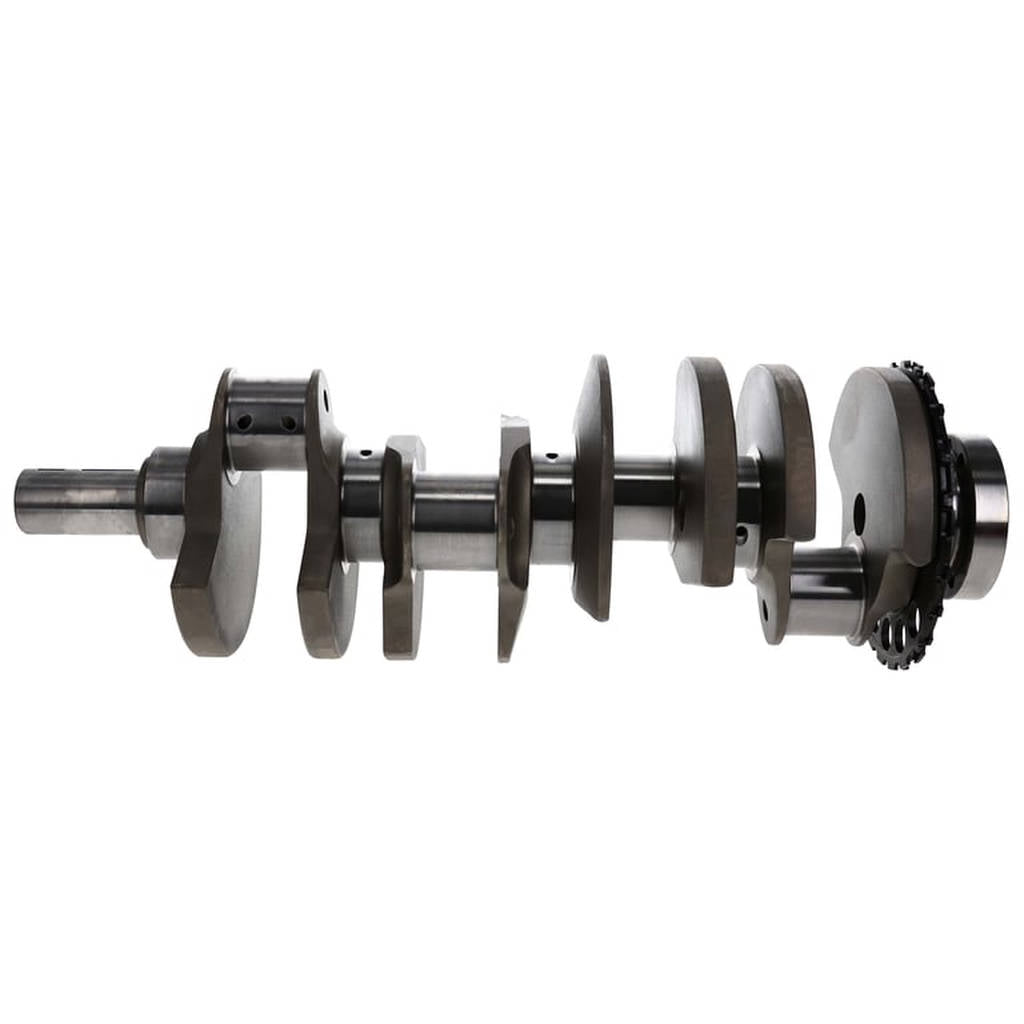
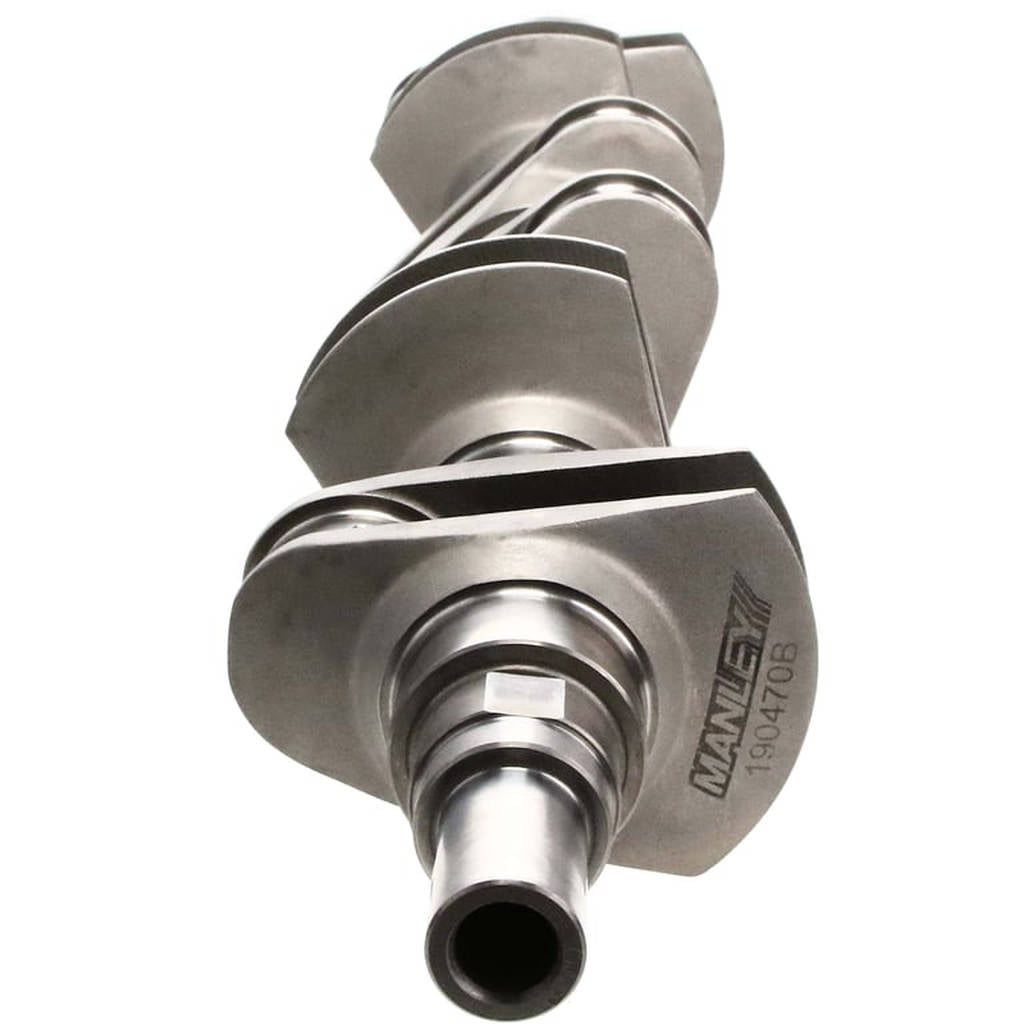
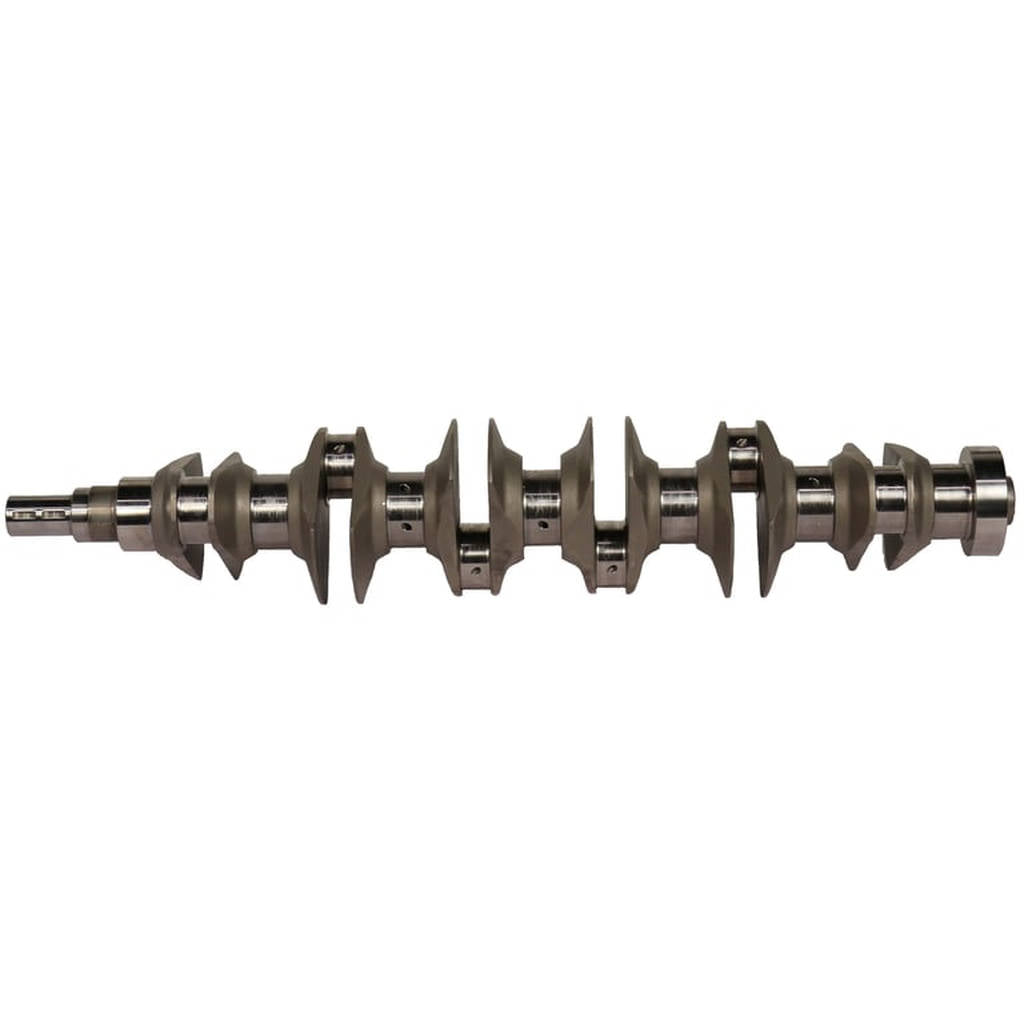
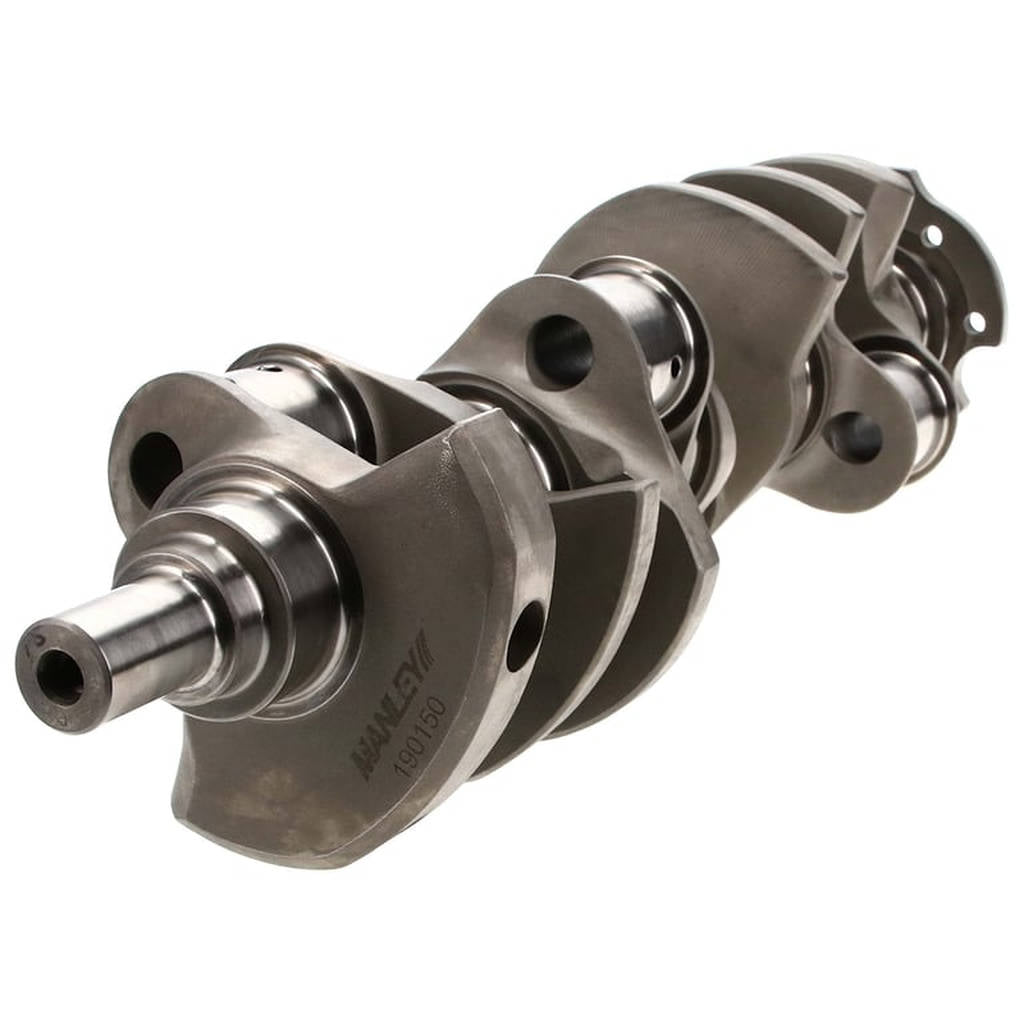
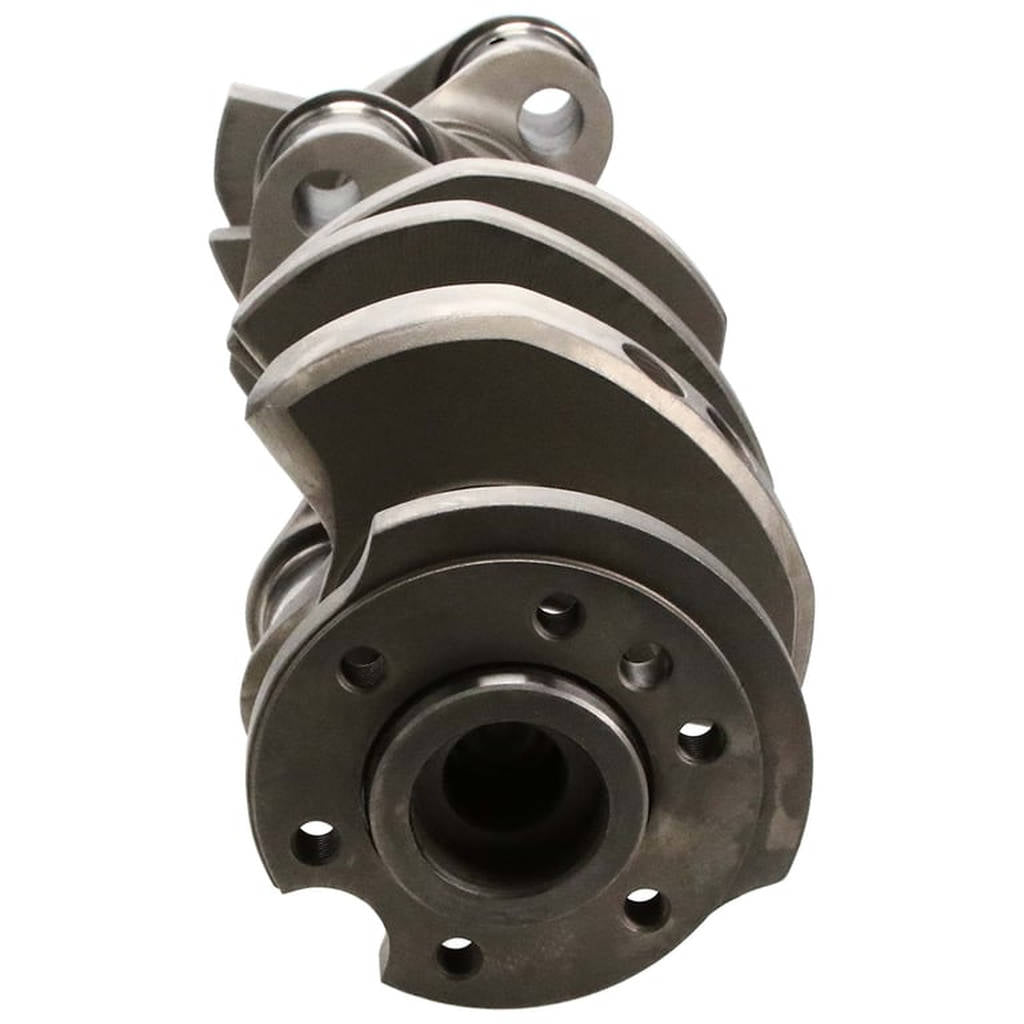
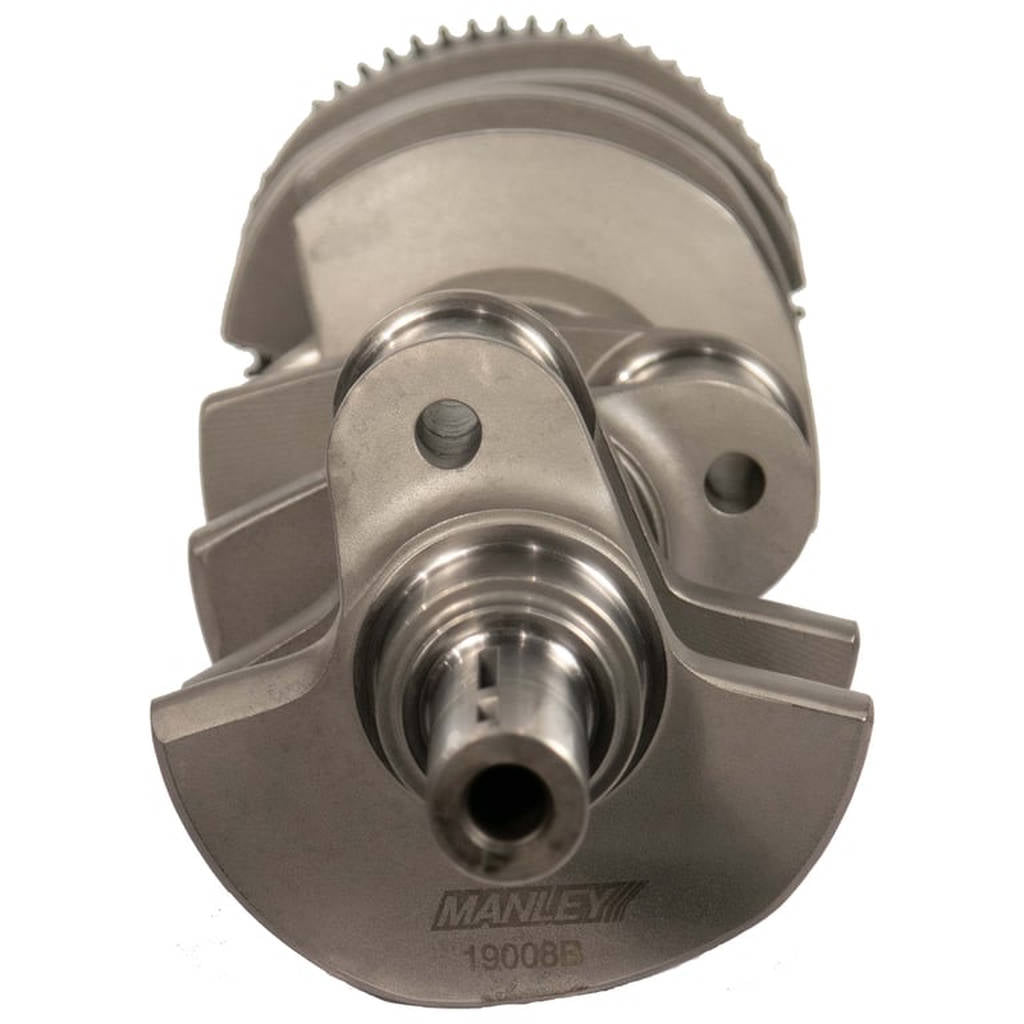
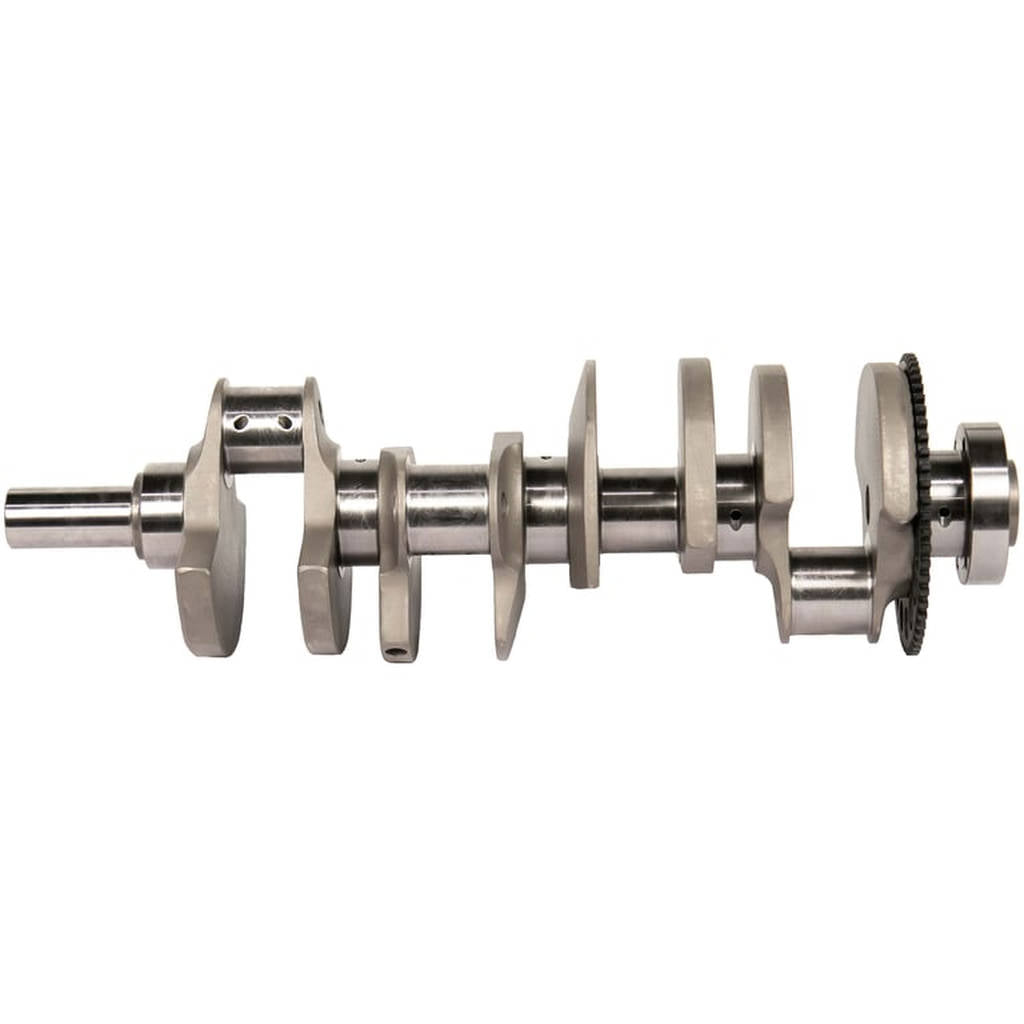
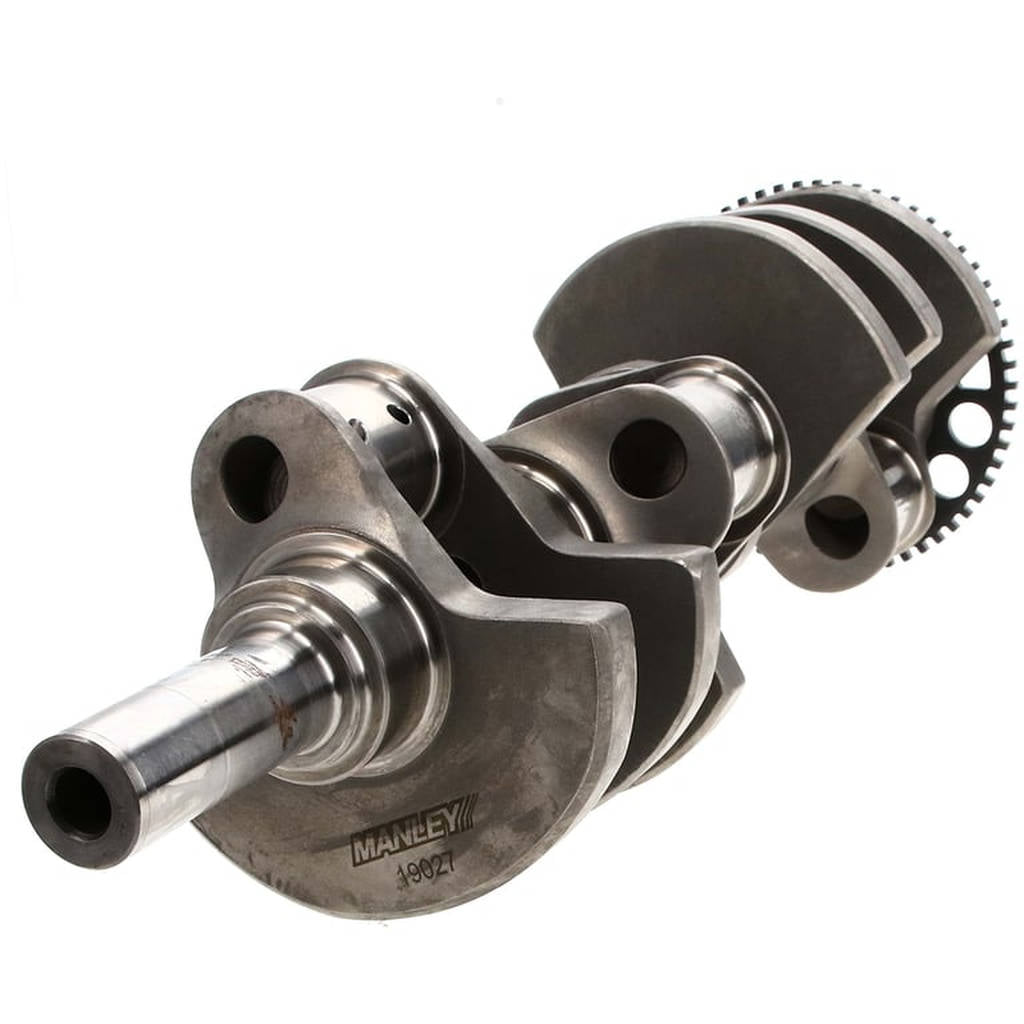
A crankshaft consists of main journals, rod journals, webs, counterweights, oil passages, and mounting surfaces for the pulley, flywheel, or drive components. The main journals are supported by the cylinder block through the main bearings, while the rod journals connect to the big ends of the connecting rods. During engine operation, the piston transfers force through the connecting rod to the rod journal, and because this journal is offset from the axis of rotation, torque is generated. The higher the cylinder pressure and the longer the crank throw, the greater the load on the crankshaft, bearings, and block.
Crankshaft geometry defines piston stroke. Increasing stroke with a stroker kit allows greater displacement and higher mid-range torque, but at the same time increases average piston speed, inertial loads, and the strength requirements for the connecting rods. A shorter stroke, by contrast, can be useful for engines designed to operate at high rpm because it reduces peak piston group speed. For this reason, crankshafts cannot be evaluated by strength alone: they must be treated as a component that shapes the engine’s character.
Crankshaft counterweights play an important role in reducing vibration and inertial loads. They offset part of the mass of the pistons and connecting rods, reduce load on the main bearings, and help the engine operate more smoothly at high rpm. If balancing is inaccurate, vibration increases, bearing wear accelerates, oil film stability deteriorates, and the risk of fatigue cracking rises. In performance engines, where the engine often operates near the upper rpm limit, crankshaft balancing is just as important as material strength.
Oil passages inside the crankshaft supply lubrication to the rod journals. Under load, a stable hydrodynamic oil film, or oil wedge, must be maintained between the journal and bearing to prevent direct metal-to-metal contact. If a passage is contaminated, oil pressure is unstable, or bearing clearance is selected incorrectly, even a strong crankshaft can quickly suffer surface damage. This is why this assembly is always linked to lubrication system quality, bearing selection, and engine assembly precision.
Materials, Machining, and Strength Engineering of Crankshafts
Crankshafts for production engines may be manufactured by casting or forging depending on the engine’s purpose, cost requirements, and load level. For high-performance engines, forged steel crankshafts are often preferred, most commonly made from high-strength chromoly alloys, because they resist impact and cyclic loads better. Forging creates a denser metal structure and improves the part’s ability to withstand tension, torsion, and material fatigue. In an engine operating with high cylinder pressure, fatigue strength often determines the crankshaft’s real service life.
Crankshaft material must withstand not only peak torque, but also repeated load cycles. During every revolution, the crankshaft experiences twisting, bending, and localized stress in the transition zones between journals and webs. These transition areas are critical for durability, so fillet radii, surface quality, absence of stress concentrators, and proper heat treatment, such as nitriding or induction hardening, become highly important. For a car used on the track or in drag racing, this level of detail has practical value: the crankshaft must not simply survive one run, but remain stable after many load cycles.
Journal surface finishing determines bearing and lubrication system performance. Journals must have correct roundness, precise diameter, appropriate surface roughness, and stable geometry across the entire contact width. A surface that is too rough accelerates bearing wear, while incorrect geometry can disrupt the oil wedge. In high-load engines, it is especially important that after machining the crankshaft is checked for runout, microcracks through inspection methods, and compliance with tolerances. Even a small deviation can lead to vibration, bearing overheating, or a drop in oil pressure.
Fasteners connected to the crankshaft also play a separate role. Flywheel bolts, pulley fasteners, locking elements, and other load-bearing connections must withstand sudden torque changes and vibration loads. This is why ARP is indispensable in the context of high-load engines: its high-quality fasteners help maintain stability in assemblies working together with the crankshaft. At the same time, Manley Performance and Tomei are known for solutions used to build strong engine bottom ends, while AMS Performance is associated with complete configurations for powerful vehicle platforms.
Application of Crankshafts in Road, Racing, and Turbocharged Engines
In road tuning, crankshafts are most often considered during serious engine builds when increased power, torque, or displacement is planned. If the vehicle remains suitable for daily use, not only strength matters, but also smooth operation, absence of excessive vibration, stable oil pressure, and compatibility with stock or upgraded systems. In such a configuration, the crankshaft must provide a strength reserve without creating unnecessary issues with balancing, bearing life, or low-rpm operation.
On the race track, the crankshaft operates under prolonged high load. The engine repeatedly enters the upper rpm range, going through cycles of acceleration, engine braking, gear changes, and renewed load after corners. In these conditions, geometric stability, balancing quality, lubrication system performance, and the ability of the journals to maintain correct contact with the bearings are especially important. For a track car, the crankshaft must withstand not only maximum power, but also prolonged operation at high oil temperatures.
In drag racing, the load on the crankshaft has a different character. Over a short period of time, the engine experiences extremely high cylinder pressure, a sudden rise in torque, and strong impact loads on the rod journals. Powerful high-boost engines can create conditions in which a factory crankshaft quickly approaches its strength limit. Here, material, transition radii, heat treatment quality, balancing precision, and compatibility with reinforced connecting rods, pistons, and bearings are all critical.
Crankshafts are also important in diesel engines, where high torque and significant cylinder pressure are present even in stock configurations. After fuel system upgrades, increased boost pressure, or software calibration, the load on the crankshaft, main supports, and rod journals rises even further. In these engines, it is not enough to focus only on peak power: prolonged operation under heavy pulling load, oil temperature, lubrication quality, and the condition of the cylinder block must also be considered. This is why a reinforced or correctly selected crankshaft can be a key reliability component in a diesel project.
How to Choose a Crankshaft for a Specific Engine Configuration
Crankshaft selection begins with the exact engine parameters. It is necessary to know the engine code, number of cylinders, main and rod journal diameters, piston stroke, journal width, auxiliary drive type, compatibility with the flywheel or damper, and cylinder block design. Even a small difference in mounting dimensions, oil passages, or fastening can make the crankshaft incompatible with a specific platform. For a performance engine, this kind of error is especially critical because, after assembly, any mismatch can quickly lead to lubrication problems, vibration, or bearing damage.
The second important criterion is the desired engine character. If the goal is to increase displacement and torque, a crankshaft with a longer stroke may be used. This configuration provides stronger pulling force, but increases average piston speed and connecting rod load. If the engine is being built for high rpm, excessive stroke increase may be undesirable. In that case, low inertia, precise dynamic balancing, and the ability of the crankshaft to operate stably in the upper rpm range become more important, for example with lightweight crankshafts using knife-edged web profiles.
Related components must also be considered. The crankshaft must work together with the connecting rods, pistons, bearings, flywheel, torsional damper, and lubrication system. If a crankshaft with a different stroke is installed, piston position at top and bottom dead center changes, along with rod geometry, compression ratio, and cylinder wall loading. This may require different pistons, connecting rods, or block machining. Therefore, crankshafts should be selected as part of a complete engine assembly, not as an isolated component.
Balancing must be considered during selection. The crankshaft works together with the flywheel, clutch, damper, and piston-and-rod assembly, so final stability depends on the entire rotating assembly. For high rpm and performance use, it is advisable to balance the complete set rather than evaluating the crankshaft alone. Incorrect balance can cause vibration, reduced bearing life, cracks in fasteners, and unstable engine operation under load.
The condition of the cylinder block and lubrication system must also be evaluated separately. A new or reinforced crankshaft will not solve the problem if the main bearing saddles in the block have geometric deviations, the oil pump does not provide stable pressure, passages are contaminated, or bearings are selected without considering real clearances. In high-load engines, assembly precision is decisive. The crankshaft must operate within correct tolerances, with high-quality oil, stable temperature, and sufficient lubrication reserve.
The Role of the Crankshaft in Engine Power, Durability, and Stability
A crankshaft does not create power by itself, but it determines whether the engine can safely convert cylinder pressure into torque. When boost pressure rises, compression ratio increases, or the engine operates with more aggressive calibration, loads on the rod journals and main supports increase sharply. If the crankshaft is not strong enough or has weak points in its geometry, it can develop microcracks, deformation, or surface damage. In the worst case, crankshaft failure leads to complete powertrain failure.
Crankshaft durability depends on the combination of material, machining quality, balancing, bearing condition, and lubrication stability. If the oil film between the journal and bearing is maintained, the crankshaft can withstand significant loads for a long time. If oil pressure drops, clearance is incorrect, or the engine overheats, journal surfaces are damaged quickly. This is why, in a high-performance engine build, the crankshaft is always considered together with the oil pump, baffled oil pan, bearings, oil cooling, and assembly quality.
A correctly selected crankshaft also provides a margin for future project development. If the engine bottom end already has a strong crankshaft, reinforced connecting rods, suitable pistons, and a stable lubrication system, it becomes easier to move to higher boost pressure, a different fuel composition, a more efficient turbocharger, or increased displacement. If the crankshaft remains the weak link, any increase in torque creates a risk of mechanical failure. In this sense, the crankshaft is not just a rotating component, but the structural foundation of the entire engine build.
Crankshafts as the Foundation of a Strong Engine Bottom End
In a high-performance engine, the crankshaft operates at the center of the load path. It receives force from the connecting rods, transfers torque to the drivetrain, maintains the balance of the rotating system, and defines the mechanical stability of the engine bottom end. If the crankshaft is selected correctly, the engine receives a reliable foundation for increased power, high rpm, elevated cylinder pressure, and prolonged operation under load. If this component does not match the project level, even high-quality pistons, connecting rods, turbocharger, and electronic calibration cannot ensure long-term durability.
For fast road use, track driving, drag racing, and professional motorsport, crankshafts must be viewed as part of a complete engine system. They must match the piston group, connecting rods, bearings, cylinder block, lubrication system, flywheel, and actual rpm range. This approach makes it possible to build an engine that not only produces high power, but also maintains mechanical stability after repeated load cycles. In a properly engineered engine build, the crankshaft is one of the components that determines not only dyno results, but also real durability under demanding operating conditions.
At ATOMIC-SHOP, you will find not just crankshafts, but a complete engineering solution for building a strong engine bottom end capable of operating under high cylinder pressure, elevated rpm, and intensive road, racing, and motorsport conditions.