



















Turbocharger Housings as a Flow-Shaping Element in Forced Induction Systems
Turbocharger housings are not merely protective shells but complex aerodynamic components that define the direction and velocity of exhaust gases and airflow. Every curve of the internal volute is engineered to convert kinetic and thermal energy into mechanical work of the rotor with minimal losses. In modern performance tuning, the housing serves as a key tool that allows modification of turbocharger behavior without full replacement, adapting the system to specific applications — from daily driving to drifting or drag racing.
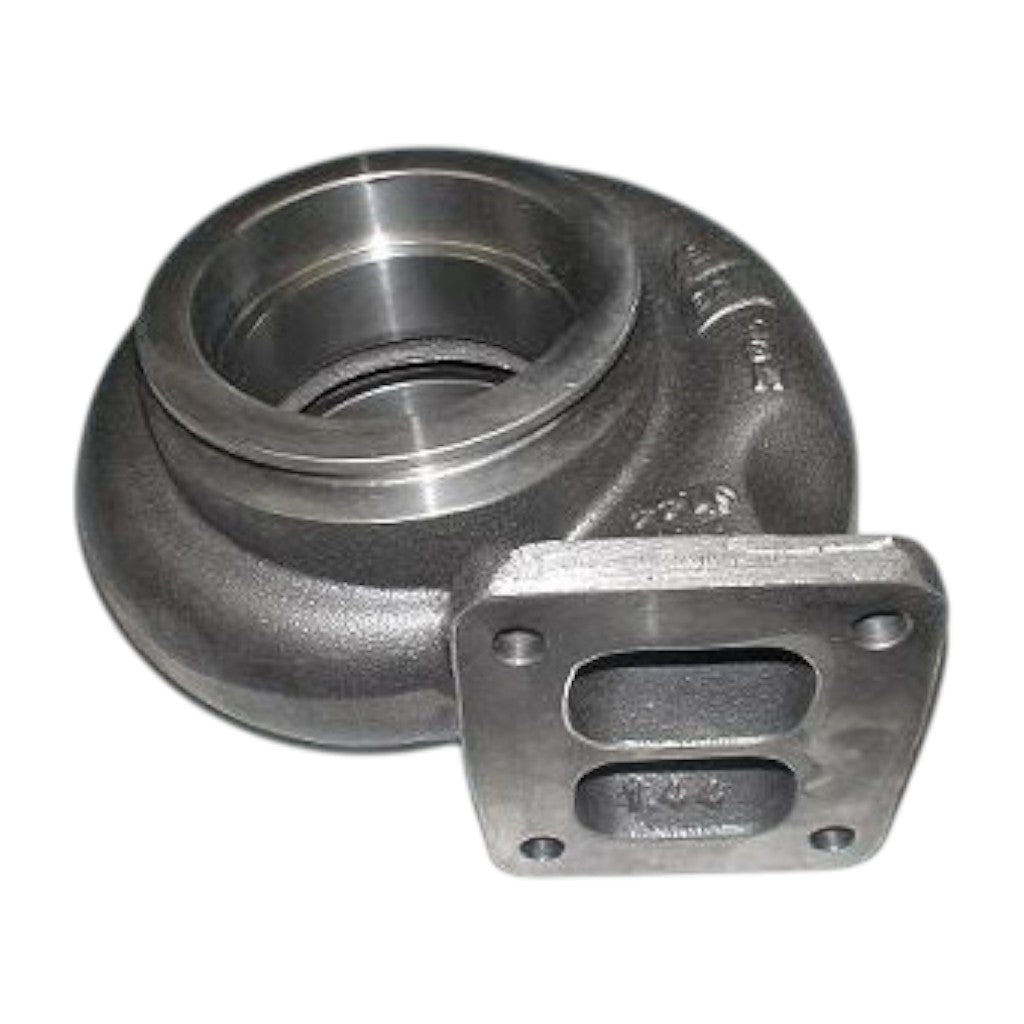
Within a turbocharger, two functionally distinct types of housings are used. The turbine (“hot side”) housing operates under extreme temperatures, directing exhaust gases onto the turbine wheel, while the compressor (“cold side”) housing is responsible for air compression efficiency and charge density. The geometry of these elements directly determines the efficiency (η) of the forced induction system, turbo response speed, and boost stability at high RPM.
The ATOMIC-SHOP range includes turbocharger housings from leading manufacturers such as Garrett Advancing Motion, TiAL Sport, and Precision Turbo. These components are designed for precise boost system tuning and stable operation under high temperature and load conditions.
Turbine Housing: Hot-Side Physics and Flange Selection
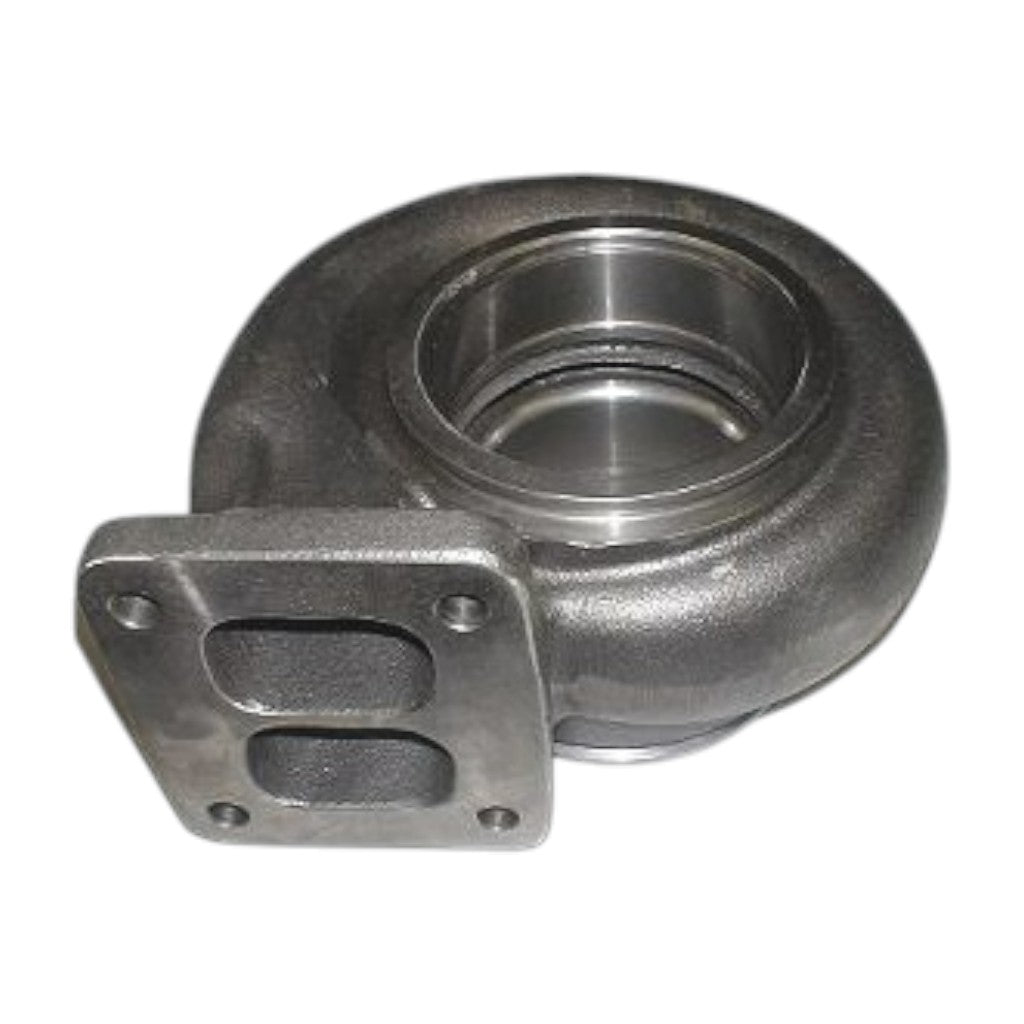
The turbine (“hot side”) housing is the most thermally stressed component of the turbocharger. It is typically manufactured from high-strength cast iron or specialized steel alloys with nickel content (such as Ni-Resist), allowing it to withstand temperatures exceeding 900–1050°C without structural degradation. In addition to internal geometry, the connection type to the exhaust manifold plays a critical role in sealing and serviceability:
- T25 / T3 / T4: Traditional four-bolt flanges. They differ in inlet area, with T4 providing the highest flow capacity for large displacement engines.
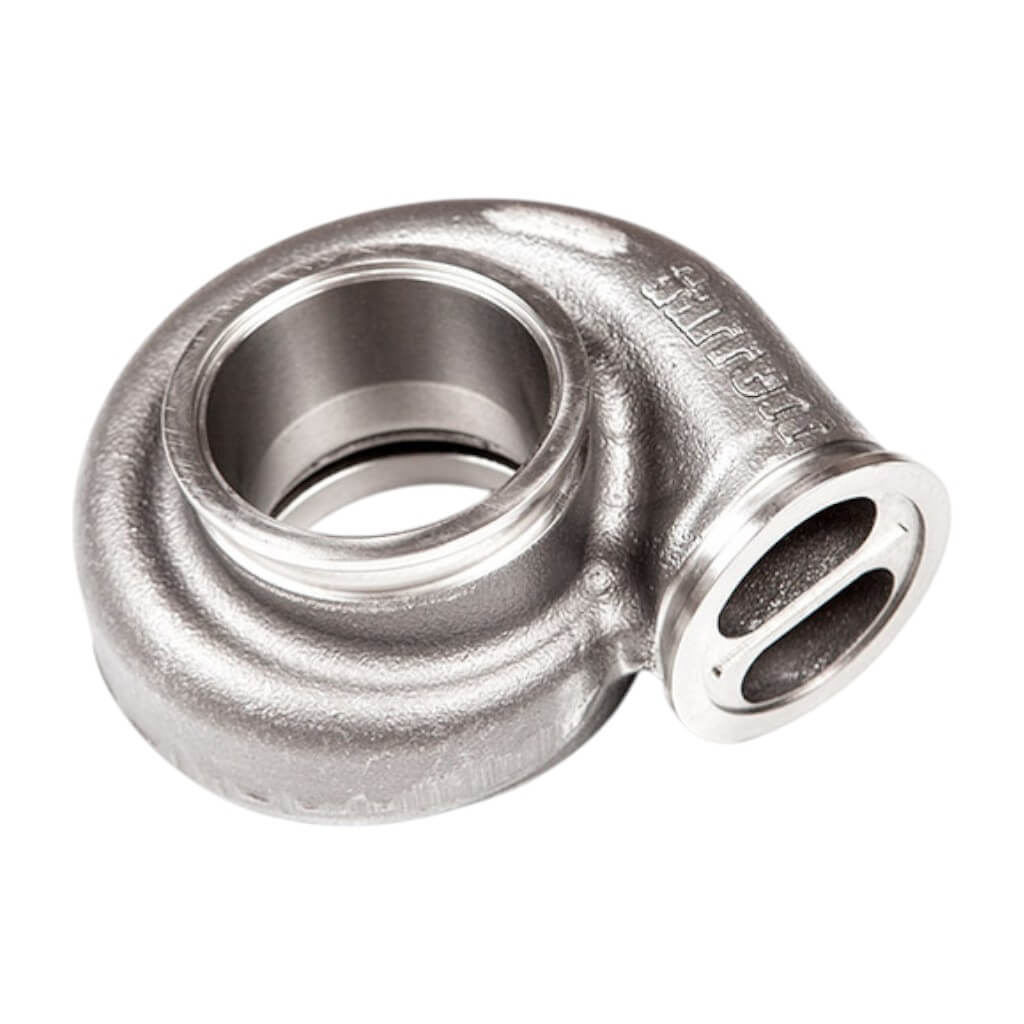
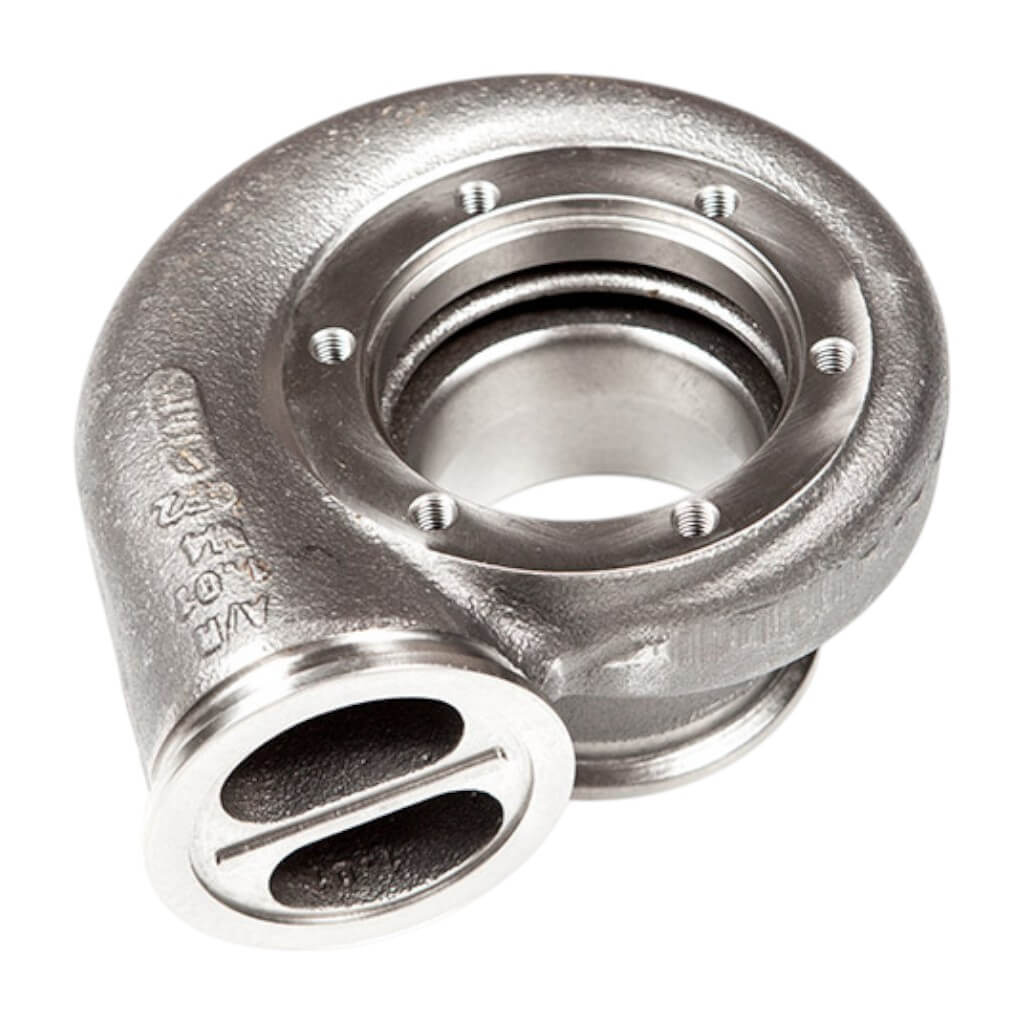
- V-Band: The most popular standard in professional tuning. It ensures perfect alignment with the manifold and allows quick turbo removal for inspection.
- Twin-Scroll: A dual-channel design that separates exhaust pulses. It reduces backpressure between cylinders, improves scavenging, and delivers significantly earlier boost compared to single-scroll designs.
A/R Ratio: A Tool for Fine-Tuning Performance
The A/R (Area/Radius) ratio is a mathematical expression of housing flow capacity. It represents the relationship between the cross-sectional area at the inlet and the radius from the shaft axis to the centroid of that area.
Choosing the correct A/R is always a compromise. Lower values (0.48–0.63) accelerate gas velocity, allowing the turbocharger to spool earlier. This is ideal for drifting, where instant throttle response is critical for maintaining control. Higher values (0.82–1.06+) increase the effective flow area, reducing exhaust restriction. This allows the engine to operate more efficiently at high RPM, which is essential for drag racing and Time Attack, where the engine spends most of its time in the upper RPM range.
Compressor Housing and Aerodynamic Loss Reduction
The compressor (“cold side”) housing is typically made from aluminum alloys to reduce weight and improve heat dissipation. Its internal geometry is designed to convert airflow velocity into static pressure. Modern housings from Garrett or TiAL often feature a Ported Shroud (anti-surge) system. This is a circular port at the inlet that allows air recirculation under critical conditions, preventing compressor surge — a dangerous phenomenon where airflow becomes unstable and creates shock loads on the shaft.
For extreme configurations, compressor housings may feature enlarged intake openings of up to 4 inches, allowing the turbocharger to draw the required air volume without creating vacuum before the compressor wheel.
Applications in Custom Builds and Motorsport
Thanks to the modular architecture of professional product lines (such as Garrett G-Series), housings can be easily interchanged. This allows drivers to adapt a single turbocharger for different track types. For example, a smaller A/R housing may be used for tight, technical circuits, while a larger A/R is installed for high-speed tracks. This flexibility makes housings one of the most cost-effective ways to alter vehicle behavior without ECU recalibration or replacement of expensive components.
Installation and Maintenance Considerations
During installation, it is essential to ensure perfectly clean mating surfaces and use appropriate heat-resistant fasteners. For the hot side, copper or nickel-based anti-seize compounds are recommended to prevent thread seizure due to high temperatures. Attention should also be paid to sealing rings between the cartridge and housing — any air or gas leakage will result in a significant loss of system efficiency.
At ATOMIC-SHOP, you will find a wide range of turbocharger housings for solving any engineering challenge. Our specialists will help calculate the optimal A/R ratio and select the appropriate components to ensure maximum efficiency and reliability of your forced induction system.