
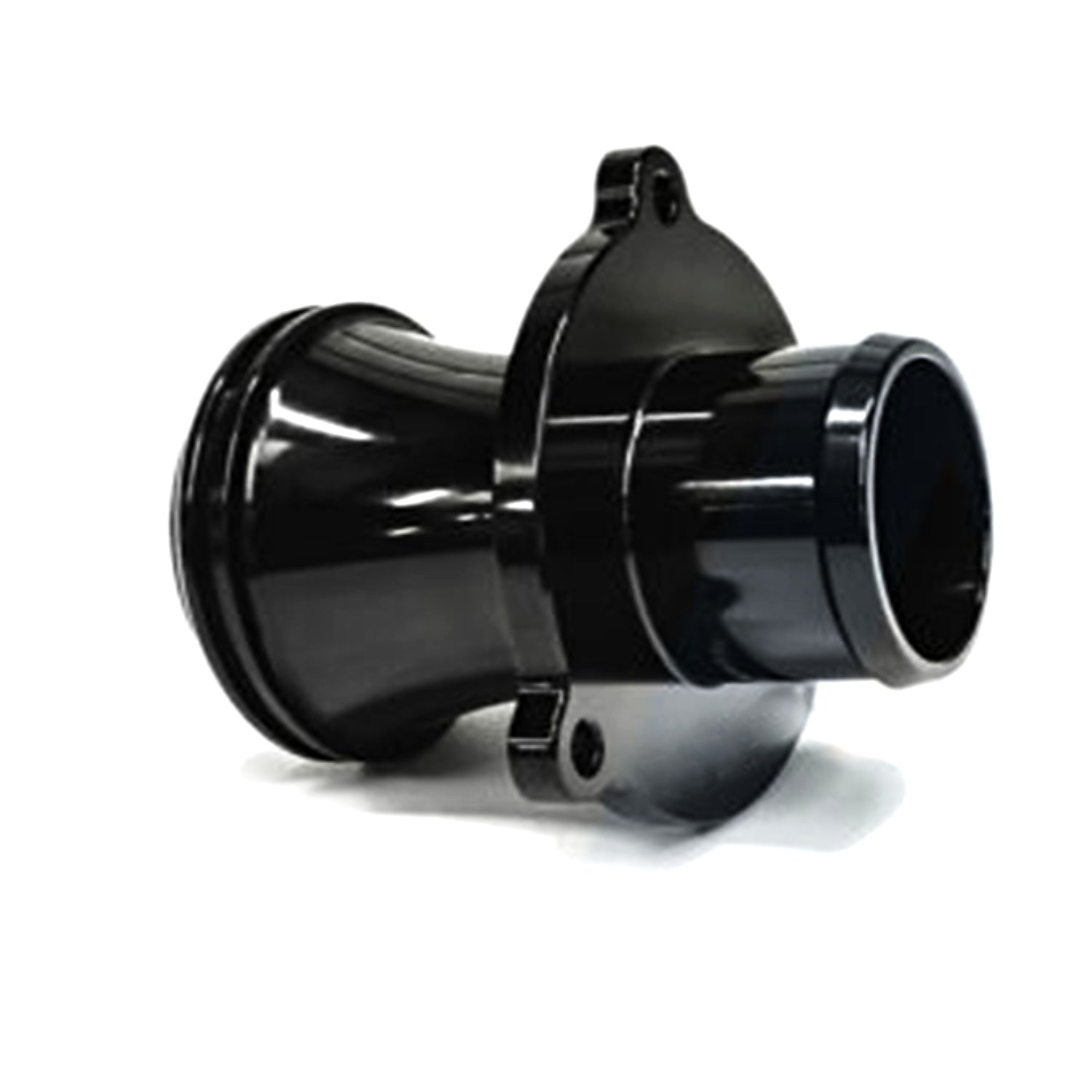
Inlet Pipes in Engine Intake and Forced Induction Systems
Inlet pipes are critical components of the intake system, responsible for delivering unrestricted airflow directly to the compressor inlet of a turbocharger or supercharger. Despite their apparent simplicity, this component acts as the “gateway” of the forced induction system: it defines airflow quality, velocity, and distribution uniformity before compression. Any restriction, narrowing, or turbulence at this stage creates inlet restriction, forcing the turbocharger to expend additional energy and delaying boost response.
In production vehicles, factory inlet pipes are often made from corrugated plastic or soft rubber with internal reinforcement ribs. While this design helps reduce intake noise and production costs, it introduces chaotic airflow turbulence. In high-performance configurations, where every component affects final horsepower output, inlet pipes are optimized to create a smooth, direct flow path with minimal internal resistance.
The ATOMIC-SHOP inlet pipe category includes advanced solutions from engineering leaders such as AMS Performance, Forge Motorsport, Mishimoto, Garrett, Eventuri, and GReddy. These components are designed to eliminate factory bottlenecks and ensure consistent airflow supply even under extreme boost conditions.
Design Features and Materials
Modern performance tuning offers several inlet pipe construction options, each with distinct advantages:
- Reinforced silicone (Forge, Mishimoto): Multi-layer construction prevents deformation under high vacuum conditions, eliminating the “collapse effect” that can occur with aging rubber hoses at high RPM.
- Aluminum alloys and cast designs: Provide stable geometry and high strength. Cast inlet elbows often feature increased internal diameter, which is essential when upgrading to hybrid or big turbo setups.
- Carbon fiber (Eventuri): Enables complex aerodynamic shapes with optimized bend radii, delivering minimal airflow resistance and extremely low thermal conductivity, preventing heat transfer from the engine.
Airflow Engineering: Minimizing Turbulence
The efficiency of an inlet pipe depends on its ability to maintain laminar airflow. When air passes through corrugated sections or sharp bends found in factory piping, turbulence occurs — chaotic vortices that effectively reduce the usable cross-section of the pipe. This forces the turbocharger to work harder to reach target boost levels, increasing post-compression air temperature.
High-quality solutions from AMS and Eventuri utilize CFD (Computational Fluid Dynamics) modeling to optimize diameter transitions. Increased internal volume creates a stable air reservoir before the compressor wheel, improving throttle response and reducing parasitic load on the turbocharger’s bearing system.
Role in Professional Tuning
When upgrading to Stage 1 or Stage 2, replacing the inlet pipe often becomes a technical necessity. As boost pressure increases, the factory pipe becomes a restriction point. For example, many MQB platform engines (VAG 2.0 TSI) feature a stock plastic inlet elbow with significant narrowing at the turbo inlet, limiting performance even in stock configurations.
Upgrading to a high-performance inlet pipe combined with a cold air intake system can deliver measurable power gains and improved engine response. In track applications, this also helps reduce intake air temperature (IAT), as the turbocharger can draw air more efficiently with less resistance, reducing overall thermal stress on the engine.
Selection Criteria and Compatibility
When selecting an inlet pipe, it is important to consider the turbocharger inlet diameter and overall intake system design. Many performance solutions include interchangeable adapters, allowing compatibility with both stock and upgraded (big turbo) systems.
It is also important to ensure the presence of ports for sensors or crankcase ventilation (PCV) systems to maintain full functionality and proper ECU operation. Brands such as Forge Motorsport and Mishimoto offer Bolt-on solutions designed for direct installation with factory mounting points, ensuring reliable sealing under all operating conditions.
Impact on Efficiency and System Longevity
Optimizing the intake system with a high-quality inlet pipe reduces the turbocharger shaft speed required to achieve target boost levels. This directly improves turbocharger longevity by reducing heat and bearing wear. A smooth and consistent airflow also minimizes the risk of localized cavitation effects on compressor blades.
At ATOMIC-SHOP, you can receive professional consultation and purchase inlet pipes tailored to your specific project. Our solutions help eliminate intake restrictions and ensure stable engine performance both in daily driving and under extreme motorsport conditions.