


















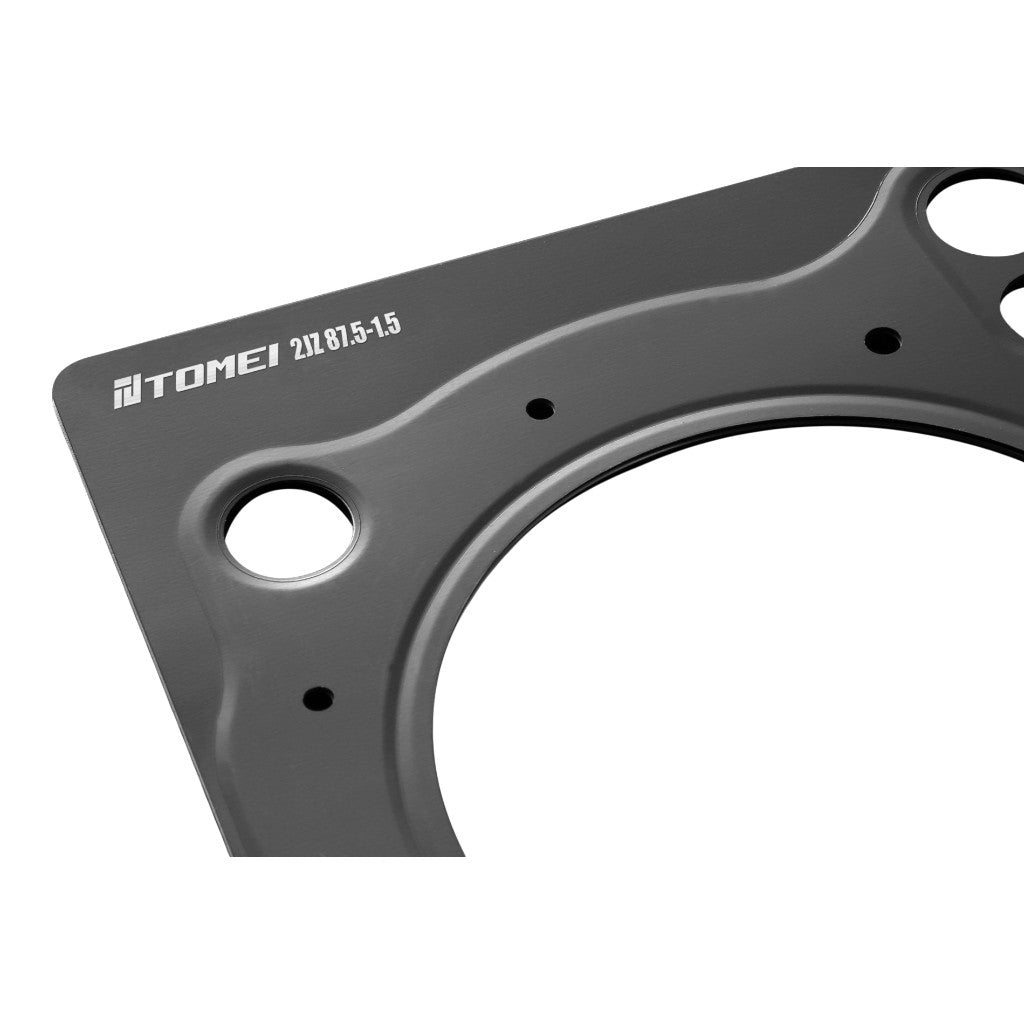














Cylinder Head Gaskets as a Key Element of Engine Sealing
Cylinder head gaskets are a critically important component in the design of an internal combustion engine, providing a sealed connection between the cylinder block and the cylinder head. This part is responsible for isolating the combustion chambers, coolant passages, and oil galleries, creating stable operating conditions for the engine even under high loads.
In stock configurations, cylinder head gaskets are designed for standard temperature ranges, compression levels, and combustion chamber pressure. However, when power is increased, compression ratio is raised, or turbocharging is used, the load on this area rises dramatically. Under these conditions, gasket quality becomes a decisive factor in the reliability of the entire powertrain.
This category includes cylinder head gaskets for different types of engines, including naturally aspirated and turbocharged configurations. Products from brands such as Cometic, HKS, GReddy, Tomei, and JE are widely used in tuning projects and motorsport, where combustion chamber sealing is critical for stable engine operation.
When an engine is modified with a higher-flow turbocharger or more aggressive ignition timing, peak cylinder pressure can exceed factory design limits several times over. A standard gasket under these conditions is exposed to microscopic movement, which can lead to immediate gasket failure. Installing a reinforced sealing component is an essential step, without which stable compression and protection against internal fluid leaks cannot be ensured.
Cylinder Head Gasket Design and Functional Purpose
A cylinder head gasket performs several key functions at once. It seals the combustion chambers, preventing gas leakage, isolates the oil passages from the cooling system, and provides stable sealing under changing thermal and mechanical loads.
Structurally, gaskets can be made from different materials — from composite multilayer designs to fully metallic MLS, or multi-layer steel, versions. Today, multi-layer steel gaskets are the standard for high-performance engines because they can withstand high combustion chamber pressure and repeated thermal expansion cycles.
The key parameters of a gasket are its thickness, rigidity, and ability to adapt to microscopic irregularities on the block and head surfaces. High-precision manufacturing ensures even load distribution across the entire contact surface, which is critical for preventing localized overheating and deformation.
Performance engines use gaskets with reinforced sealing rings around the cylinders, commonly known as fire rings, which further strengthen the area exposed to maximum pressure. Such solutions are widely used in Cometic and Tomei products, where material precision and geometric accuracy play a decisive role.
An MLS gasket consists of several layers of cold-rolled stainless steel, with the outer layers coated in a thin elastomer material, most often based on fluororubber or Viton. The inner layers act as compression limiters and distribute the load from the fasteners. A key feature of this technology is the presence of formed spring-like embossments, which create continuous elastic clamping force. When combustion pressure causes the cylinder head to move microscopically relative to the block, the MLS gasket layers work like a spring, compensating for the gap and preventing gases from breaking into the coolant jacket.
Engineering Principles of Sealing and Thermal Load Management
The operation of a cylinder head gasket is based on a complex balance between mechanical clamping force and thermal expansion of materials. During engine operation, combustion chamber temperatures can exceed 2000°C, while pressure can reach dozens of bar. Under these conditions, the gasket must maintain sealing performance without losing structural integrity.
One of the key factors is uniform cylinder head tightening. Factory bolts or reinforced studs create the required clamping force, which must be sufficient for sealing, but not excessive enough to deform the components.
In high-performance engines, the thermal expansion of different materials plays a particularly important role. The cylinder block and head may be made from different alloys with different expansion coefficients. The gasket must compensate for these differences while maintaining sealing performance across all temperature ranges.
MLS multi-layer steel gaskets use several thin metal layers with elastic coatings, providing both rigidity and adaptability. This allows them to withstand high boost pressure in turbocharged engines without the risk of gasket blowout.
When designing extreme racing engines, engineers often face the issue of head lift. Under massive boost pressure, standard head bolts stretch, reducing gasket clamping force. To counteract this effect, reinforced metal gaskets from HKS and Cometic use additional sealing stoppers around the cylinders, known as stopper-type designs, or separate steel rings, such as O-rings or Cooper rings, that bite directly into the cylinder head or block surface. This creates a concentrated zone of extremely high sealing pressure around the cylinder perimeter, protecting against gas leakage even at boost pressures above 2.5–3.0 bar.
Application in Road and Motorsport Configurations
In production vehicles, cylinder head gaskets provide long-term operation without the need for intervention. They are optimized for standard loads and temperature ranges that match everyday driving conditions.
In tuned engines, the situation changes significantly. Increasing the compression ratio or installing a turbocharger raises combustion chamber pressure, creating much greater loads on the gasket. Under these conditions, standard solutions become unacceptable.
High-performance configurations use reinforced gaskets from manufacturers such as HKS or GReddy, which are capable of withstanding extreme loads. In drag racing, time attack, and circuit racing, these components are a mandatory part of the engine build.
For Stage 2 projects and beyond, selecting the correct gasket thickness also allows the engine’s compression ratio to be adjusted. This makes it possible to optimize the engine for a specific fuel type and boost level.
By changing cylinder head gasket thickness — with options from 0.6 mm to 2.0 mm and beyond in Cometic and Tomei product lines — engineers can accurately adjust combustion chamber volume and quench volume. This allows the compression ratio to be reduced for safer high-boost turbo tuning on pump fuel, or, conversely, the gasket can be made thinner to increase the compression ratio in high-efficiency naturally aspirated engines, improving combustion speed and throttle response.
Criteria for Choosing a Cylinder Head Gasket
Gasket selection depends on the engine configuration, level of modification, and operating conditions. For basic use, standard composite solutions are sufficient, while tuning applications require multi-layer metal gaskets.
The key parameters are gasket thickness, material, and the ability to withstand high pressure. Compatibility with the block and cylinder head surfaces must also be considered, as their condition and machining quality have a direct impact on sealing performance.
In high-performance projects, it is important to consider not only the gasket itself, but the entire set of related components — cylinder head bolts or studs, tightening torque, and installation accuracy. Without this, even the highest-quality gasket will not deliver the required result.
Solutions from JE and other manufacturers are often used together with other engine components, helping achieve maximum efficiency and reliability.
The main requirement when switching to an MLS metal gasket is ideal surface roughness and flatness of the block and cylinder head. Metal layers require very clean machining through milling or grinding, typically with an RA value below 30–50. Any micro-scratches or surface distortion can prevent the Viton elastomer coating from fully filling the gaps, causing microscopic coolant or oil leaks. Replacing factory head bolts with high-strength studs, such as ARP, is also mandatory, because they do not stretch under load and provide stable, even clamping of the gasket’s metal layers.
The Impact of a Cylinder Head Gasket on Engine Performance and Reliability
Cylinder head gaskets directly affect engine efficiency because they ensure combustion chamber sealing. Any loss of sealing leads to compression loss, overheating, or mixing of operating fluids.
In high-performance engines, stable gasket operation allows high boost levels and precise combustion parameters to be maintained. This is critically important for achieving maximum power without risking component damage.
As a result, the cylinder head gasket is not just a sealing element, but a key engineered component that defines the balance between compression, heat resistance, and engine durability. Correct selection and installation are mandatory for stable operation in both road and racing vehicles.
Using high-end solutions from industry leaders fully eliminates the risk of so-called gasket blowout during critical loads on the track. This protects expensive forged pistons and connecting rods from damage caused by coolant entering the cylinders and creating hydrolock. By purchasing original cylinder head gaskets from ATOMIC-SHOP, you invest in absolute sealing integrity for your vehicle’s engine.