








Exhaust Systems as a Complete Solution for Managing Engine Gas Dynamics
Exhaust systems are complex engineering assemblies that define not only how exhaust gases are removed, but also the overall efficiency of engine operation. They create the conditions for stable gas flow from the moment the exhaust valve opens until the gases exit into the atmosphere, influencing backpressure, thermal behavior, and the acoustic character of the vehicle.
In production vehicles, exhaust systems are designed as a compromise between emissions standards, noise levels, and durability. This limits their flow capacity and often creates additional resistance in the exhaust path. In tuned and motorsport applications, however, this system is treated as a key component for optimizing engine performance and improving throttle response.
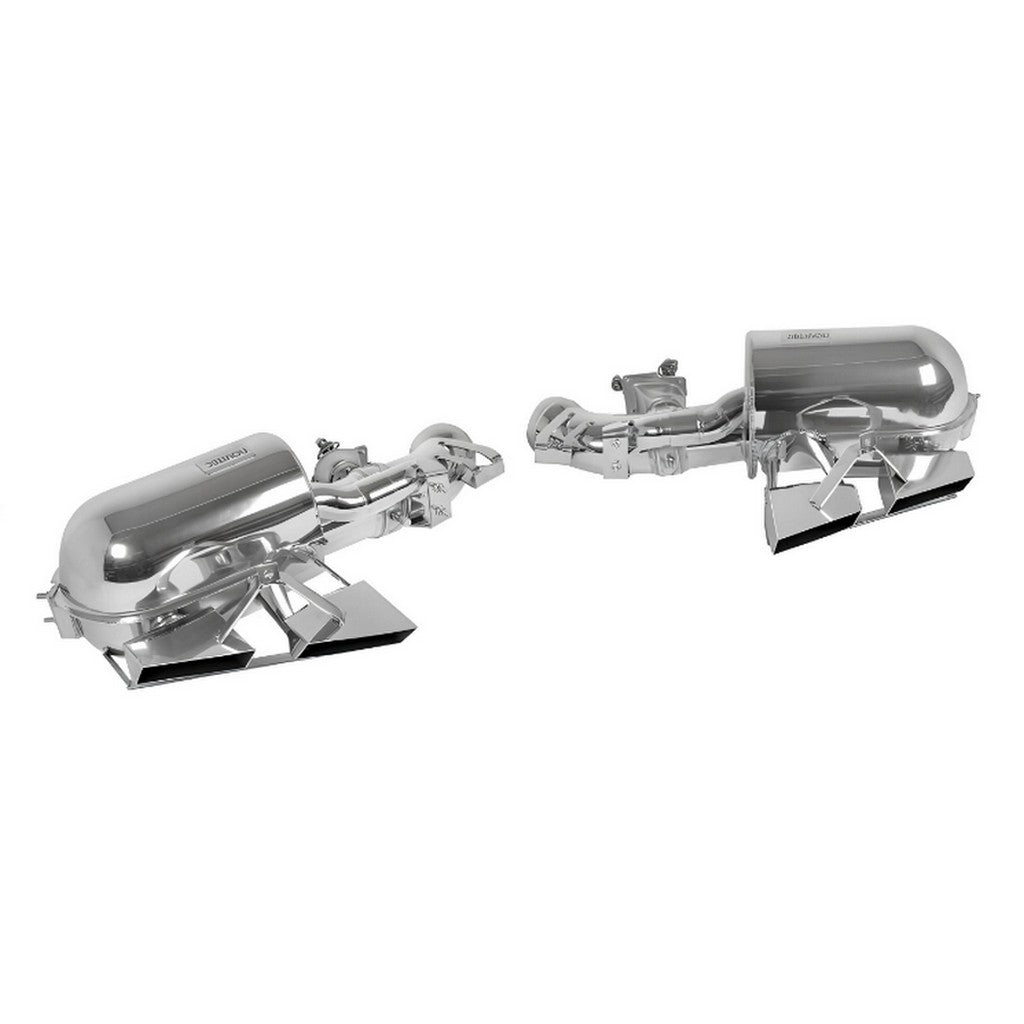
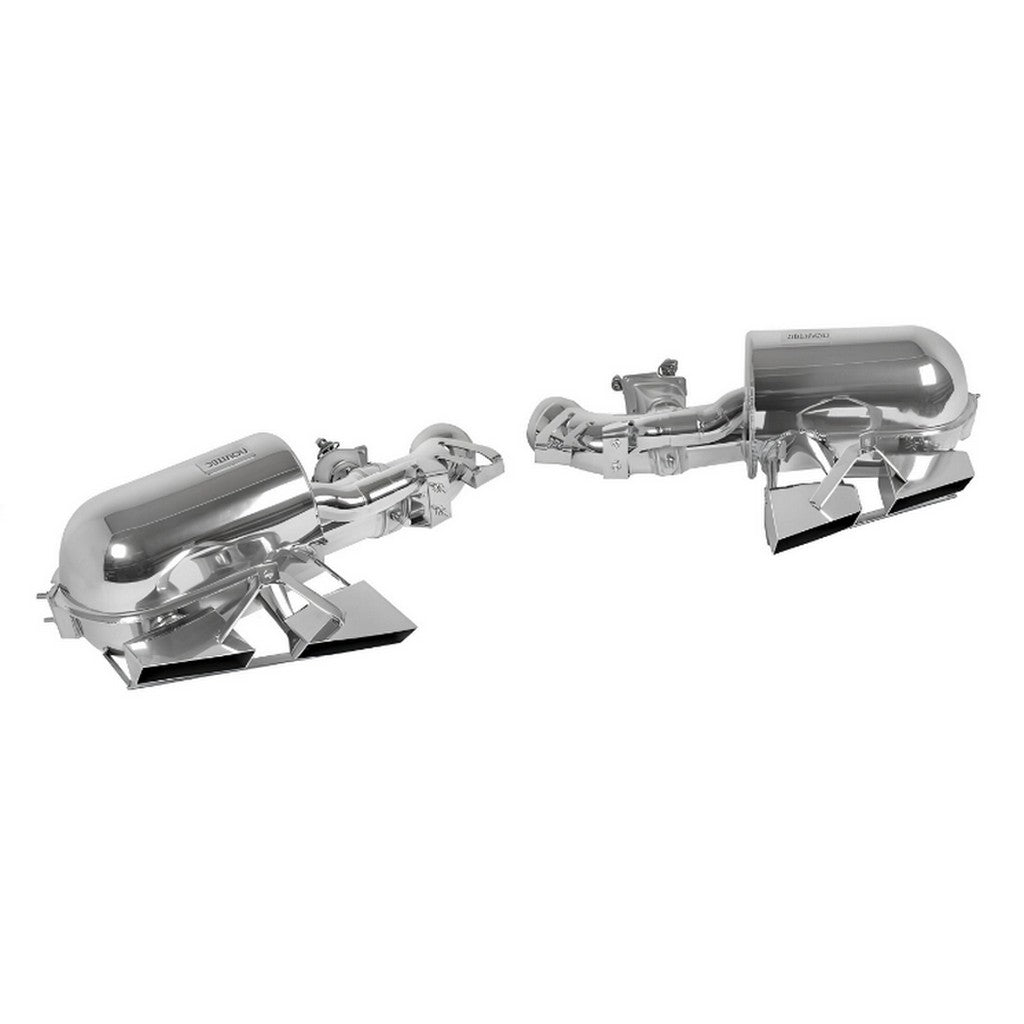
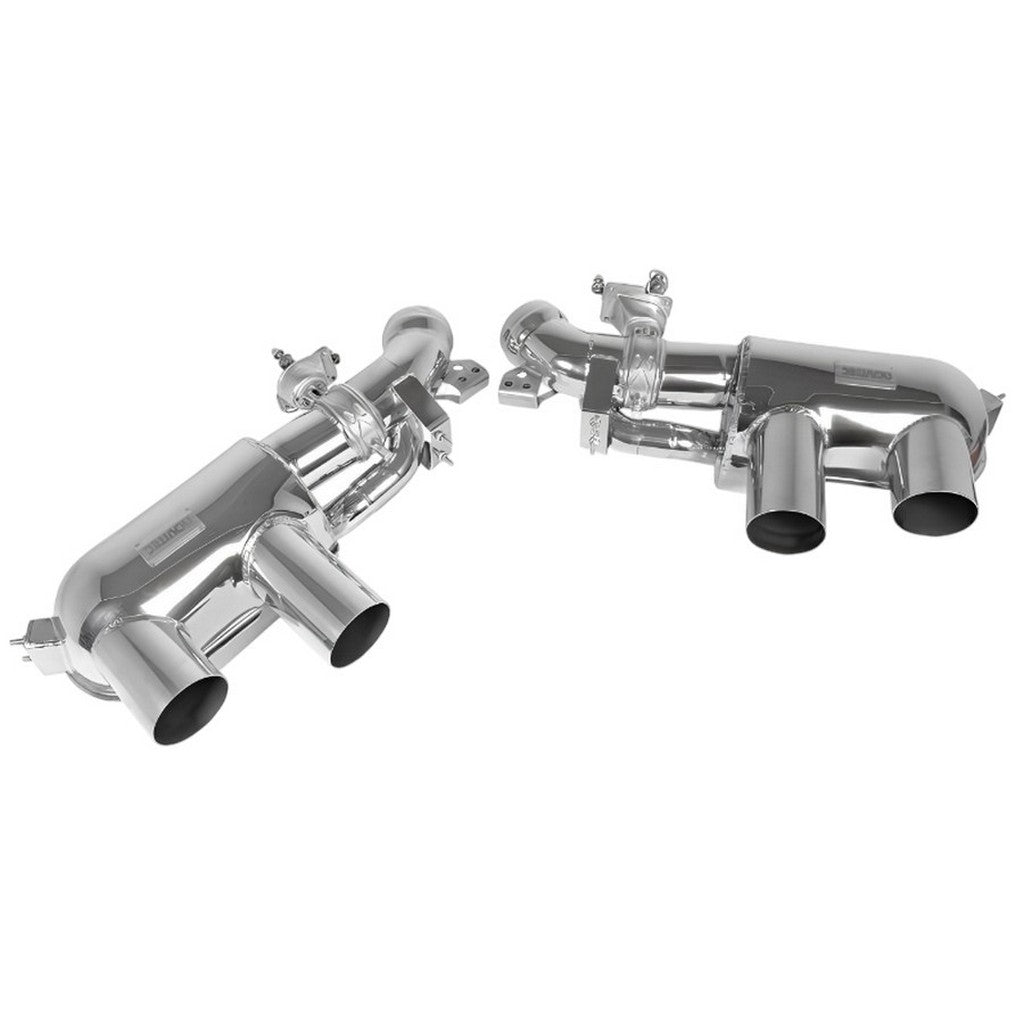
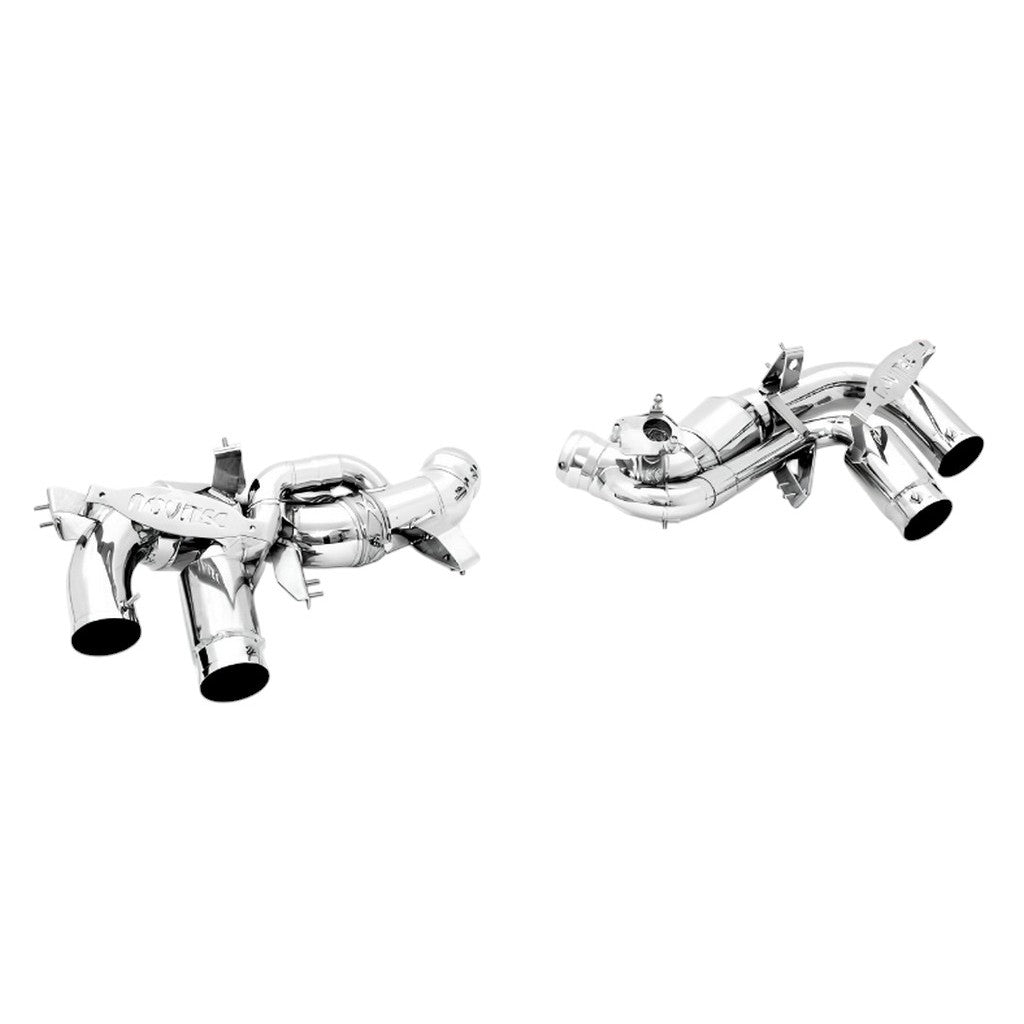
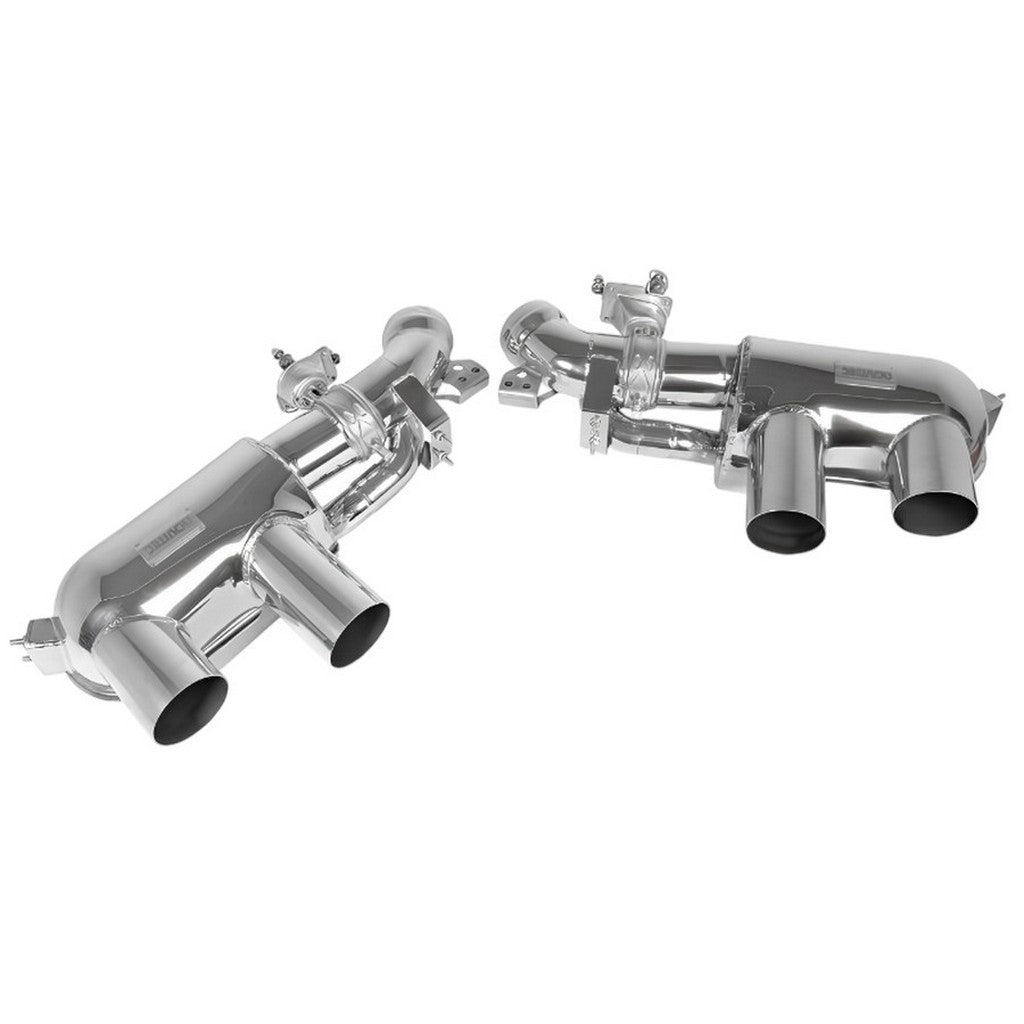
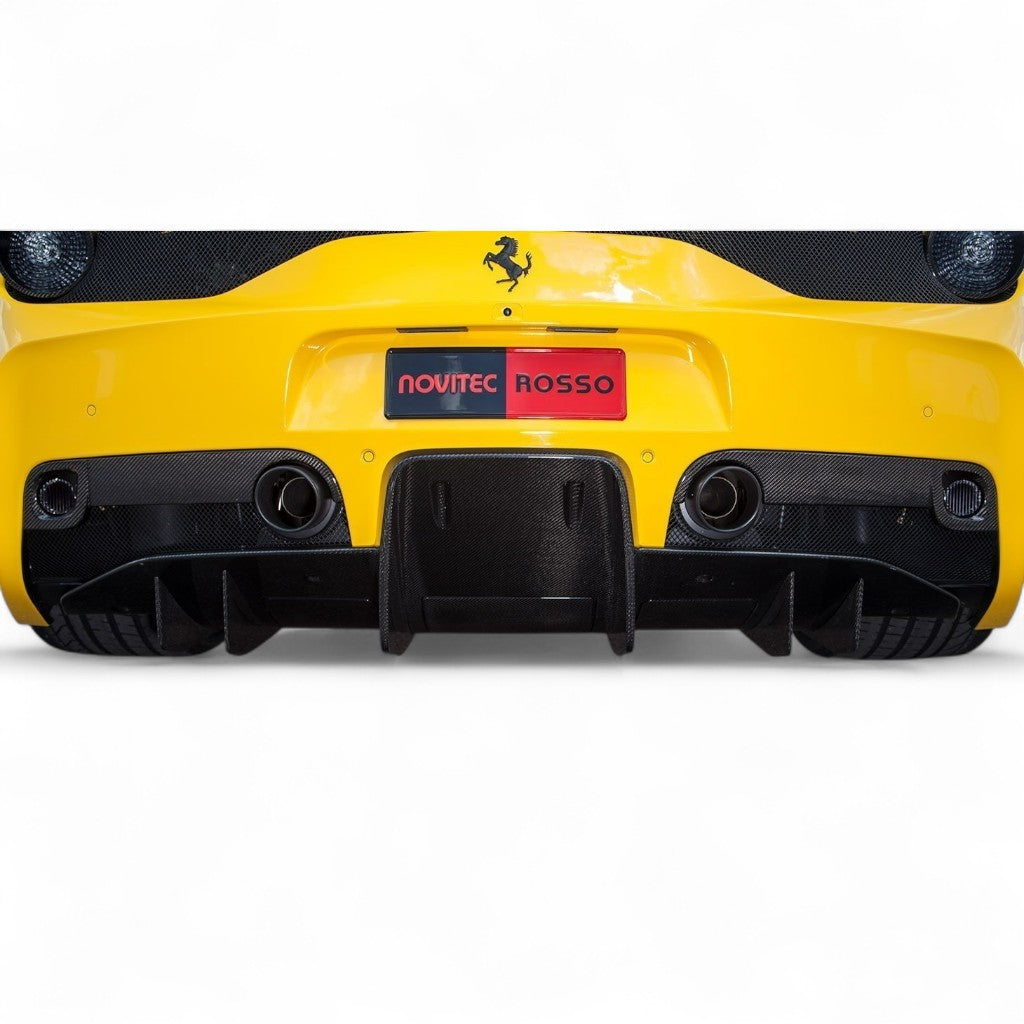
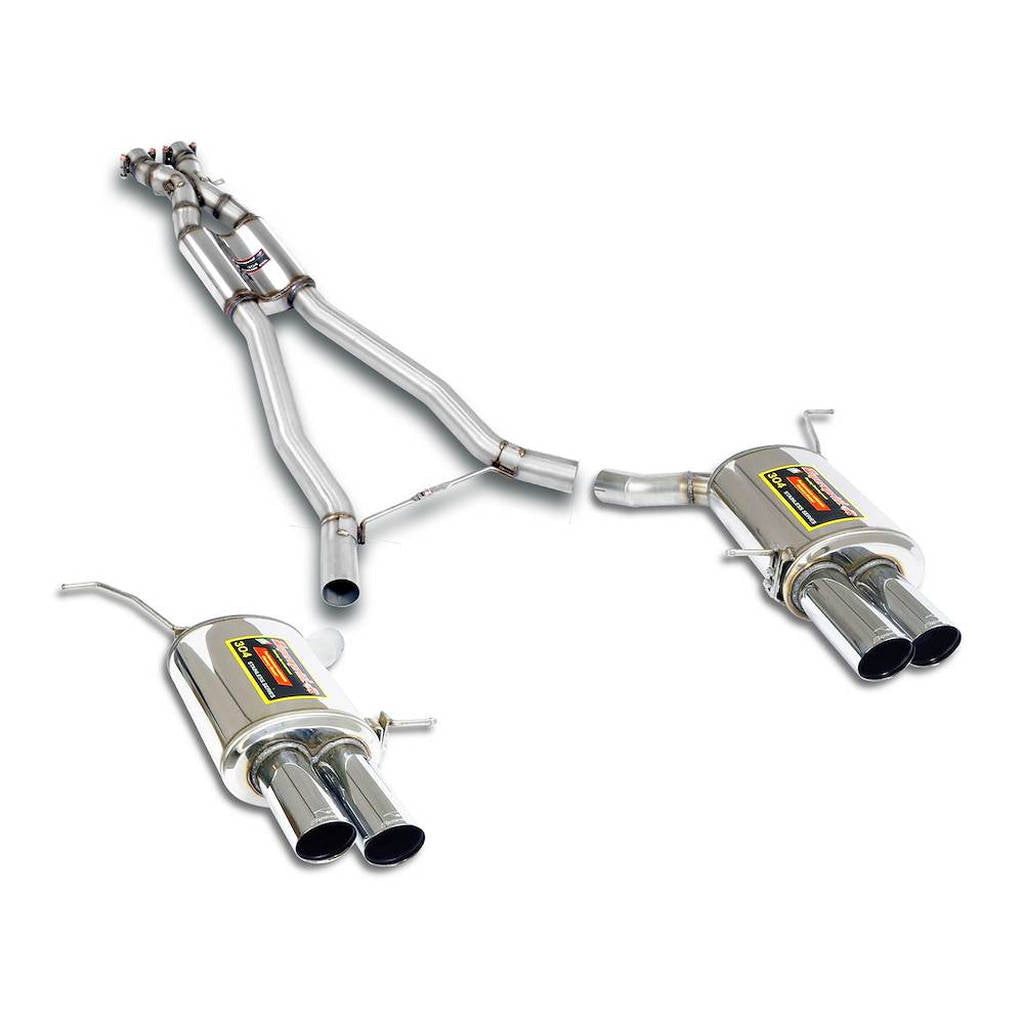
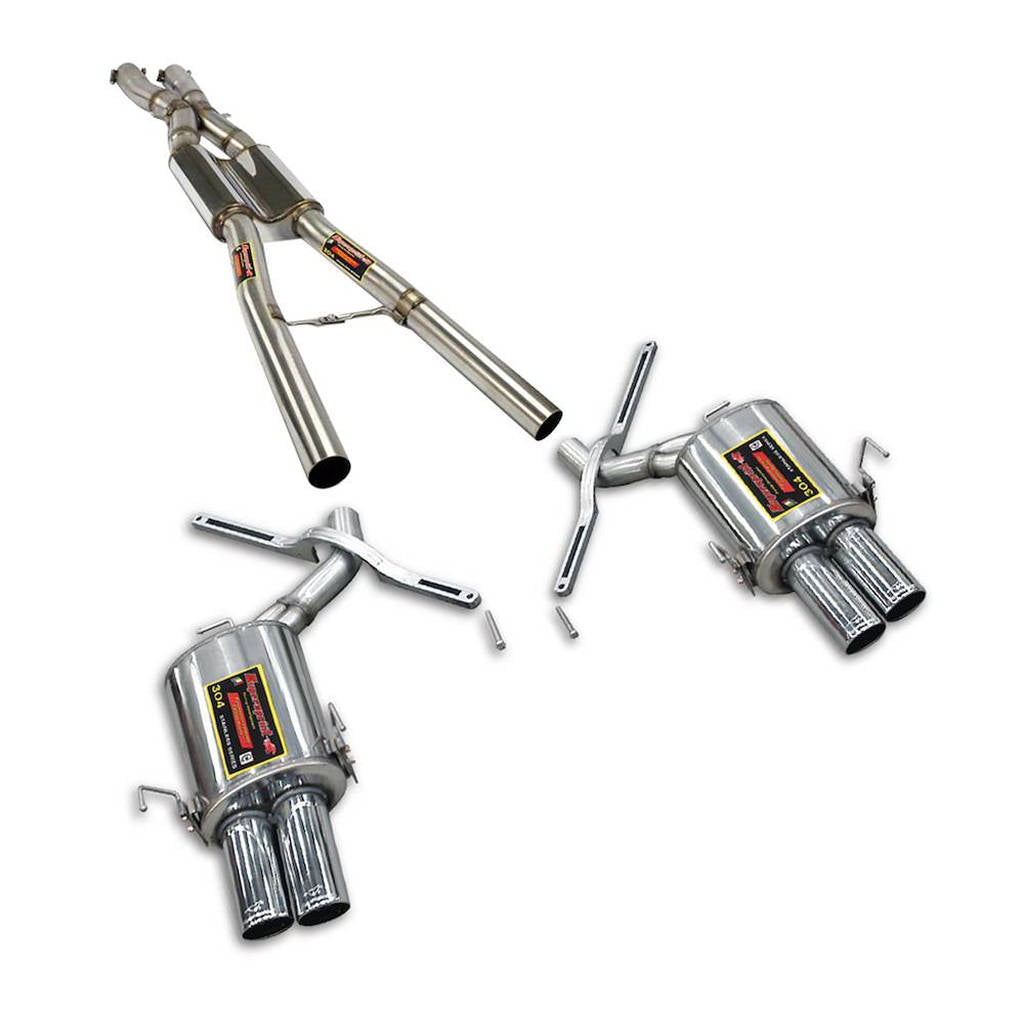
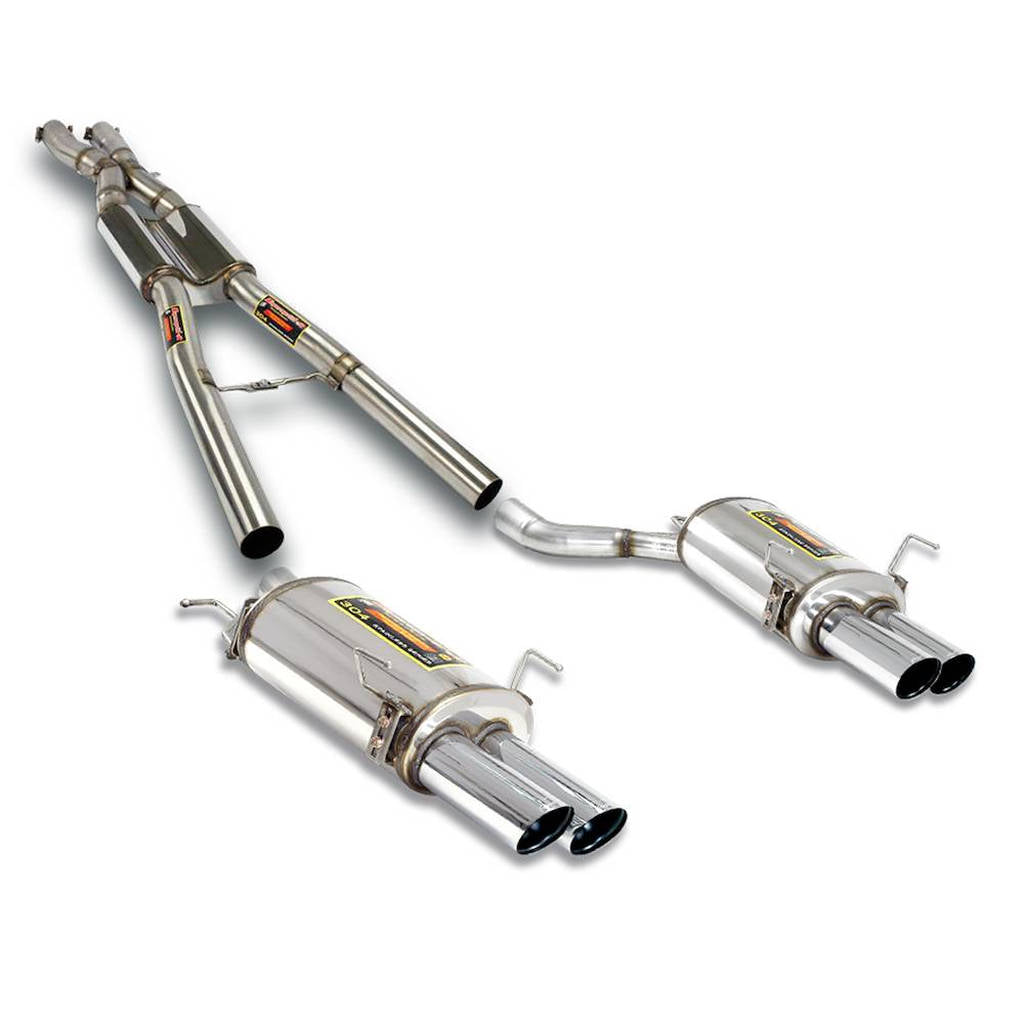
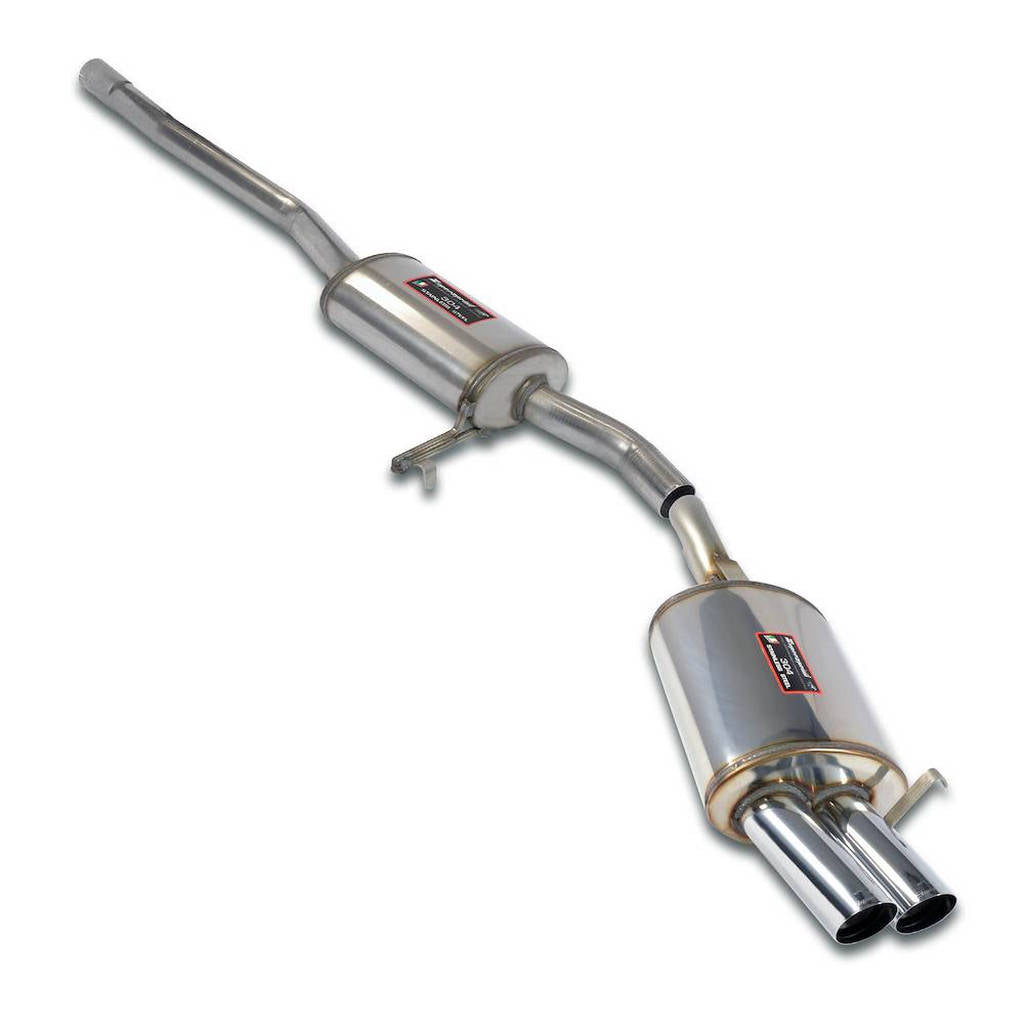
This category includes complete exhaust systems and their components from manufacturers such as Akrapovic, Borla, Milltek, Supersprint, HKS, Novitec, and Tomei. Each of these brands applies its own engineering approach to managing gas dynamics, reducing energy losses, and controlling exhaust sound characteristics.
Exhaust System Design and Its Functional Sections
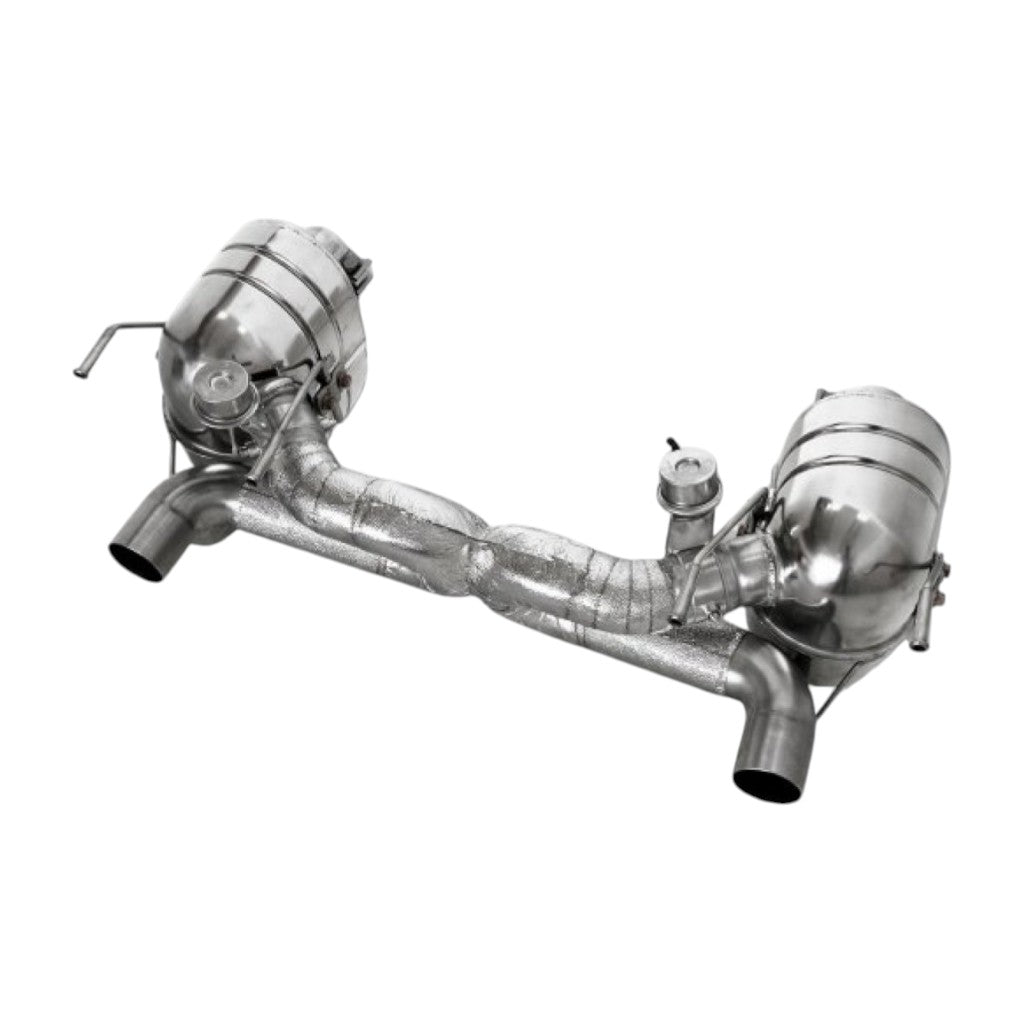
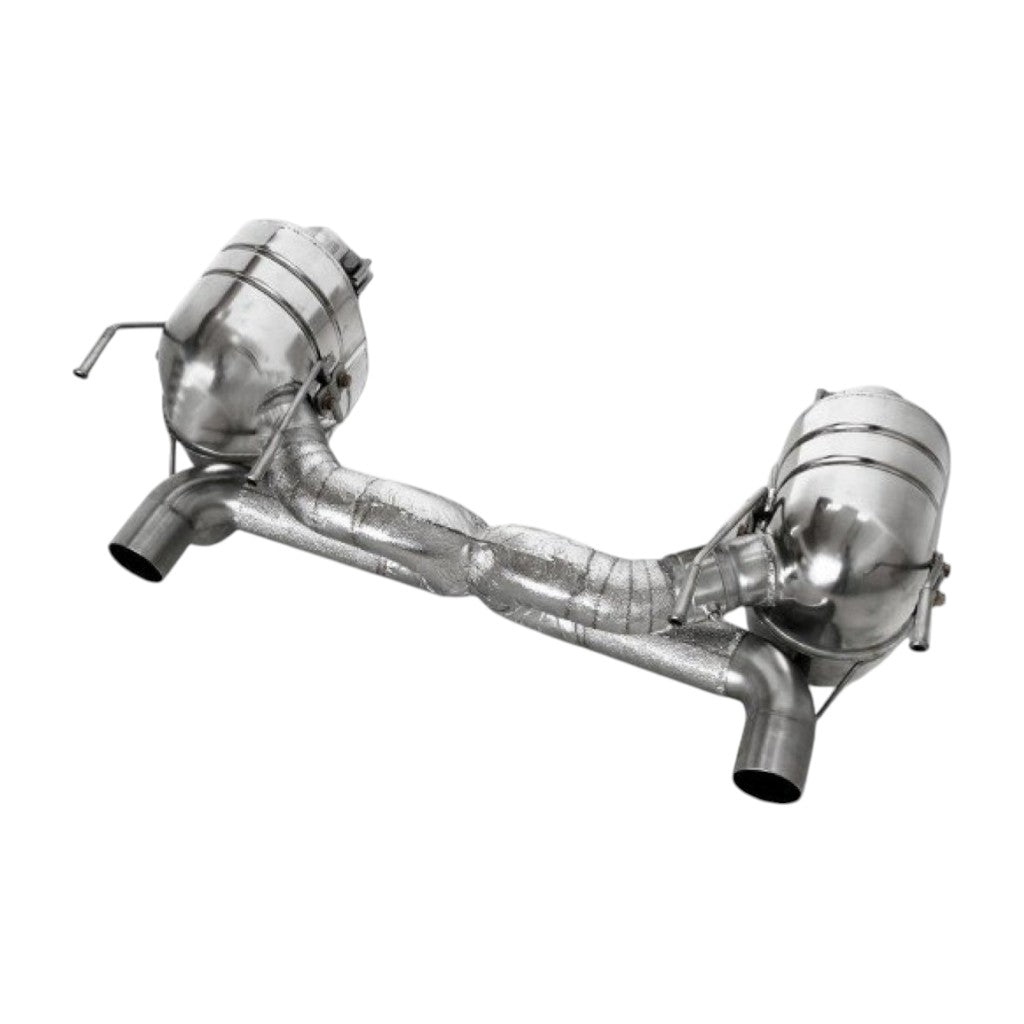
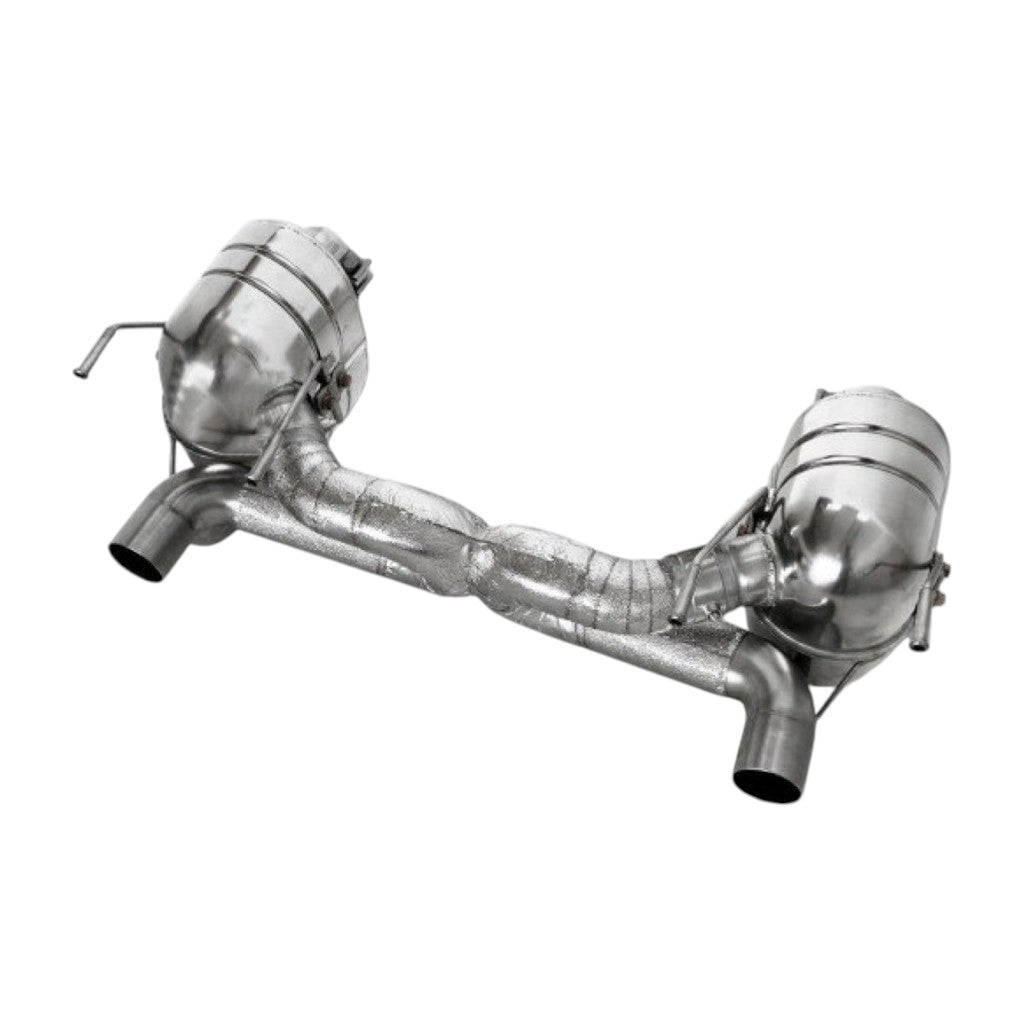
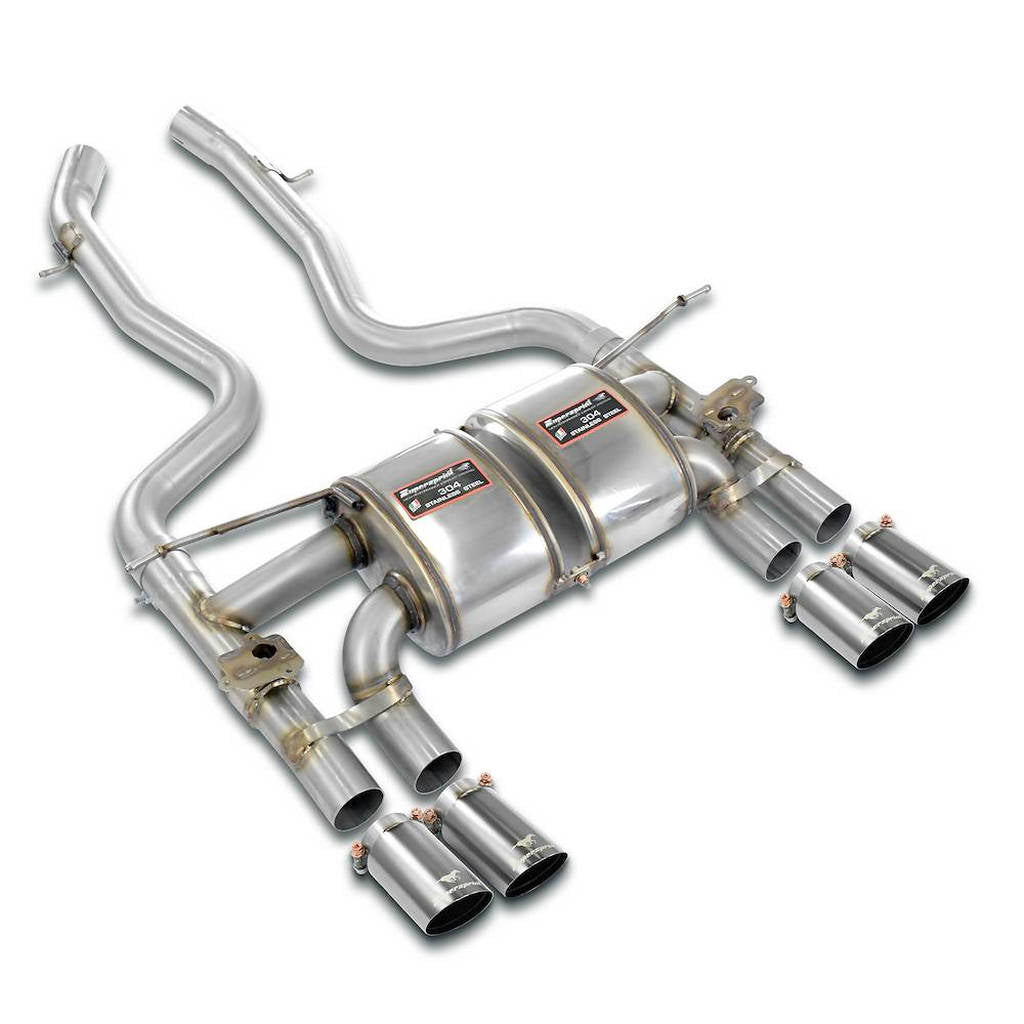
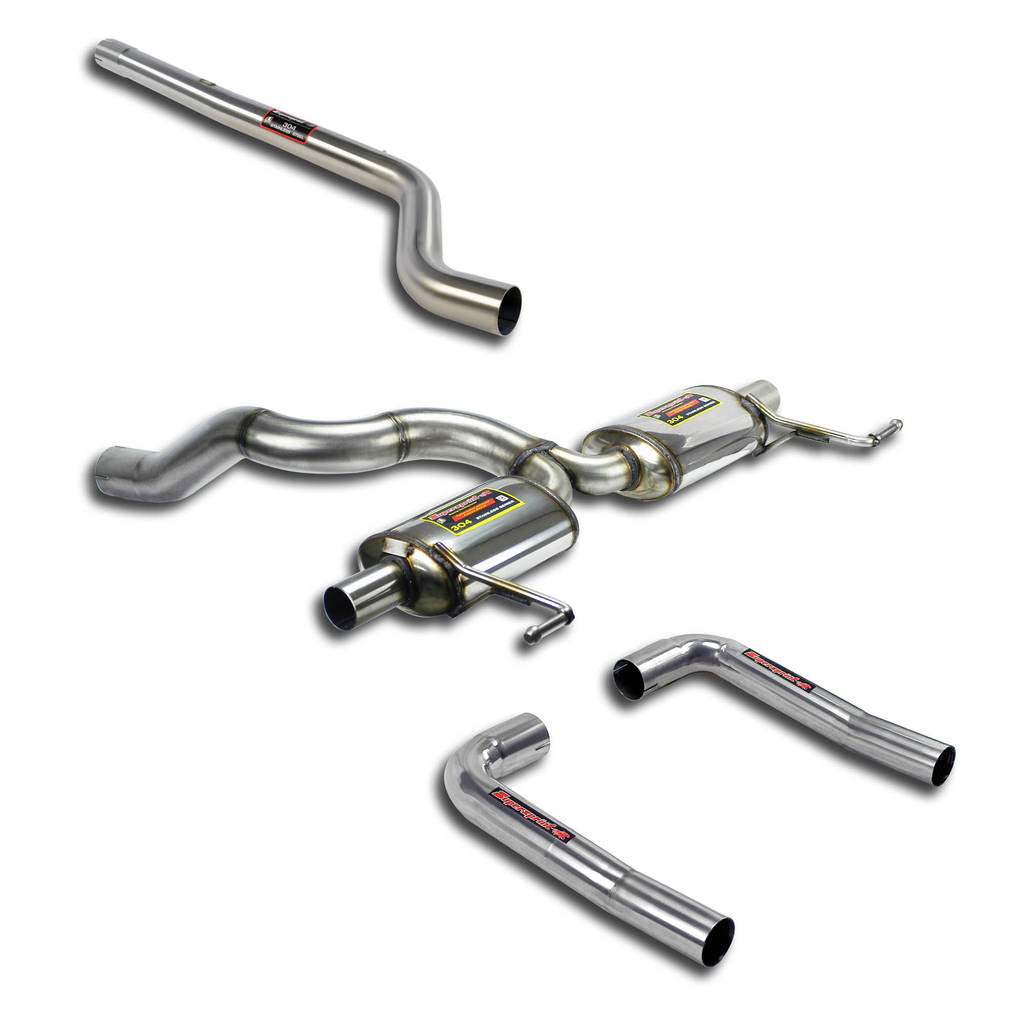
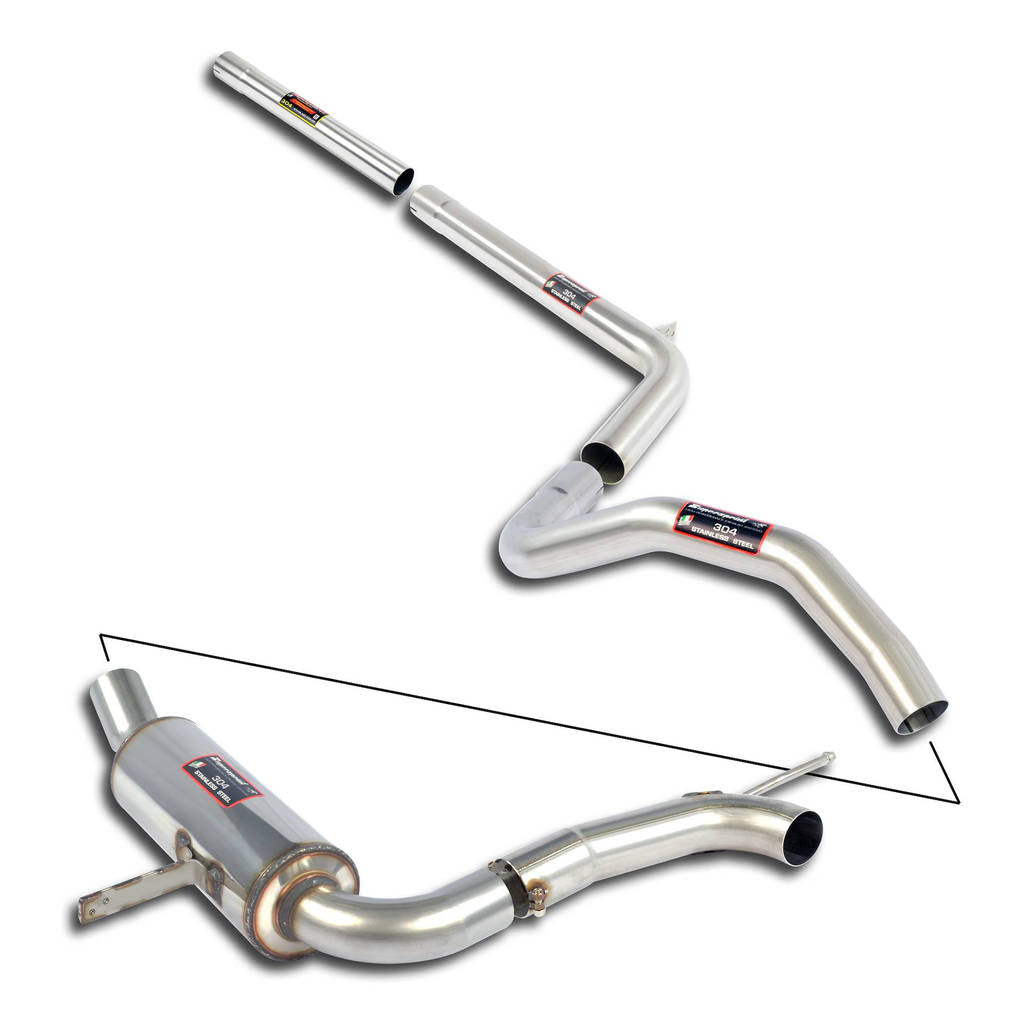
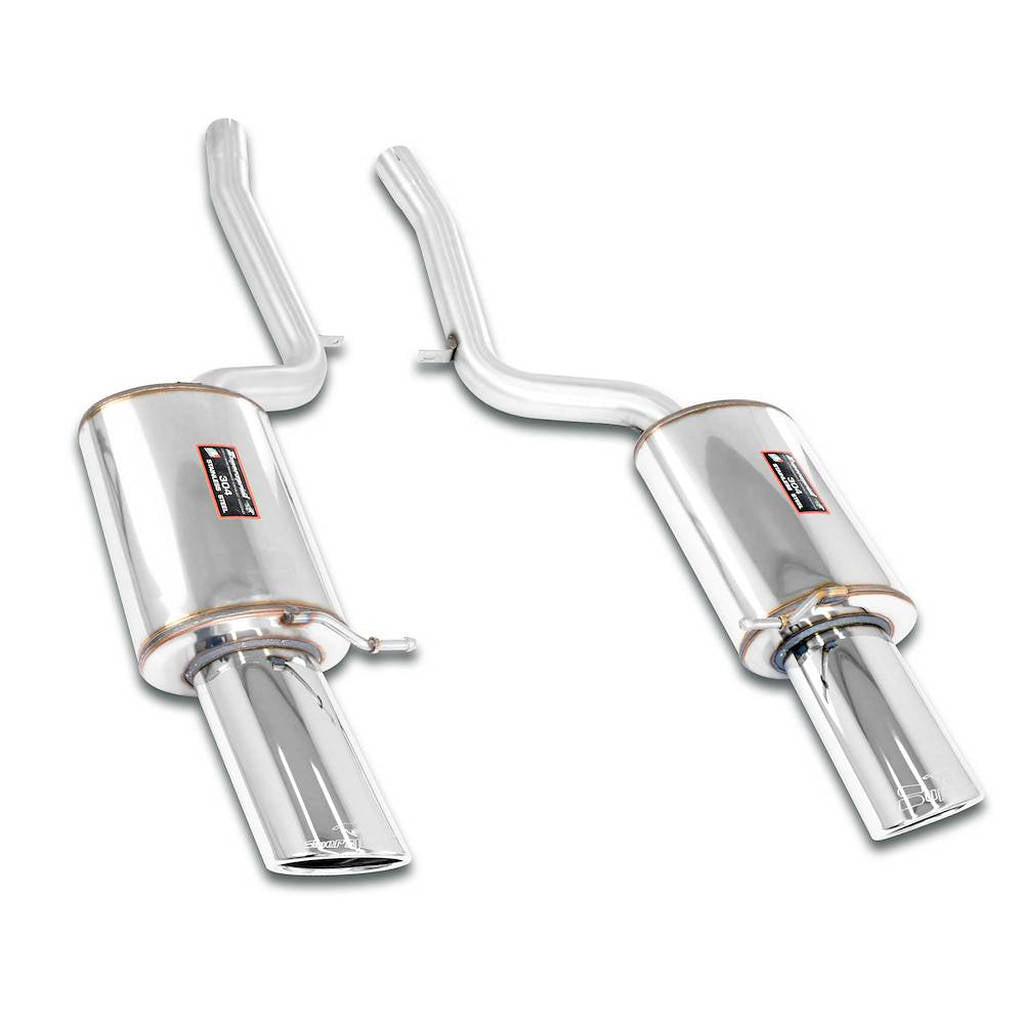
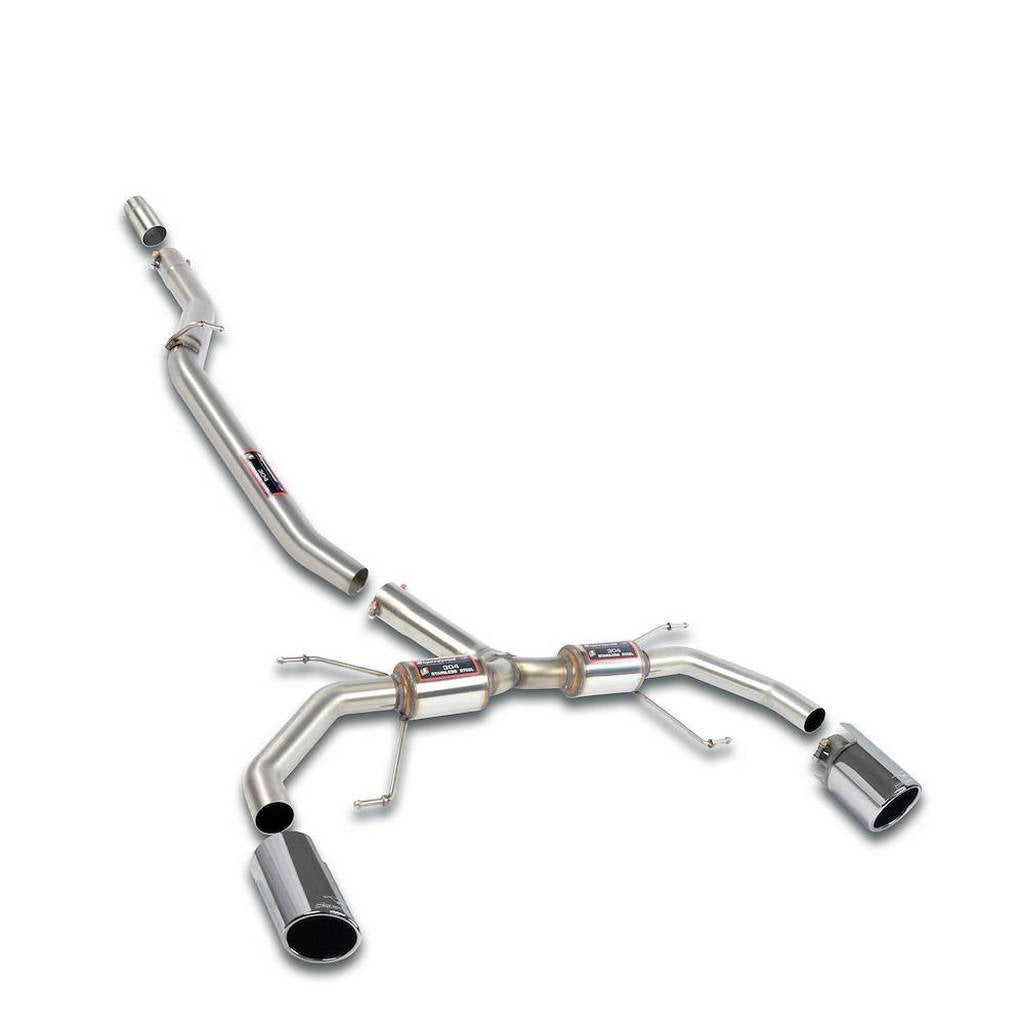
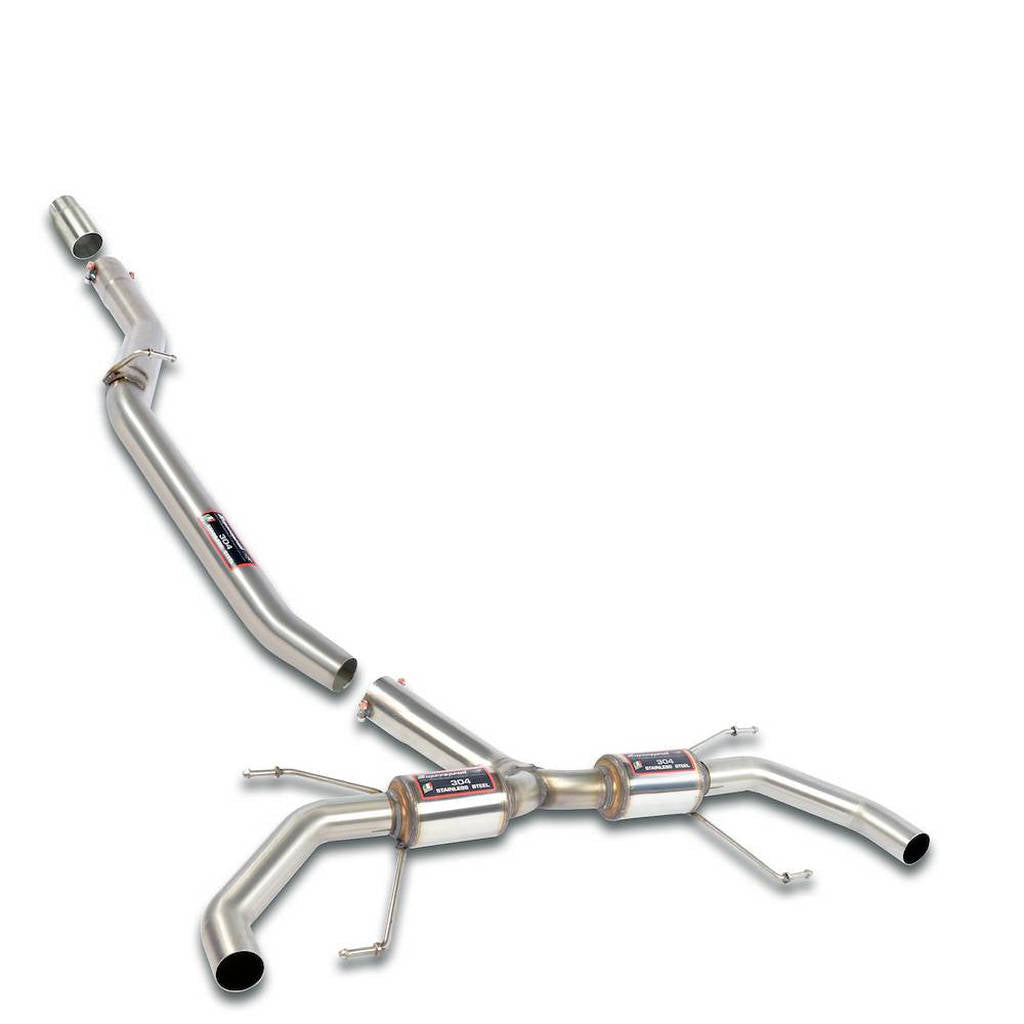
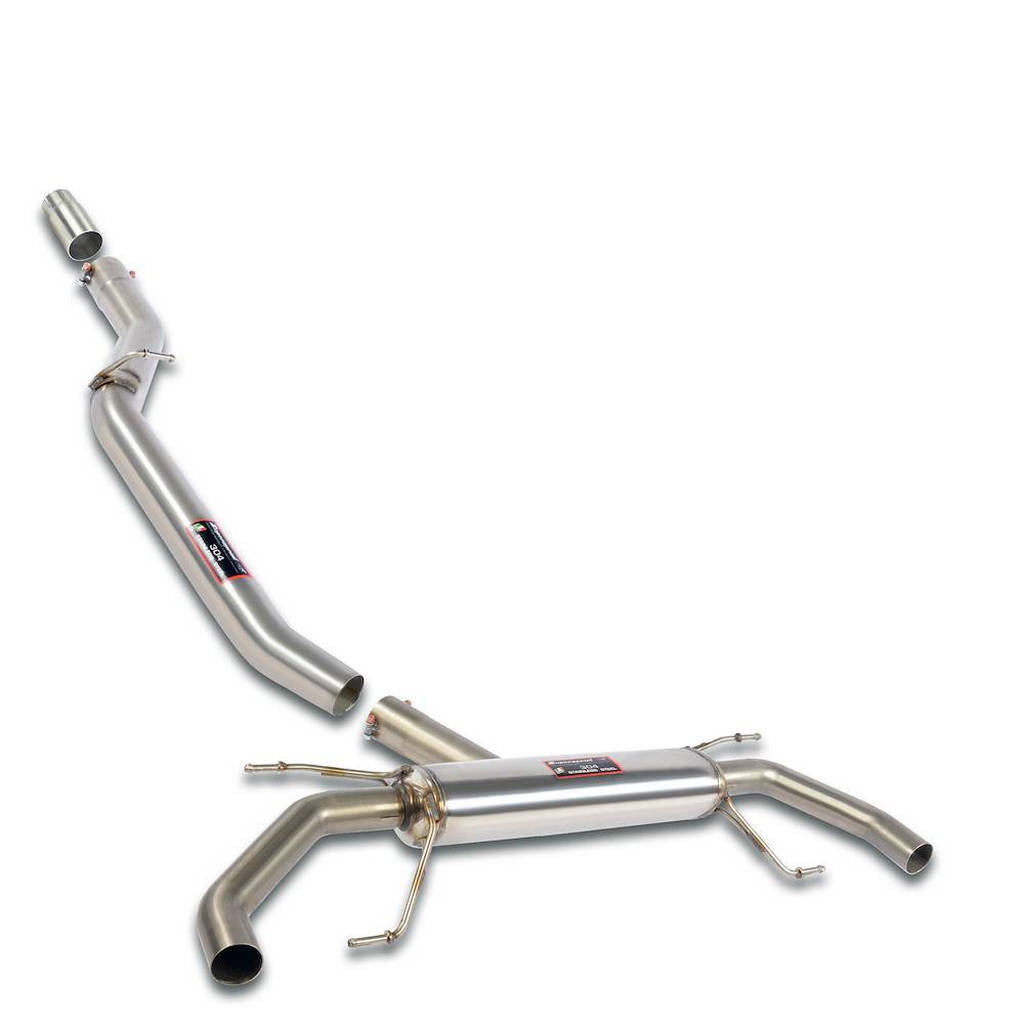
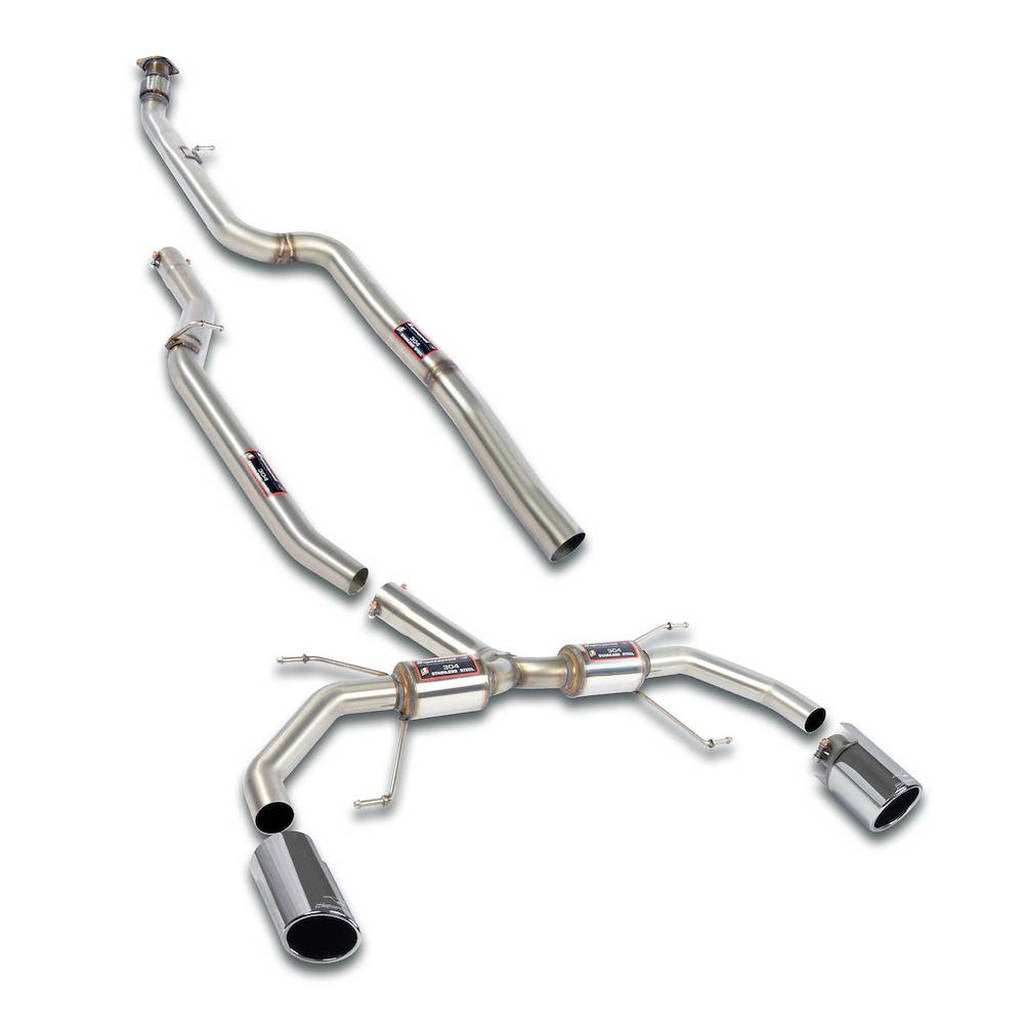
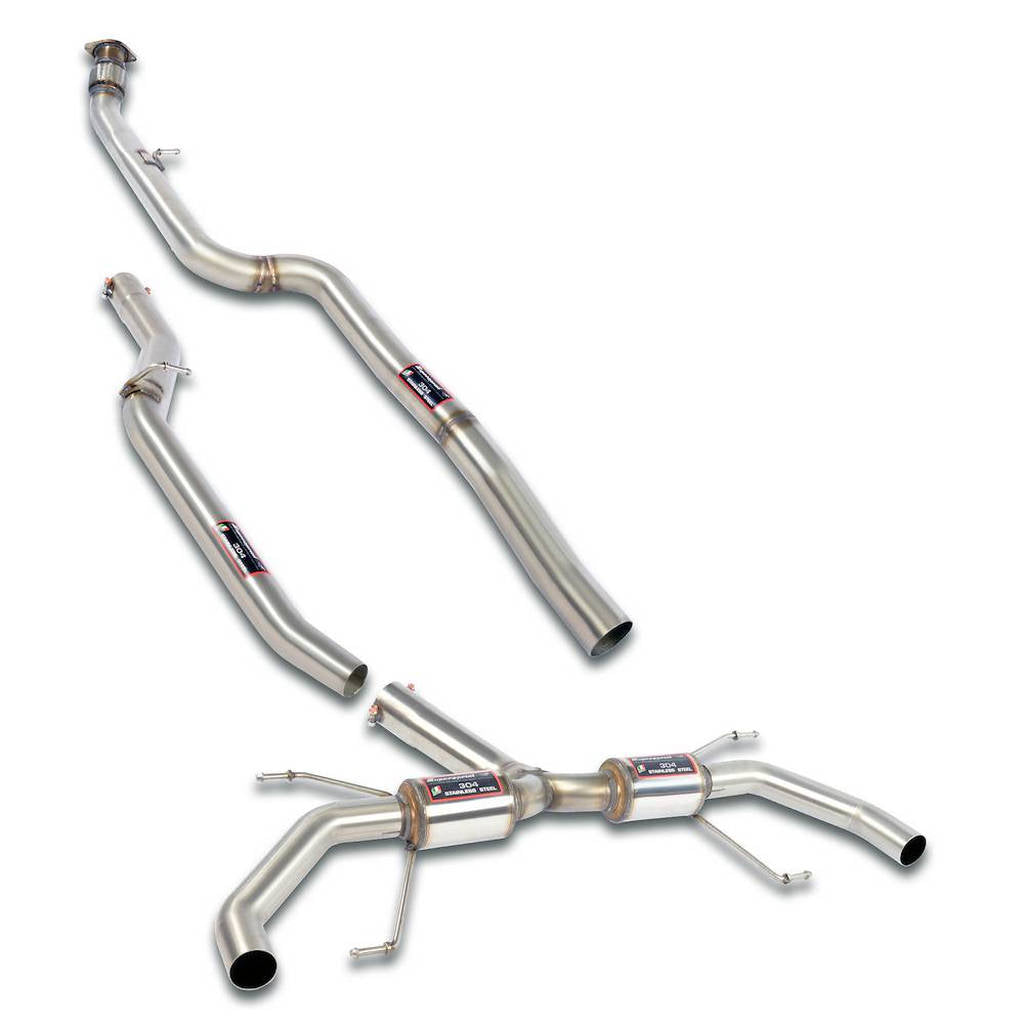
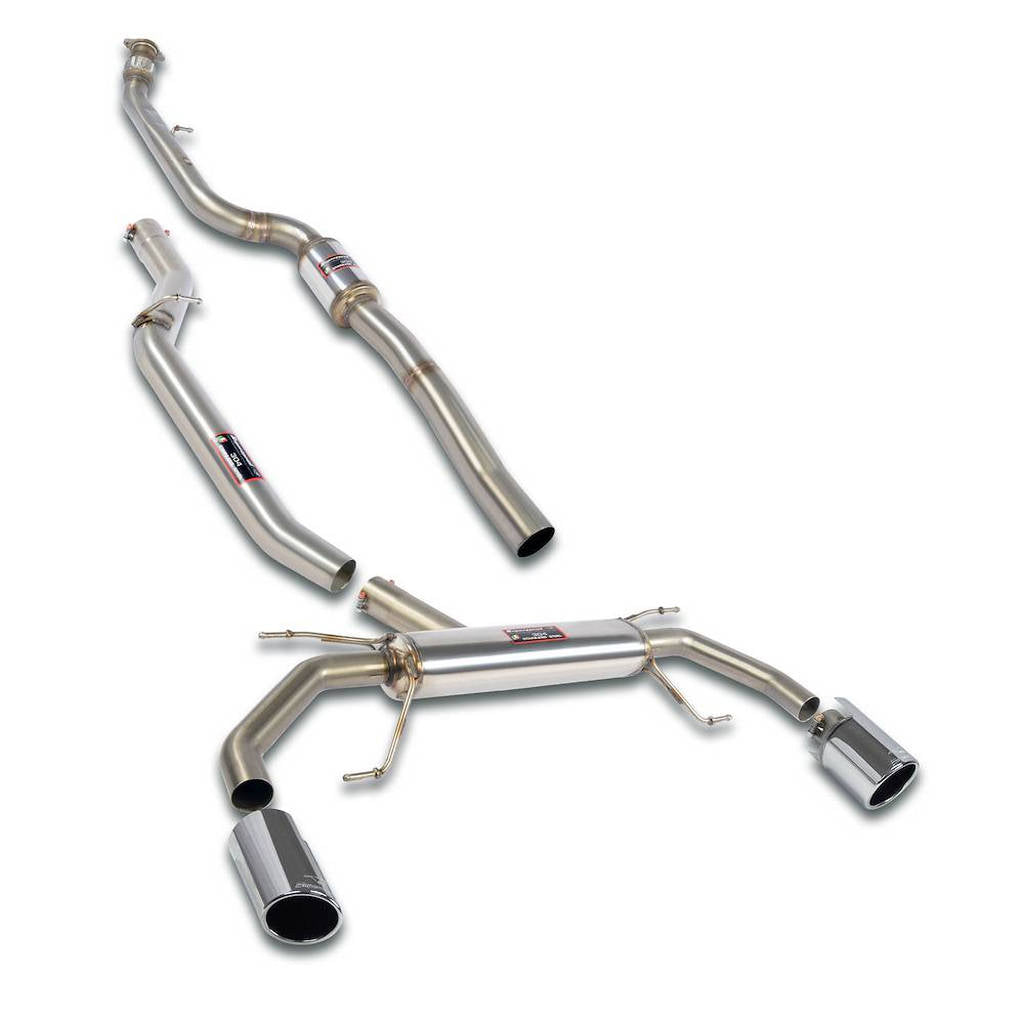
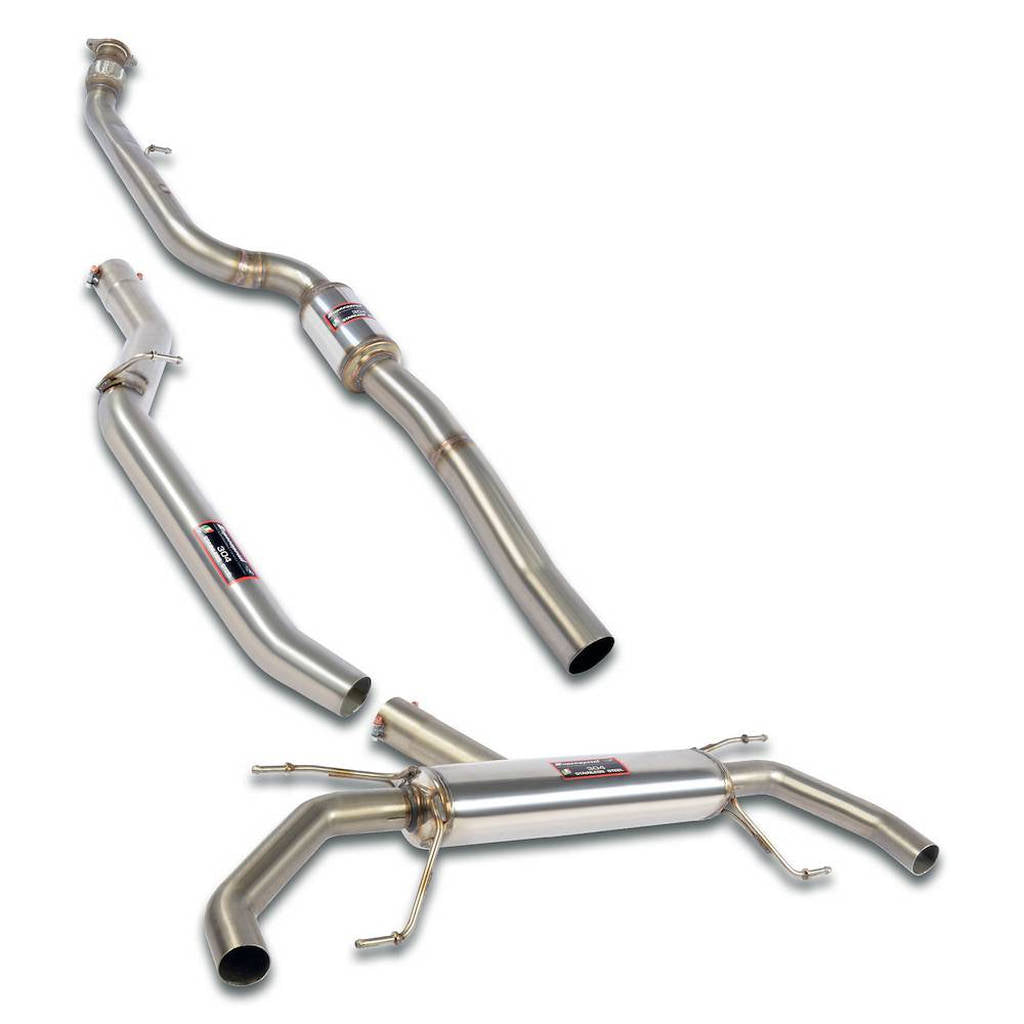
Exhaust systems consist of several key components: the exhaust manifold, downpipe, resonator, muffler, and rear sections. Each of these components performs a specific function, but together they operate as a single system that creates stable and predictable gas flow.
The exhaust manifold defines the initial gas dynamics by shaping pressure pulses. The downpipe quickly removes gases from the turbine or manifold while minimizing energy losses. The resonator and muffler control noise and smooth out flow oscillations, while their internal geometry directly affects the level of backpressure.
In high-performance configurations, pipe diameter and connection quality play an important role. Smooth transitions and the absence of sharp restrictions reduce turbulence and provide more efficient gas movement.
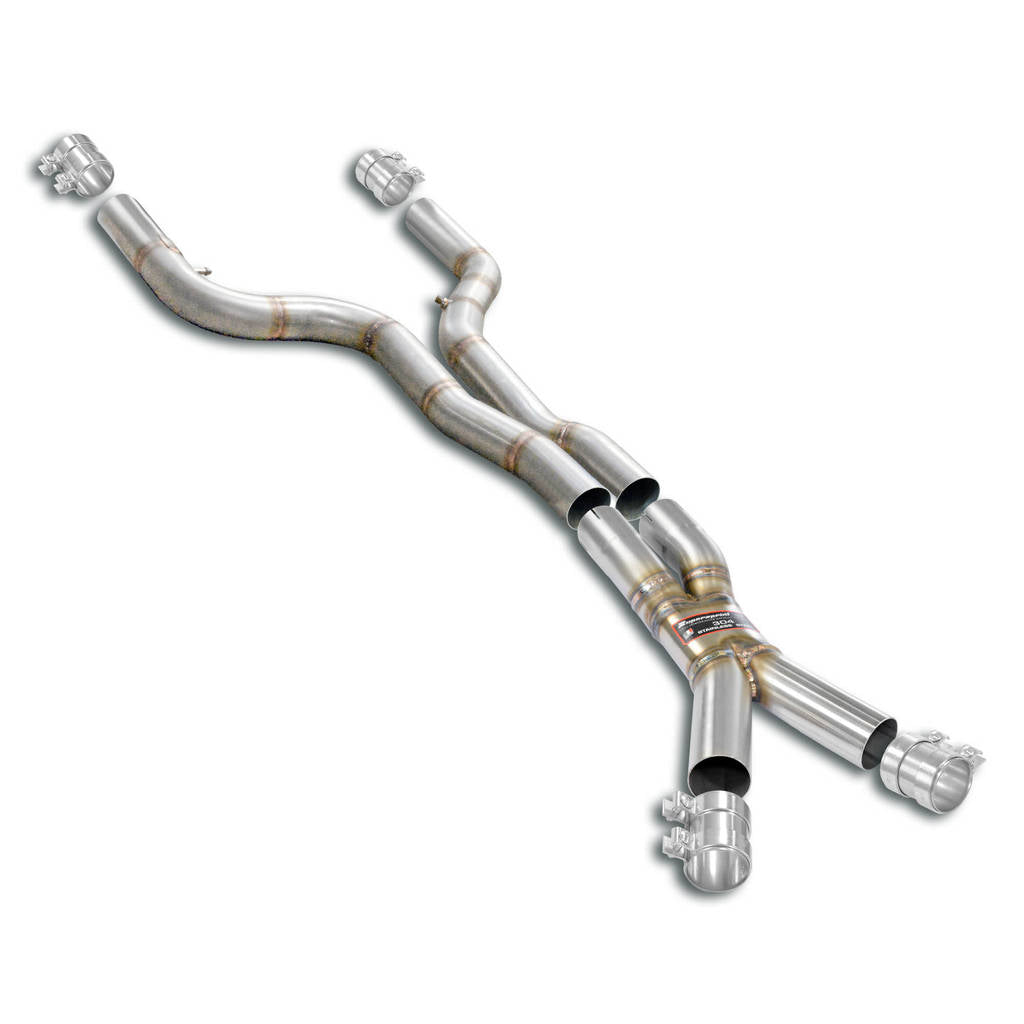
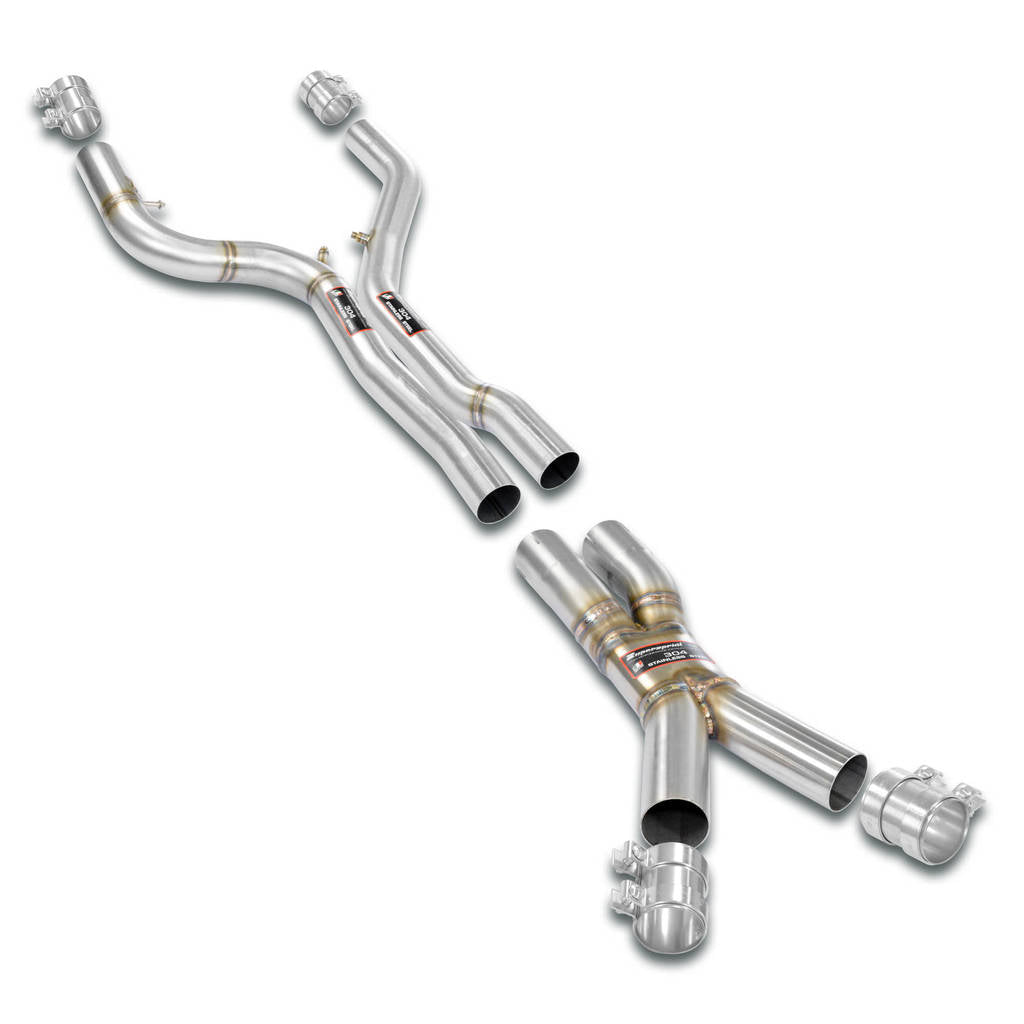
When dealing with V-engine layouts or systems with a dual exhaust path, the choice of crossover elements becomes especially important — the X-pipe or H-pipe. Engineers from brands such as Borla and Milltek use them to balance pressure between the two cylinder banks. An X-pipe, through cross-flow merging, accelerates gas movement at high engine speeds and shifts the sound toward a higher, more motorsport-inspired tone. An H-pipe works by creating a compensating volume, improving torque in the low and mid-range while producing a deeper bass exhaust note.
The correct selection of high-flow sport catalytic converters also plays a separate role. Replacing the factory unit with a 100 or 200 CPI high-flow metallic catalytic converter can significantly reduce backpressure while maintaining correct sensor operation and system stability.
Gas Dynamics, Wave Processes, and Thermal Behavior
The operation of an exhaust system is based on the pulsed nature of gas movement. Each engine cycle creates pressure waves that travel through the pipes. If the system is designed correctly, these waves help draw exhaust gases out of the cylinders, reducing residual pressure and improving cylinder filling.
Incorrect geometry leads to pulse interference and the formation of high-pressure zones, reducing engine efficiency. This is why sports exhaust systems pay special attention to pipe length, pipe diameter, and transition shape.
Thermal loads in the exhaust system are extreme, especially in turbocharged engines. High-quality systems are made from stainless steel or titanium, allowing them to retain mechanical strength and stable characteristics at high temperatures.
An important engineering factor is the scavenging effect, where high-velocity pressure pulses create a localized low-pressure zone behind them. This vacuum effect during valve overlap helps remove residual gases more efficiently and improves combustion chamber filling. In Tomei solutions, precise pipe geometry calculation and mandrel bending are used to maintain a consistent cross-section.
From a thermodynamic standpoint, maintaining high gas temperature inside the system is important. This preserves gas velocity and reduces the risk of stagnant zones. Thermal insulation materials and ceramic coatings are used for this purpose, keeping heat inside the exhaust path and protecting the engine bay from overheating.
Application in Road and Motorsport Configurations
In standard vehicles, exhaust systems are focused on comfort and regulatory compliance, which limits their performance potential. In sports configurations, the priority shifts toward minimizing flow resistance and making maximum use of exhaust gas energy.
In tuning projects, exhaust systems work together with the intake, turbocharging system, and engine control unit calibration, forming a balanced powertrain with improved performance characteristics.
Valved exhaust systems, used by Novitec and Milltek, allow the operating mode of the exhaust to be changed. In a quiet mode, they provide comfort and lower noise levels, while under load a freer-flowing path opens with minimal resistance.
In professional motorsport, straight-through systems without mufflers and catalytic converters are often used to provide maximum flow capacity and minimum exhaust resistance.
Criteria for Choosing an Exhaust System
Choosing an exhaust system depends on the engine type, operating conditions, and upgrade goals. For daily use, the balance between comfort and performance is important, while for track use maximum efficiency becomes the main priority.
Pipe diameter, muffler design, material, and weld quality directly affect system characteristics. Stainless steel provides durability, while titanium solutions allow a significant reduction in vehicle weight.
Compatibility with other components, including the turbocharger, catalytic converter, and engine electronics, is critical for achieving the best result.
The Impact of the Exhaust System on Engine Performance and Durability
Exhaust systems directly affect engine efficiency. Reducing backpressure improves cylinder scavenging and allows power output to increase.
Optimized flow provides stable thermal behavior and even load distribution, which has a positive effect on engine durability.
For turbocharged engines, reducing backpressure after the turbine lowers the load on the bearings and reduces exhaust gas temperature, which is critical for turbocharger system longevity.
As a result, the exhaust system is a key engineered assembly that defines the balance between performance, reliability, and the acoustic character of the vehicle.