



















Camshafts as a Key Element of Valve Timing Control
Camshafts are one of the fundamental components of an internal combustion engine, defining the character of the powertrain, its efficiency, and its performance potential. This component is responsible for opening and closing the intake and exhaust valves, forming the valve timing events and influencing how effectively the cylinders are filled with the air-fuel mixture.
In standard configurations, camshafts are optimized for universal use — stable operation at low and mid-range engine speeds, fuel efficiency, and emissions performance. However, this compromise geometry limits the engine’s potential at high rpm and prevents it from fully realizing its capabilities in performance driving conditions.
This category includes camshafts for different types of engines, including naturally aspirated and turbocharged configurations. Products from manufacturers such as Kelford, Tomei, Manley, and GReddy are used in tuning projects and motorsport, where precise valve timing control is critical for achieving maximum engine performance.
When an engine is upgraded for high power levels — Stage 2, Stage 3, and beyond — the factory cylinder head becomes one of the main airflow restrictions. Even with increased boost pressure or an optimized intake system, the flow capacity through the valve openings remains unchanged unless the valve opening strategy is revised. Performance camshafts make it possible to fundamentally change the torque curve by shifting the operating range toward higher rpm, where the engine can move a significantly greater volume of air per unit of time, resulting in a direct and substantial increase in horsepower.
Camshaft Design and Operating Principle
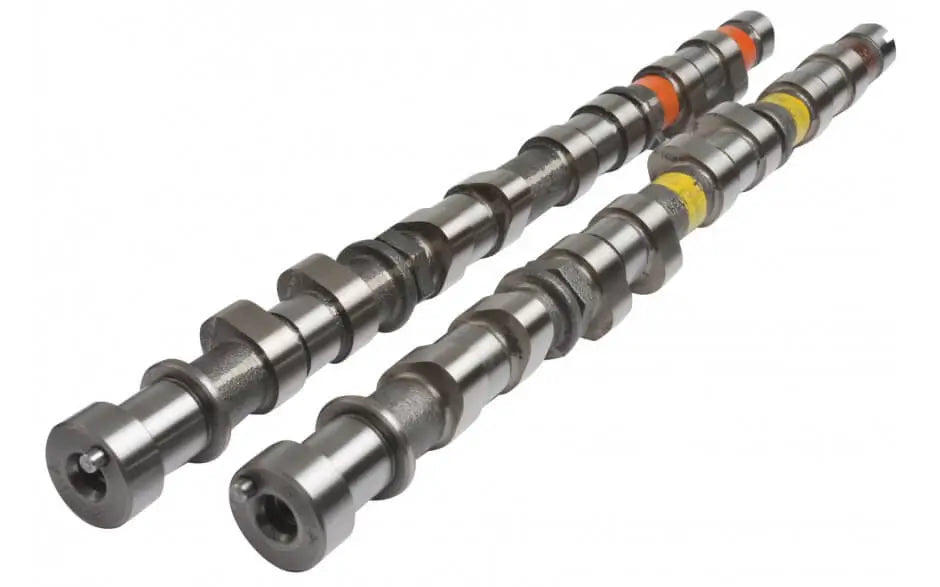
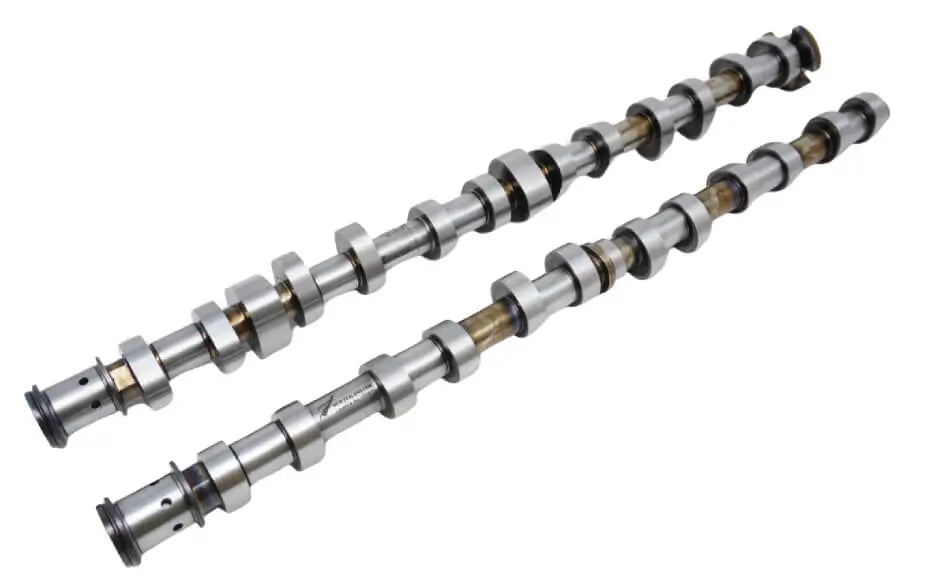
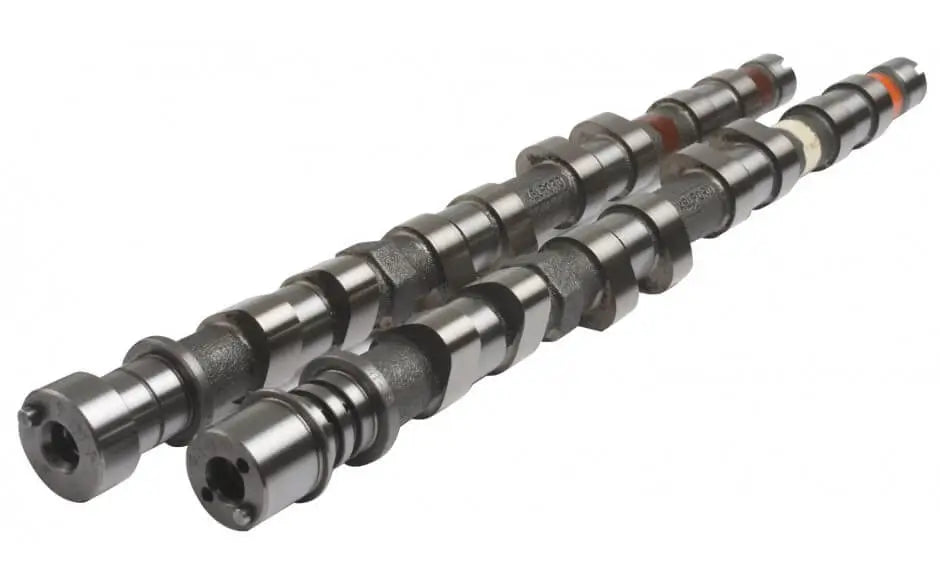
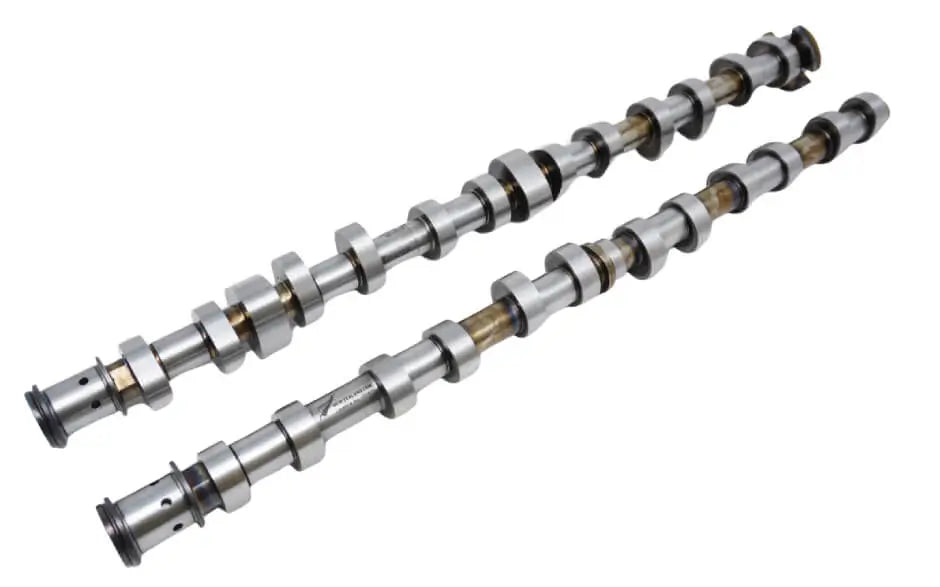
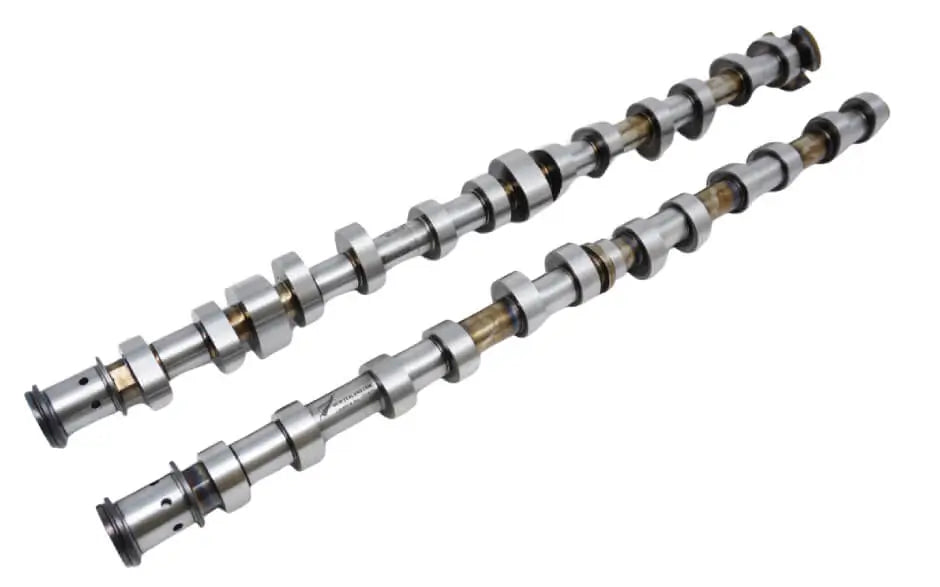
A camshaft is a shaft with profiled lobes that interact with the valvetrain as it rotates, forcing the valves to open at a defined moment in time. The shape of the cam lobe determines parameters such as valve lift, opening duration, and valve overlap.
These parameters directly affect cylinder filling efficiency. The greater the valve lift and the longer the valve remains open, the more air can enter the combustion chamber, which is especially important at high engine speeds.
Modern engines often use variable valve timing systems such as VANOS, VTEC, or MiVEC, which allow the camshaft position to change relative to the crankshaft. However, even in such systems, cam lobe geometry remains the key factor that defines the engine’s baseline behavior.
Each camshaft lobe has a complex three-dimensional geometry. Engineers work with two types of duration: advertised duration and duration measured at a specific technical lift point, such as 0.050 inches or 1.0 mm. The second value reflects the real working profile more accurately, because the initial valve lift has only a minor effect on airflow. Aggressive profiles provide a longer period of maximum valve opening, increasing the engine’s volumetric efficiency.
Engineering Aspects of Cam Lobe Profiles and Valve Timing
The cam lobe profile is the result of precise engineering calculations that take into account valve movement speed, component loads, and airflow dynamics. Increasing duration allows the valve to remain open longer, improving cylinder filling at high rpm, but it can reduce idle stability.
Valve overlap, when the intake and exhaust valves are open at the same time, is used to improve cylinder scavenging. In high-performance engines, this helps remove exhaust gases more efficiently and improves the cylinder filling ratio.
Solutions from Kelford or Tomei are developed with consideration for the type of forced induction, the degree of engine modification, and the target rpm range, making it possible to achieve a precise balance between power and drivability.
The physics inside the cylinder head is based on airflow inertia. At high rpm, air continues moving even after the piston has passed bottom dead center, allowing the cylinder to receive additional charge. This is why performance camshafts close the intake valve later, using the inertia of the airflow to improve cylinder filling.
Camshafts are manufactured from forged or billet steel blanks followed by heat treatment, such as carburizing or nitriding. This provides maximum surface hardness and wear resistance even at extreme engine speeds.
Application in Road and Performance Configurations
In road cars, camshafts are focused on stability, low noise, and fuel efficiency. This means conservative timing and minimal overlap.
In performance configurations, more aggressive profiles are used, providing greater valve lift and allowing the engine to operate efficiently at high rpm.
In turbocharged engines, excessive overlap must be avoided to prevent boost pressure from escaping through the exhaust side. For this reason, cam profiles are selected individually for the specific turbocharger setup.
For street-oriented projects, solutions such as Tomei Poncam are popular because they can be installed without extensive cylinder head modification and provide gains without sacrificing comfort.
In racing configurations, such as Tomei Procam and Kelford applications, extreme timing profiles are used, allowing the engine to rev to 9000 rpm and beyond.
Criteria for Choosing Camshafts
Selection depends on the engine configuration and intended use. For street driving, balance is important, while for track use maximum efficiency becomes the priority.
The main parameters are valve lift, duration, and overlap. Compatibility with the valvetrain is also critical.
When using aggressive camshafts, reinforced valve springs and lightweight retainers must be installed to prevent valve float.
The Impact of Camshafts on Engine Performance and Durability
Camshafts define cylinder filling efficiency and directly affect engine power. Correct selection can fundamentally change the character of the engine.
However, aggressive profiles increase the load on related components, so a comprehensive upgrade approach is required.
After installation, it is important to set the valve timing accurately using adjustable cam gears, allowing engine operation to be optimized for the specific configuration.