































Brake Pads for Road Cars and High-Performance Braking Systems
Brake pads are friction components of a vehicle’s disc braking system. These elements directly contact the surface of the brake disc and generate the friction required to decelerate the vehicle. When the brake pedal is applied, hydraulic pressure is transmitted to the caliper, which presses the pads against the rotating disc. At this moment, the vehicle’s kinetic energy begins to convert into thermal energy, reducing wheel rotation speed. Despite their relatively compact size, brake pads play a fundamental role in driving safety, braking stability, and overall system efficiency.
In modern vehicles, braking performance depends not only on disc size or caliper design, but also on the characteristics of the friction material used in the pads. This material defines how effectively the vehicle can slow down, how stable the braking system remains across different temperature ranges, and how it performs during repeated heavy braking cycles. Together with discs and calipers, brake pads form a unified mechanical system responsible for speed control under all driving conditions.
In vehicles with increased engine output, especially those used in performance driving or modified engine configurations, the load on the braking system increases significantly. During aggressive braking, the contact surface between the pad and disc can reach temperatures of several hundred degrees. For this reason, the composition of the friction layer, the stability of the friction coefficient, and the ability to operate across a wide temperature range become critical. High-performance and track-oriented vehicles use specialized brake pads designed for more demanding operating conditions.
The brake pad category at ATOMIC-SHOP includes components suitable for both daily-driven vehicles and high-performance applications. The range features solutions from manufacturers well known in motorsport and braking system engineering, including Ferodo, Pagid, Endless, Hawk, Brembo, and Wilwood. These companies develop friction compounds and pad designs capable of maintaining performance under elevated thermal loads typical for track use, mountain driving, or aggressive urban conditions.
Technical Construction of Brake Pads
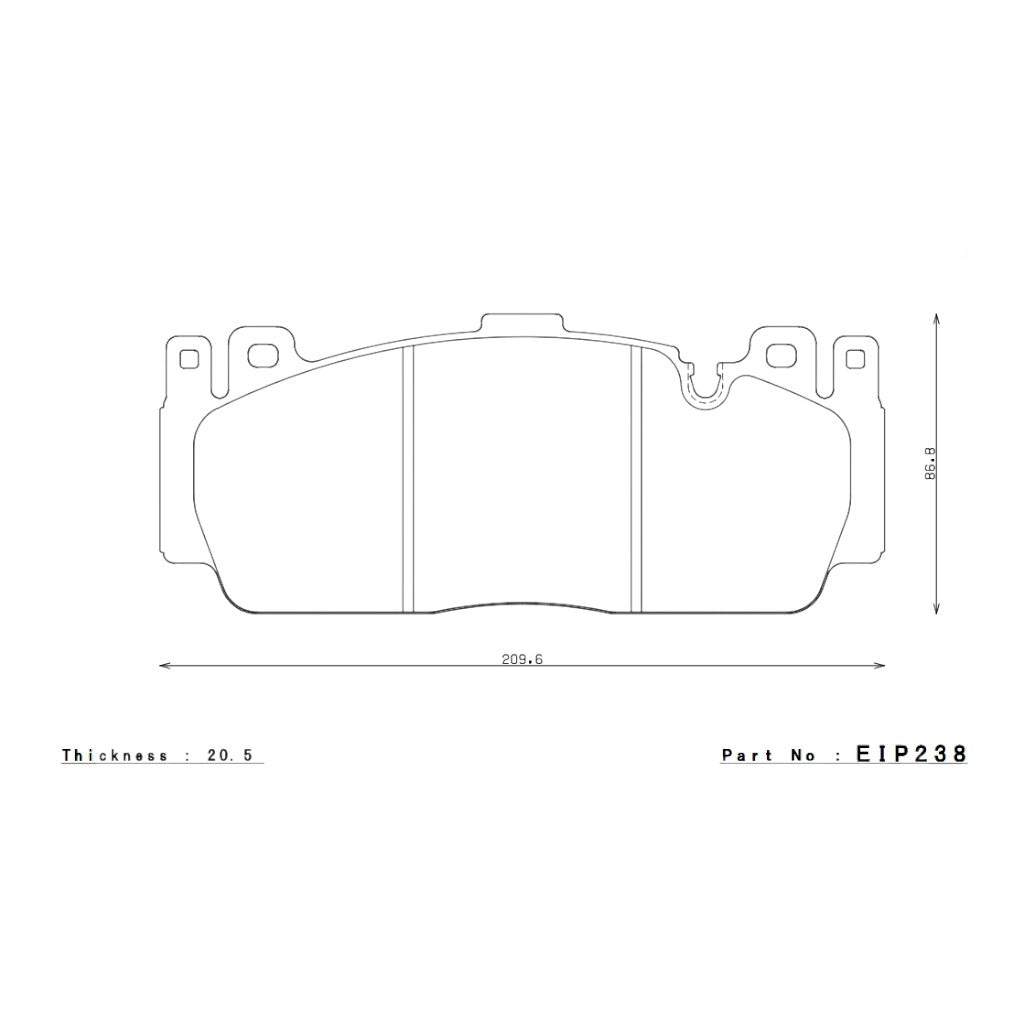
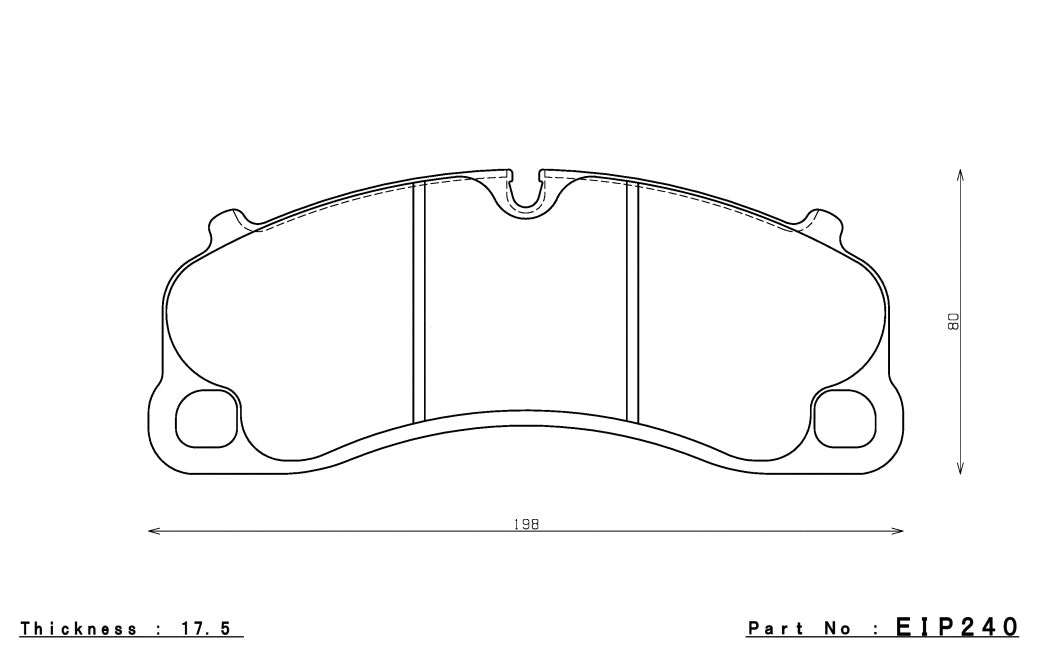
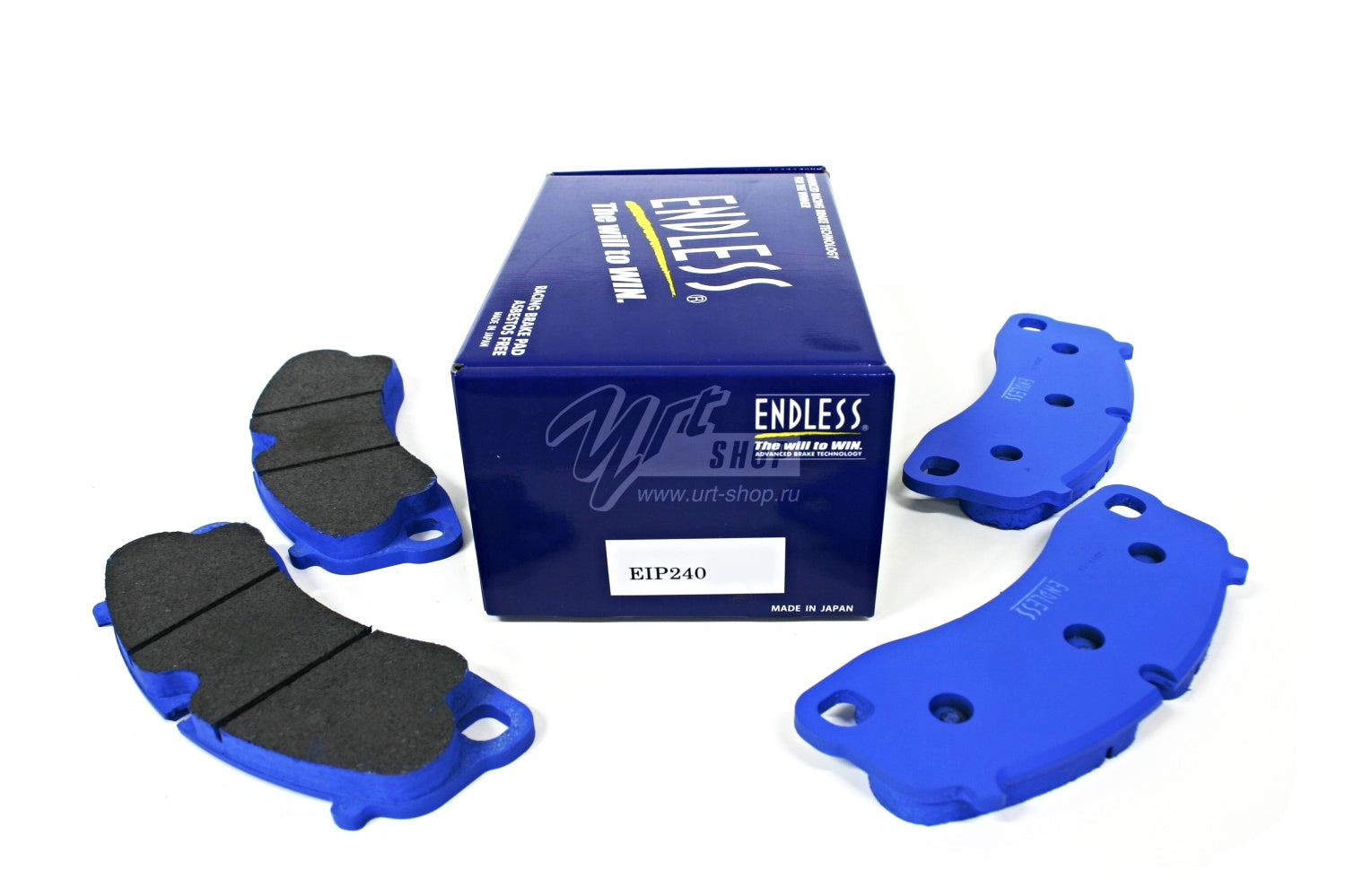
A brake pad consists of several key elements. The foundation is a rigid metal backing plate, which ensures structural integrity and distributes load evenly during braking. A friction material is bonded to this plate, and it is this layer that interacts directly with the brake disc surface. The composition of the friction material determines braking characteristics, including friction coefficient, thermal stability, wear rate, and acoustic behavior.
Friction compounds may contain dozens of different components. These include metallic fibers, ceramic particles, graphite, resins, and various mineral additives. Each component serves a specific function. Metallic fibers improve thermal conductivity and structural strength, graphite helps stabilize the friction coefficient, while synthetic resins form the binding structure of the compound. The result is a composite material that must maintain consistent performance through repeated heating and cooling cycles.
In addition to the core structure, modern brake pads may incorporate additional design elements aimed at improving efficiency and usability. Anti-noise shims reduce vibration and high-frequency noise during braking. Thermal insulation layers limit heat transfer to the caliper and brake fluid, which is particularly important under heavy load. The friction surface may also include slots or chamfers to improve dust and gas evacuation generated during braking.
These engineering solutions contribute to more stable contact between the pad and disc, improving braking predictability across different driving conditions. As a result, modern brake pads are complex engineered components rather than simple friction linings.
Engineering Principles of Friction Materials
The operation of the braking system is based on energy conversion through friction. When brake pads are pressed against the disc, a microscopic interaction occurs between the surfaces. During this process, both mechanical and thermodynamic phenomena take place. A portion of the friction material transfers onto the disc surface, forming a friction layer. This layer is essential for maintaining a consistent friction coefficient during repeated braking cycles.
Temperature is one of the most critical factors affecting brake pad performance. During hard braking from speeds above 100 km/h, the amount of heat generated can be substantial. If the pad material is not designed for such temperatures, brake fade may occur — a temporary loss of braking efficiency due to instability in the friction layer. High-performance brake pads are therefore engineered to operate reliably at temperatures reaching several hundred degrees.
In racing and track environments, engineers often use specialized friction compounds optimized for high-temperature operation and maximum friction output. Manufacturers such as Pagid, Endless, and Ferodo develop advanced material compositions that maintain stable braking performance even under repeated high-load conditions. For road use, however, the balance between performance, noise, and wear remains a key engineering consideration.
Application Across Different Driving Conditions
Brake pads are used across a wide range of vehicles — from compact city cars to high-performance sports cars and race vehicles. In standard road conditions, the primary requirements are stable braking at moderate temperatures, low noise levels, and minimal disc wear. For these applications, balanced friction compounds are used to ensure predictable and comfortable braking behavior.
In performance driving and track use, operating conditions change significantly. The braking system is exposed to repeated high-energy deceleration, where consistency and thermal resistance become critical. During intensive track sessions, brake disc temperatures can exceed 600 degrees. In such conditions, specialized brake pads with extended temperature ranges are required.
Components from brands such as Hawk, Brembo, and Wilwood are commonly used in high-power vehicle builds where braking performance must remain consistent at high speeds. These solutions are suitable for track days, amateur racing, or performance-focused street applications with upgraded braking systems.
Selecting Brake Pads for a Vehicle
Choosing brake pads depends on several technical factors, including vehicle type, braking system configuration, and intended use. First, compatibility with the specific caliper and disc size must be considered. Different vehicles require specific pad geometries, making correct selection based on OEM specifications or part numbers essential.
The friction material composition is another critical factor. For daily driving, pads with moderate friction coefficients are typically preferred, offering smooth operation and low noise. For more dynamic driving or higher-powered vehicles, performance or semi-track compounds provide improved thermal resistance and braking consistency.
It is also important to consider the balance between braking performance and component wear. More aggressive compounds can deliver stronger braking force but may accelerate disc wear. For this reason, brake pads should be selected based on actual driving conditions rather than maximum theoretical performance.
Impact of Brake Pads on Vehicle Dynamics and Reliability
The quality and characteristics of brake pads directly affect vehicle dynamics, braking stability, and overall safety. An efficient braking system allows for more precise control of entry speed into corners, shorter stopping distances, and predictable behavior even under demanding conditions.
Properly selected brake pads also contribute to the longevity of other braking system components. Stable friction materials reduce the risk of overheating, minimize vibration, and ensure even wear across contact surfaces. This is especially important in high-performance vehicles where braking loads exceed typical road conditions.
As a result, brake pads remain one of the most critical elements in a vehicle’s engineering architecture. Their characteristics define braking efficiency, system stability, and overall vehicle control during dynamic driving. For this reason, careful selection of high-quality friction components is a key consideration in performance builds, track setups, and advanced braking system upgrades.