








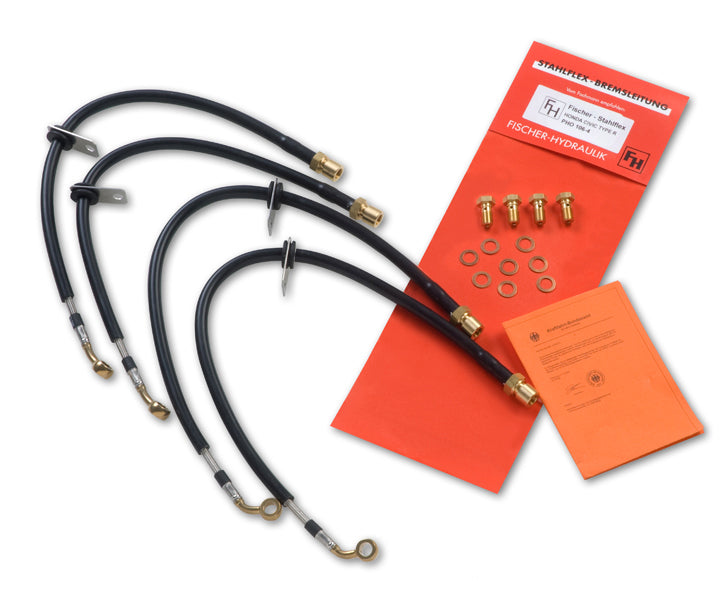
Brake Lines in Automotive Hydraulic Braking Systems
Brake lines form the foundation of the hydraulic circuit within a vehicle’s braking system, transferring pressure from the master cylinder to the braking mechanisms at each wheel. Through these rigid pipes and flexible hoses, brake fluid transmits force that ultimately causes the calipers to press the brake pads against the rotors. Although brake lines are often overlooked when discussing braking systems, their construction and material properties have a direct impact on braking precision and pedal response.
In modern vehicles, the hydraulic braking system operates as a closed circuit, where any change in pressure is transmitted instantly through the brake fluid. This makes the stability and sealing integrity of brake lines critical for predictable system behavior. Even minor hose expansion or material degradation can affect pedal feel and overall braking efficiency.
In a standard vehicle configuration, brake lines must withstand high hydraulic pressure, temperature fluctuations, and continuous mechanical stress caused by vehicle movement. Under heavy braking, system pressure can reach significant levels, and any expansion or deformation in the line can influence braking response. For this reason, material selection and structural design are key engineering considerations.
ATOMIC-SHOP offers solutions used in both street vehicles and performance or motorsport applications. In such systems, reinforced brake lines are commonly used to provide more consistent pressure transfer and improved pedal response. Manufacturers such as AP Racing, StopTech, Wilwood, Forge, RacingLine, Goodridge, AMS, Fischer, Cusco, and Unplugged Performance develop components widely used in upgraded braking systems and performance vehicles.
Structure of Hydraulic Brake Lines in Disc Brake Systems
A brake line serves as the channel through which brake fluid transmits pressure from the master cylinder to the braking mechanisms. In most vehicles, the system consists of rigid metal pipes and flexible hoses. Rigid lines are routed along the chassis, while flexible hoses are used in areas where suspension components move relative to the body.
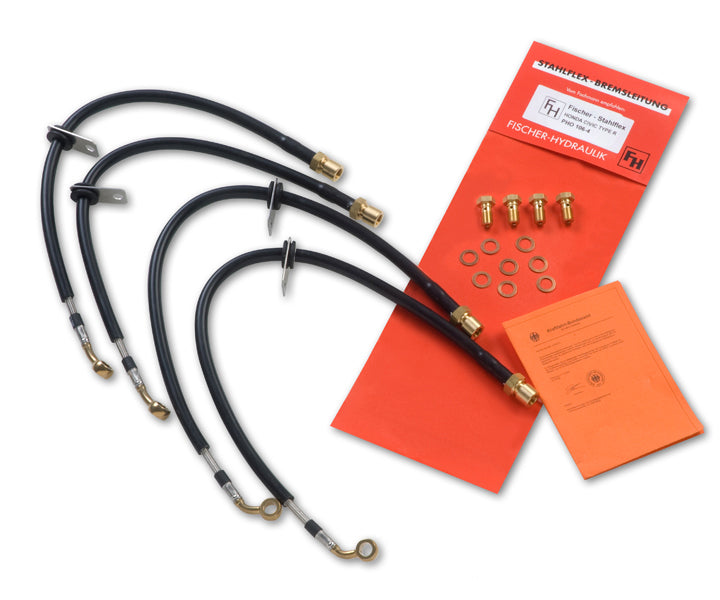
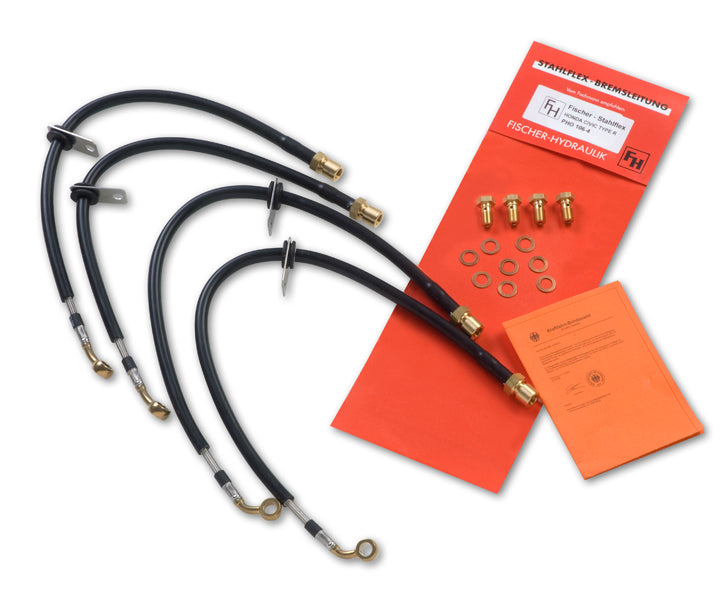
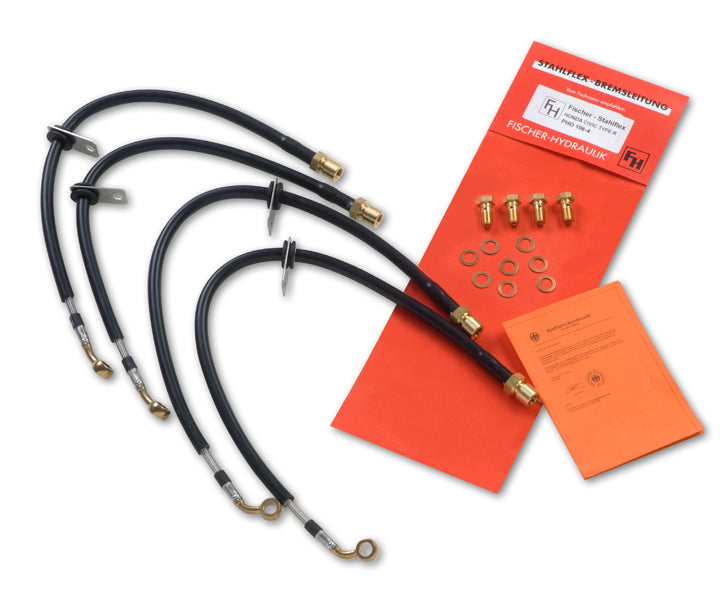
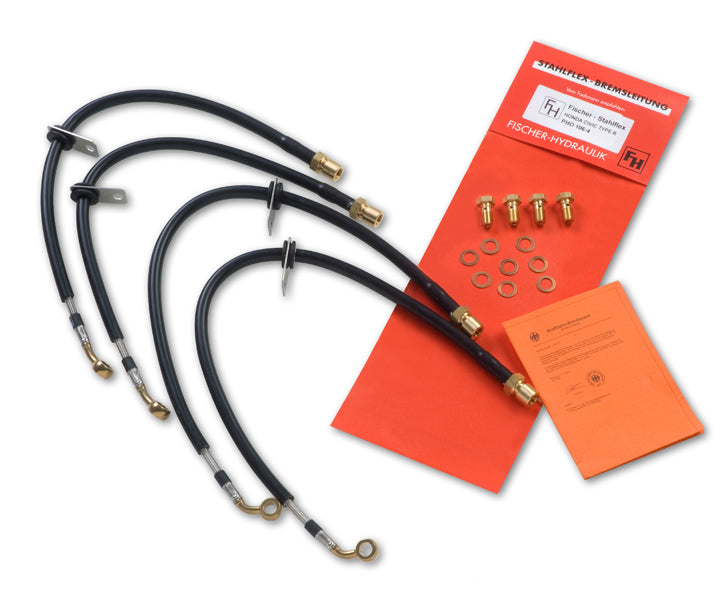
Flexible brake lines are critical components, as they must handle both high pressure and continuous suspension movement. Standard systems typically use multi-layer rubber hoses reinforced with textile materials. In higher-performance applications, braided stainless steel lines are used to significantly reduce expansion under pressure.
Reinforced brake lines usually consist of an inner PTFE (Teflon) tube that carries the brake fluid and an outer stainless steel braid that prevents expansion. This construction maintains a consistent internal volume even under high hydraulic pressure.
The external braid also provides mechanical protection against debris, moisture, and contact with suspension components. As a result, braided brake lines often offer improved durability under demanding operating conditions.
Hydraulic Force Transmission and Its Effect on Brake Response
The braking system operates by transmitting force through hydraulic fluid. When the driver presses the brake pedal, the master cylinder generates pressure within the system. This pressure is transmitted through the brake lines to the calipers, where it is converted into mechanical force that actuates the pistons.
If a brake line expands under pressure, part of the input energy is absorbed by material deformation. This results in reduced braking precision and a less responsive pedal feel. For this reason, reinforced brake lines are widely used in performance vehicles where precise modulation is required.
Products from manufacturers such as StopTech, AP Racing, and Wilwood utilize reinforced constructions that minimize line expansion. This leads to a firmer, more consistent pedal response, which is particularly important during aggressive driving or track use.
Maintaining stable line geometry also ensures consistent pressure throughout repeated braking cycles. This helps eliminate variation in pedal feel and provides predictable braking performance under load.
Use of Reinforced Brake Lines in Performance and Motorsport Applications
In standard road vehicles, brake lines are designed to meet the requirements of everyday driving. However, under performance driving conditions or in upgraded braking systems, their characteristics may become a limiting factor. During repeated high-load braking, conventional rubber hoses can expand, affecting system response.
Braided brake lines significantly reduce this effect by using a steel reinforcement layer. These components are often installed alongside upgraded calipers, performance pads, and larger brake discs. The result is a more cohesive system with improved consistency under load.
In track vehicles, reinforced brake lines are effectively standard. They maintain consistent pedal feel under high temperatures and repeated braking cycles. Components from manufacturers such as RacingLine, Forge, and Goodridge are commonly used in such applications where braking precision is critical.
Selecting Brake Lines for Vehicle Applications
When selecting brake lines, compatibility with the specific vehicle platform is essential. Hose length, routing geometry, and connection types must match the suspension design and caliper configuration. For this reason, most manufacturers offer model-specific brake line kits.
Material selection is another key factor. Standard rubber hoses provide sufficient flexibility and durability for daily driving. Reinforced braided lines are better suited for performance applications, as they offer more consistent pressure transfer and reduced expansion.
Operating conditions should also be considered. For urban driving, standard solutions are typically adequate. For dynamic driving or track use, reinforced brake lines from performance-oriented manufacturers provide more stable and predictable braking characteristics.
Effect of Brake Line Quality on System Precision
Brake lines directly influence pedal feel and the precision of braking force modulation. Stable hydraulic pressure transfer allows the driver to better control deceleration, which is especially important in demanding driving situations.
High-quality brake lines help maintain consistent braking performance under high temperatures and repeated нагрузках. They reduce the risk of performance degradation, improve pedal feedback, and contribute to more predictable vehicle behavior during braking.
In performance builds, upgrading brake lines is often part of a broader approach to improving the braking system. Together with calipers, pads, and rotors, they form an integrated system capable of operating reliably under increased нагрузках and demanding driving conditions.